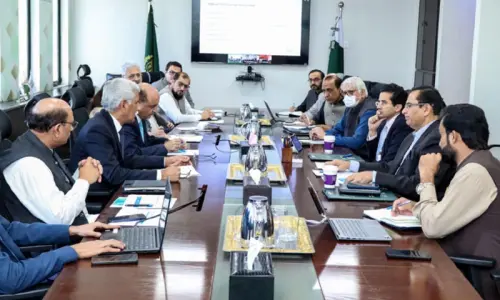
ISLAMABAD: Pakistan asked for a new $5.3 billion bailout loan programme from the International Monetary Fund on Thursday after talks with a visiting delegation from the global lender.
“The government of Pakistan and International Monetary Fund have reached an agreement for a three-year programme of at least 5.3 billion dollars under an extended fund facility,” said Finance Minister Ishaq Dar.
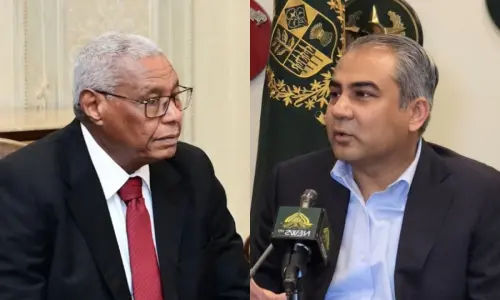
“This is a Pakistan designed programme. It includes bringing the fiscal deficit to a more sustainable level,” Jeffrey Franks, the regional adviser to the Fund on Pakistan, told reporters speaking alongside the Pakistani finance minister.
The IMF expects Pakistan to reach a budget deficit target of six per cent of gross domestic product as part of its bailout loan programme, said Franks.
The floating interest rate would be set at three per cent and that the loan would be payable over a longer period than conventional stand-by arrangements, he added.
Franks said the loan was subject to further approval within the IMF and would then go to the executive board in early September.
The successful conclusion of talks comes at a time when Pakistan's central bank has only about $6.25 billion left in reserves, enough to cover less than six weeks of imports.
Dar said there was no option but request the loan to save Pakistan from defaulting.
“We have not carried the begging bowl in our hands nor are we getting a grant, Pakistan is a member of IMF,” Dar said.
Franks said the aim of the programme was to bring down the fiscal deficit – which neared nine percent last year – to a more sustainable level and reform the energy sector to help resolve severe power cuts that have sapped growth potential.
He added an agreement with the State Bank of Pakistan was also designed to help rebuild forex reserves and keep inflation at acceptable levels.
As part of the loan agreement, Franks added, the Pakistani government has developed plans to improve tax collection and to eliminate tax loop holes and exemptions. It also had a programme to restructure and even privatise public sector enterprises, which would generate significant revenues.
“The overall focus on this programme is to boost economic growth so we can have a better future for all Pakistanis,” he said. “There will be some difficult decisions... but these will be necessary decisions to make sure that the economy is stable going forward.”
Anxiety over the nation’s struggling economy is one of the many challenges facing the new Pakistan Muslim League - Nawaz (PML-N) government.
With reserves shrinking by around $500 million a month and with many Pakistanis already angry over unemployment, high food prices and crippling power cuts, Prime Minister Nawaz Sharif is keen to be seen as a decisive man capable of overhauling the economy.
But any IMF reform package, which usually comes with conditions attached, could also prove unpopular, adding to concerns over instability at a time when Pakistan is already under pressure to contain a growing insurgency.