ISLAMABAD: The Abbottabad (Osama bin Laden) Commission has concluded that the global terror kingpin’s nine-year-long stay in Pakistan and the May 2011 secret US raid, in which he was killed, were because of “gross incompetence” of the state institutions, but was particularly critical of ISI for being too casual in first tracking him and then investigating the May 2 denouement.
The 336-page classified report, which was revealed by Al Jazeera on its website on Monday, a day after Dawn carried the initial story, was a scathing criticism of the performance of the intelligence agencies, with the commission members specifically observing that the most well-resourced ISI acted unprofessionally, lacked commitment to fight extremism and terror and obstructed the performance of other spy outfits.
Accessing the report on Al Jazeera’s website became difficult soon after it was released due to unexplained reasons.
The five-member commission led by Justice Javed Iqbal believed that “culpable negligence and incompetence at almost all levels of government can more or less be conclusively established”.
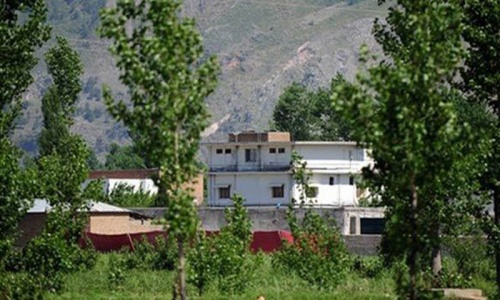
Al Qaeda chief Osama bin Laden was killed in a raid on his Abbottabad hideout on the night of May 1-2, 2011, by a team of US Navy SEALs from the US Naval Special Warfare Development Group with CIA support. The operation was ordered by President Obama.
The US special troops, who had flown into Pakistan on board four helicopters undetected by PAF radars, remained in Pakistani territory for about three hours including up to 38 minutes that they spent on the operation inside Bin Laden home.
The incident had sparked a public outcry in the country with the people asking how the most sought after fugitive lived in the country evading the snooping eyes of otherwise menacing local spies and how did US carry out hours-long hostile operation without any resistance from the military.
Confronted with a barrage of domestic and international criticism, the government first held an in-camera session of the parliament, which called for a detailed probe. The commission constituted in the first week of June started functioning on July 5 because of political wrangling that delayed its notification for weeks.
The commission which investigated the various aspects of OBL’s stay and killing in the US raid felt that the entire system had become dysfunctional and described the situation as “Government Implosion Syndrome”.
The result, the members observed, was “military humiliation, national outrage and instrumental outrage”. It was noted that the ISI had prematurely stopped tracking OBL in view of fading US interest in him. Retrospectively it looked the Americans could have stopped sharing information with ISI because of a trust gulf, but themselves never gave up search for him.
“There was no real search for OBL allowing its (ISI’s) foreign and domestic critics to allege that its operatives were too close to their ‘assets’”, the report said.
But, curiously, the premier intelligence agency did not seriously carry out investigations after the May 2 incident.
The agency neither tried to locate the addresses where the Al Qaeda chief and his family members lived before arriving in Abbottabad, nor did it probe the leads given by those interrogated.
“It just prevented other authorised agencies from doing possibly a better job despite their relative lack of resources,” the commission maintained.
It said that while the civilian agencies were incompetent and lacked initiative, the powerful non-civilian outfits denied them space and resources.
The statements made before the commission showed that ISI had arrogated to itself the counter-terror role and there was no clear government direction in this regard.
The civilian agencies including FIA and IB got their share of criticism also.
The then acting chief of FIA was said to be unaware of the mandate of his agency and thought that the head of IB was indulging in “idle gossip with the commission” and having not fully probed the information that was available to him.
The IB’s report on the incident was said to have been mainly based on media reports.
The commission suspected that there could have been rogue elements in intelligence agencies or retired military personnel, who could have acted as OBL’s support network and references were made to Hizbut Tehrir’s involvement with some of the officers.
The MI chief denied the assertion saying there were no rogue elements within the intelligence agencies.
The MI director general admitted to negligence of his and other intelligence agencies in chasing high-value targets, with one example of Umer Patek, who too was arrested from Abbottabad, but no follow-up was done.
The commission said that not investigating Patek’s other links was more than mere negligence.
It also observed that none of the arrested high-value targets were thoroughly probed and were rather handed over to the Americans in a rush.
For further reading: Findings of Abbottabad Commission: How US reached Osama