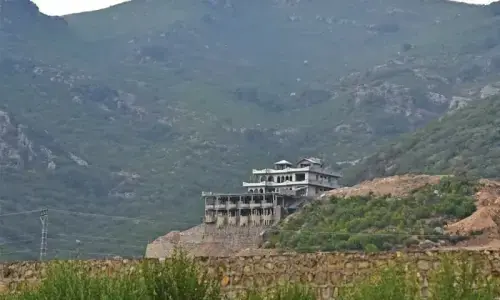
In Balochistan’s Ziarat Valley, under the shade of ancient juniper trees, 70-year-old Haji Abdul Qayyum has constructed a mud-walled shop.
“The juniper is my life; I have lived below its shadow throughout my life,” says the elderly man.
But Qayyum doesn’t know how much longer that shadow will last. Ziarat’s juniper forest is the second largest of its kind in the world, but is now battling to maintain that reputation. People living in the area continue to cut the trees unchecked – in the presence of the concerned (or rather, unconcerned) authorities.
Home to other kinds of natural beauty and bounty, the lush green valley is also famous for top quality fruit orchards, including apples, cherries and grapes. The valley itself is nestled between mountain peaks, springs and karezes (a historical underground irrigation system).
Considered one of the chilliest areas in Balochistan during winter, locals cut down ancient juniper trees for firewood. Most of the valley’s surrounding areas are yet to be provided with natural gas.
It isn’t just the locals seeking firewood who contribute to the depletion of the forest. Well-known environmentalist Faiz Muhammad Kakar explains that the timber mafia is also involved in deforestation and the smuggling of the ancient trees to other parts of the country. “The Ziarat juniper forest strives for its survival,” Kakar emphasises.
Ziarat’s forest covers an area of approximately 700,000 acres of which 230,000 acres belong to the state. Juniper berries are used for flavour, and their oil has several uses. Medical herbs like Ephedra, Artemisia and mint are also produced. Fragrant lavender covers almost the entire landscape from July to October.
The trees grow half an inch every year – and amazingly, some of the trees in this forest are as old as 7,000 years, according to Kakar, who also points out that the forest is a global asset.
For those like the elderly Qayyum, the juniper tree is already an asset. In Pashto, the juniper tree is called “Obashta” – meaning a species which sucks water. To Qayyum, the cutting of the “Obashta” isn’t just a case of environmental negligence – it’s unholy. “Religiously, we are told, cutting trees is forbidden,” explains the man who has spent his entire life protecting the ancient forest.
Accompanying the care for the trees is reverence. “I do not remember a tree that grew up before me,” Qayyum says, referring to the forest’s age.
The self-proclaimed caretaker isn’t the only one who feels so strongly about the forest. In a small town called Kharwari Baba near Ziarat, people migrate to Harnai in the winter when the temperature drops. “We prefer migration instead of cutting the trees,” the caretaker says.
Recently, Unesco’s International Coordinating Council (ICC) of the Man and the Biosphere (MAB) has declared Ziarat’s juniper forest as a biosphere reserve. Despite the claims of the forestry department; the timber mafia, and locals looking for firewood, continue to cut the ancient trees openly.
The forest contributes to Ziarat as a popular tourism spot in Pakistan – but the future of the green expanse seems to be in peril, without any concentrated efforts being made for its preservation. Prompt and practical measures need to be adopted by the government and NGOs to protect the ancient species.