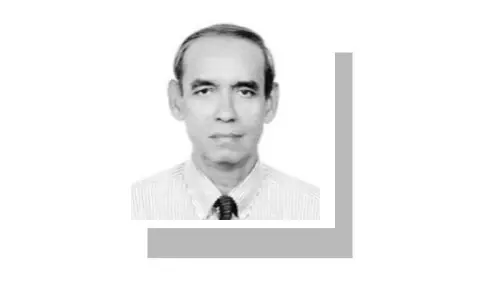
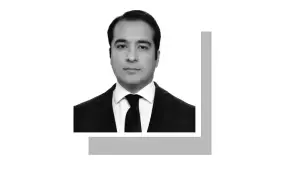
Born in 1951, Rehman Malik hails from Sialkot in Punjab’s northeast. He started a career in the civil service in 1973 and worked in various capacities in the government’s Bureau of Emigration. In 1987, he started working for the Federal Investigation Agency (FIA) which he served in several capacities. He managed to climb upwards in the organisation rather quickly, reportedly on account of his connections with a staff member of former military ruler Ziaul Haq.
During Benazir’s second government, he further emerged as one of the most powerful bureaucrats and rose to the position of FIA’s director general. Benazir had also assigned him the task of probing Nawaz Sharif’s corruption.
Jailed by Sharif over corruption charges after his 1997 re-election, Malik was later granted bail. Subsequently, he left for Afghanistan and then moved to the United Kingdom. Apart from assisting Benazir during her years in self-imposed exile, he developed and still has major business interests in the UK.
Having laid low for a few years, Malik emerged as Benazir’s chief of security in 2007 after brokering a deal between her and the then president Pervez Musharraf. His role as top negotiator made Malik Benazir’s most trusted aide, a position previously enjoyed by Makhdoom Amin Faheem.
After Benazir’s assassination and the victory of PPP in the 2008 general election, Malik who was also elected to the Senate, was appointed Federal Minister for Interior. In June 2012, the Supreme Court suspended Malik’s Senate membership over holding dual nationality. He later resigned from his Senate membership but was again elected and sworn in as Senator, and subsequently as interior minister. Malik claims to have renounced his British citizenship on March 25, 2008.
His recent assignment as interior minister can easily be labelled as currently the worst job in the country. With continual terrorist attacks across Pakistan as well as political killings plaguing Karachi for the past several years, Malik has repeatedly been accused of incompetence. He has been a subject of much public ridicule and his measure as interior minister of blocking mobile phone services on national and religious occasions has also not been of much help.
— Research and text by Saher Baloch