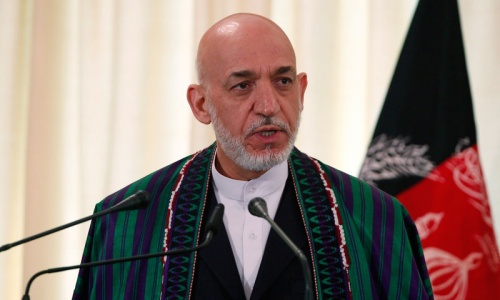

ISLAMABAD: Afghan President Hamid Karzai returned to Kabul on Tuesday after completing an extended visit to Pakistan, but apparently without any major breakthrough on stalemated peace talks with Taliban or release of militants the Afghan government wants to be freed by Pakistan.
The upshot of the visit was renewal of political contacts between the two countries after months of acrimony and estrangement.
The visit had started with low expectations. But the unexpected extension in President Karzai’s trip had spurred hopes of a breakthrough.
Both the countries were nudged into this engagement by the US and the UK after fears that a rupture in Pak-Afghan ties could affect the drawdown plan.
Karzai concluded his two-day trip by inviting Prime Minister Nawaz Sharif to visit Kabul.
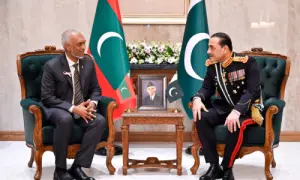
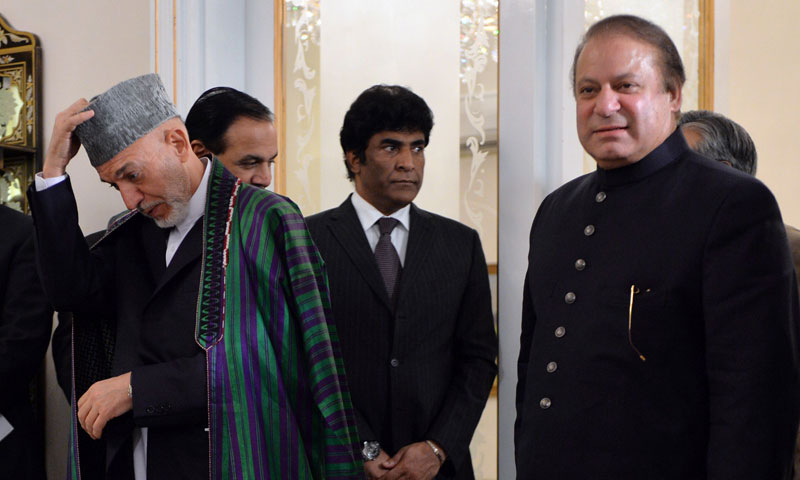
The Afghan president came to Islamabad to meet Sharif for the first time since his election in May in a bid to overcome a series of public rows that have hampered efforts to end 12 years of war in Afghanistan.
The Afghan president urged Pakistan to help arrange peace talks between his government and the Afghan Taliban, then took the unexpected step of extending his visit by a day.
Prime Minister Nawaz Sharif and President Karzai met for the extended round of talks in Murree on Tuesday but could not come up with anything concrete about revival of the reconciliation process in Afghanistan except for reiteration of principled stance that Pakistan remained committed to helping the Afghans in restoring peace to their country.
“Pakistan would facilitate in whatever manner we think would be useful,” Foreign Office spokesman Aizaz Chaudhry told Dawn after the meeting.
Prime Minister Sharif was quoted in a statement issued by his office as having reaffirmed “strong and sincere support for peace and reconciliation in Afghanistan”.
Meanwhile, the Afghan presidency in a statement after Mr Karzai’s return to Kabul asked Islamabad to fulfil the promises made during the talks spread over two days.
“The Pakistani side is expected to take specific and practical steps in accordance with the decisions made during these negotiations,” an Afghan presidential spokesman said.
The agreed steps were, however, not revealed.
During his visit, Mr Karzai sought Pakistan’s help for the troubled reconciliation process and pressed his Pakistani interlocutors for making restoration of peace and stability in Afghanistan a priority in the bilateral agenda.
Release of key militants in custody of Pakistani authorities, particularly Mullah Barader, and coaxing Taliban to talk to High Peace Council were the Afghan leader’s key demands.
Prime Minister’s Foreign Affairs and National Security Adviser Sartaj Aziz claimed in a television interview that the Pakistani side was able to convince Mr Karzai that it did not control the Taliban.
Mr Karzai said Pakistan had failed to use its influence to convince the Taliban to join peace talks. In a reference to Pakistan, he said, Taliban backers wanted to keep Afghanistan “impoverished and underdeveloped forever”.
The harsh statement indicated that Afghan president’s expectations from the visit haven’t been met, even though some promises might have been made with him.
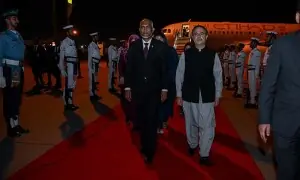
The Afghan president and his delegation were later seen off at the Noor Khan Airbase by Advisor to the Prime Minister on National Security and Foreign Affairs Sartaj Aziz.
President Karzai during his stay also held a separate meeting with President Asif Ali Zardari.