6
6
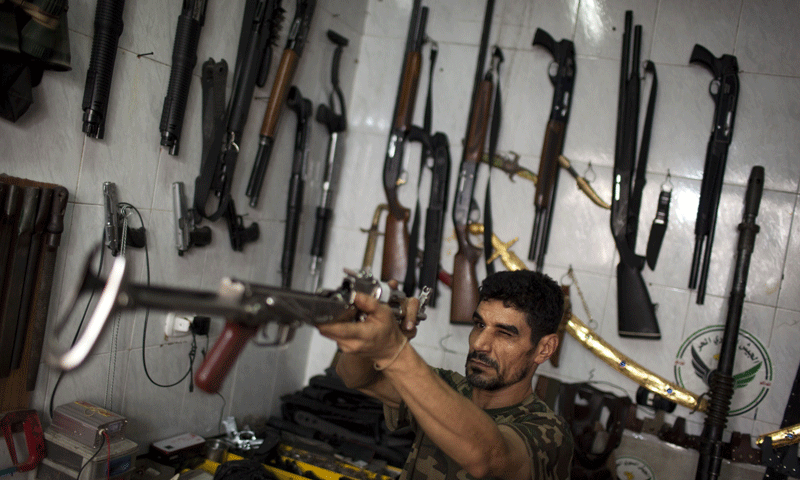



ALEPPO: While most Syrians get poorer with every day of war, Aleppo's main gun seller Abu Mohammad is doing just fine by selling firearms, including rocket-propelled grenades, ammunition and even swords.
“War is great business,” exclaimed the northern city's sole gun shop owner, as he laid several hand grenades out on a counter.
“I wanted to help the rebels because they had no arms or ammunition,” the 39-year-old declared, adding that he makes an astonishing 50,000 Syrian pounds a day.
Abu Mohammad opened his gun store in the rebel-held neighbourhood of Fardos earlier this year after a leg injury cut short a nine-month stint battling alongside the Free Syrian Army.
Several weapons are exhibited on the shop walls, including 9mm guns and AK-47 assault rifles, one of them silver-plated.
“They're made in Iraq and Russia, and prices range from $1,500 to $2,000, depending on the quality,” said Abu Mohammad's 20-year-old son, a rebel fighter who lends a hand in the store.
“We also have military uniforms, boots, gas masks and walkie-talkies,” he said, adding that most of the material comes from Turkey.
Reaching for a 9mm gun, Mohammad said he enjoyed helping his father out in the shop because “I love weapons.”
At 4:00 pm the two men running the family business were busy serving clients.
Mohammad Assi, a 43-year-old rebel, walked in along with several of his brothers in arms. He was looking for ammunition for his rifle.
Counting a wad of cash, Assi said he would like to buy a new rifle, “but these models aren't very good and they're too expensive.”
He handed over 15,000 Syrian pounds for 150 rounds.
“100 pounds for a bullet,” the rebel sighed. “Ammo is so scarce. That's why it's the most expensive thing to buy.”
Gun seller Abu Mohammad however, understands there's a shortage of cash, so he is open to making deals with some of his clients.
“When the rebels seize an army base, they come to my store and swap weapons for ammunition,” he said.
He also said that some buyers come in looking for more specialised products, including one who wants a scope that will help locate snipers.
Another rebel walked in holding three swords and showed them to Abu Mohammad, who unsheathed them and inspected them for quality.
“We also buy weapons off people who need the money to feed their families,” Abu Mohammad said.
“Before the war broke out, there were many people who collected weapons, or who held onto them after they'd finished their draft service. They aren't going to use them, so they bring them over to me to make some money off them,” he added.
Though most of Abu Mohammad's clients are rebels, some civilians visit his store as well.
“I only sell hunting weapons and 9mm guns to civilians. I never sell them military-grade weapons,” he said.
More than a year after a massive rebel assault on Aleppo - once Syria's commercial capital - the city is divided into rebel and army-controlled districts.
Those who have not fled the city face not only escalating poverty and daily battles in their districts, but also the danger of theft and looting by criminal groups.
“I'm here to buy a gun… because of the situation, I prefer to be armed in order to protect my family,” said a 65-year-old man who brought his grandson to Abu Mohammad's store.
The gun seller is also adept at repairing damaged weapons.
Laying out a sniper rifle on his work table, he pointed a laser light through the barrel to check its accuracy.
“I've always liked fixing weapons and making them,” said Abu Mohammad, who used to work at a weapons factory.
“It's one of the few things I'm good at,” he says with a smile.