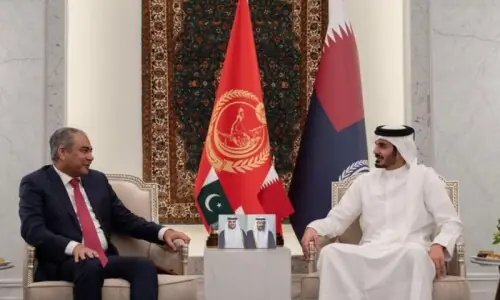
ISLAMABAD, Oct 2: Prime Minister Nawaz Sharif has been playing his cards close to his chest as he ponders over whom to appoint as successor to Gen Khalid Shameem Wynne retiring this week as Chairman Joint Chiefs of Staff Committee (CJCSC).
The appointment of chairman of the committee, a largely ceremonial position in the armed forces hierarchy described in the leaked Abbottabad Commission draft report as a post office, has never been so keenly watched before.
However, the impending completion of Army chief General Ashfaq Parvez Kayani’s extended tenure has made everyone to closely follow the CJCSC’s appointment in anticipation that it may give some indication about who could be the army’s next boss.
More importantly, defence analysts think, the appointment would show who is in the driver’s seat — whether the army has its way by retaining the slot; or the position is rotated among other services thus denting the army’s dominance in the country’s defence matters. It’s no secret that the prime minister’s camp has been pushing for the latter.
Although Gen Wynne retires on Saturday, no successor has been named yet because of which speculations have mounted. Some PML-N leaders, however, say that the aura of mystery around the appointment is by design and a successor will be named soon.
An official announcement is yet to come, but pundits are already putting their money on army winning the two-horse race – Army vs Navy.
If the army retains the office, the next CJCSC will most likely be Lt Gen Haroon Aslam, currently the most senior general in the army, while Chief of Naval Staff Admiral Asif Sandila could be the next man if the position goes to the navy.
Why is army the top contender for the post?
The arguments given for keeping the position with the army is that it is the largest of the three services, the country is engaged in war against terrorism and the challenges to country’s security in the foreseeable future are land based.
Moreover, the proponents of the army believe that since it dominated the nuclear program, Strategic Plans Division, NESCOM, etc, comes directly under the CJCSC, therefore having someone from the army in the office would help in maintaining amicable relations between the CJCSC and the army chief.
A retired general, who did not want to be named, dismissed this argument as “self-serving”.
Admiral Sandila had been sitting in the Joint Chiefs of Staff Committee for three years now and is thought to be better poised to deal with tri-services matters. The naval chief’s appointment as CJCSC could also address grievances within the armed forces about the army dominating the relationship.
The Navy and PAF’s grouse of being poorly resourced as compared to the army is well known.