KARACHI: A new agriculture policy with subsidies for farmers must be introduced to increase acreage of food crops and ensure food security in the province, said Muhammad Ismail Kumbhar, a senior faculty member of Sindh Agriculture University Tando Jam’s on Tuesday.
The seminar titled ‘Lost harvests and wasted food’ was held at Shaheed Zulfikar Ali Bhutto Institute of Science and Technology (SZABIST) under the aegis of Sindh Abhyas Academy (SAA), moderated by director Dr Ghazala Rahman Rafiq.
In his presentation, Prof Kumbhar gave a detailed account of Sindh’s contribution to Pakistan’s GDP as well as the food insecurity the people of the province face due to natural and manmade cause.
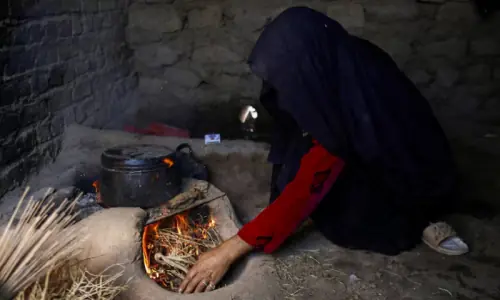
“Despite contributing 30 per cent to Pakistan’s GDP, 71pc households in Sindh face food security issues,” he said. He further added that 34pc Sindhi households faced moderate hunger and 17pc were stricken by severe hunger.
He said that the government needed to invest in the rural areas so that people there could prosper and improve quality of life.
A list of recommendations shared by Prof Kumbhar laid stress on the need to for establishing Sindh Food Authority and Sindh Food Security Task Force.
Other recommendations suggested maintaining stability in prices of food items, women empowerment, increasing grain storage facilities, farmers markets and creating strong linkages to enable farmers sell their produce better as well as including consumer rights education and food safety component in curriculum.
Yet another important recommendation was the introduction of land reforms that would help small farmers and landless tillers. Prof Kumbhar suggested landless farmers be given 5 acres of agriculture land.
Professor Manzoor Isran of SZABIST, discussed Sindh’s ‘Political Economy’.
The crux of his riveting lecture was on the lack of security that was leading the province towards turmoil.
“Sindh needs state’s intervention to begin development. Investment in law and order is needed. The businesses are fast moving to Dubai, Singapore and Malaysia thanks to the worsening law and order scenario,” he noted.
Yet another important point he highlighted was that urban bureaucracy mostly ignored the rural areas and its people and this bias was hampering real growth and productivity in the province.
“No attention is paid to the development of the agricultural sector because the urban section feels that spending money there will affect industrial development,” he said, stressing that this thinking needed to be done away with.