1
1

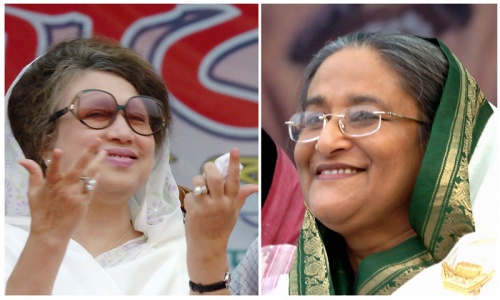
An entire week elapsed when two sides of Bangladesh ground against each other like tectonic plates. Last week, upheavals erupted across the country as if a nation was convulsing in pain. People lived in the fear of an approaching Armageddon between the two political camps that threatened to throw this country back to the Dark Age. They also lived in the tormented hope when the two supreme leaders of this country, despite the disruptive episode over a red telephone, managed to talk to each other for 37 minutes! Throughout the week lesser leaders were spitting invectives like sparks flying from friction. The chance of a reconciliation between two sides swung like an overactive pendulum. All that time it was seeking equilibrium, this nation had its nerves on edge.
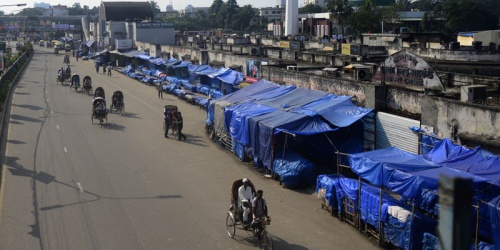
It was a week that looked like the sequels of a dystopian action film huddled within its seven days. Bands of political activists roamed the streets in their post-apocalyptic madness as they clashed with their opponents and the law-enforcement bodies. Vehicles were torched, houses and shops were gutted, cocktails were hurled, guns were fired and kerosene-induced flames danced on the roads like snakes swaying to the sound of a flute. Altogether, anywhere between fourteen and twenty lives were lost to violence. Hundreds were injured.
Although the week was packed with actions, it couldn’t produce even an ounce of solution. That inanity has been best epitomised by the telephone conversation between the two leaders broadcast on television. The conversation has set a world record for blowing something out of proportion. If one cuts out the repetitions, it could be contained within a fraction of its duration.
The overstretched conversation from its start was jinxed. The prime minister kept dialing a number that didn’t respond for forty-five minutes. The television channels promptly broke the news that could be misunderstood as if the opposition leader was deliberately avoiding the call. But why did the head of government try an unresponsive phone for so long? Why didn’t somebody find out after two-three tries if there was something wrong with the connection?
The opposition’s response was also reprehensible. Whilst rest of the country was watching the breaking news on television, why didn’t anyone in the party urgently draw their leader’s attention? Why couldn’t someone immediately inform the prime minister’s office that they were wasting time on the wrong phone?
The whole thing had the appearance of a box-ticking exercise. The prime minister took almost a week to make the phone call. When she did she explained that she was inviting the opposition leader as part of her effort to sit with all the political parties. But from the number of times she harped on one particular subject, it got many of us confused why she had called. Did she call to insist on lifting the hartal or invite the opposition leader to a dialogue?
Our politicians are addicted to apocalypse and they respond to stubbornness with stubbornness. The opposition leader stuck to her guns. She refused to call off the strike to accommodate the prime minister’s invitation.
The unpleasant truth here is that the battle of egos preceded national interest. Otherwise, the two leaders should have agreed on a mutually convenient date in that one call. If October 28 was not suitable for both, they should have finalised a new date next evening or any evening after that. An invitation to national reconciliation shouldn’t be conditional. Neither should its acceptance.
Clash of egos couldn’t be the only reason, part of the fault lies in the preparations for the talks. The prime minister’s advisors didn’t prepare her for a recalcitrant opponent. The opposition leader wasn’t rehearsed to expect the prime minister’s carrot and stick proposition. The end result has been yet another deadlock. The silver bullet is now contingent upon who is going to pick up the phone for the next round of talks.
Advisors give advice, but they also add vices at times. After the Bay of Pigs fiasco, US president John F Kennedy told his wife Jackie that if all his life he had known better not to depend on the experts, he was stupid that one time to let them go ahead. Just to understand what Kennedy meant, Air Force General Thomas Power, who played a key role during the Cuban missile crisis, contended that if at the end of the war there were two Americans and one Russian left alive, America would have still won.
The political showdown last week was seething with that guiding contention. It underscored the futility of our political system where people are captive of politicians who are captives of their own contradiction. Two sides of the same coin, our leaders are one selfish lot in benevolent garb. Head they win, head they lose. In the ultimate tragedy, the people lose every time.
The writer is Editor, First News and an opinion writer for The Daily Star.
By arrangement with The Daily Star/ANN