ISLAMABAD, Nov 6: The continuous delay in the appointment of heads in 28 public sector institutions is resulting in indiscipline and administrative problems in these entities.
Experts say there seems to be no relief in the near future as fresh applications for appointments continue to pour in at the commission responsible for short-listing suitable candidates for these state-owned entities.
The commission was established by the prime minister in July 2013, with Federal Tax Ombudsman Abdul Rauf Chaudhry as chairman and Shams Qasim Lakha and Dr Ajaz Nabi as members.
The commission will meet here on Thursday to discuss the outcome of government decision to abolish the upper age limit for candidates to be appointed as CEOs and chairpersons of the state-owned entities and the regulatory bodies.
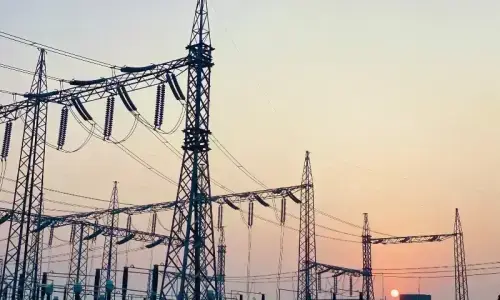
Some of the key state-owned institutions and departments which are being run by the acting heads include the Securities and Exchange Commission of Pakistan (SECP), Pakistan Electric Power Company (Pepco), the National Power Construction Company, the National Transmission and Dispatch Company, the Trade Development Authority of Pakistan (TDAP), the National Insurance Company Limited (NICL), the National Fertiliser Corporation (NFC), the Pakistan State Oil (PSO), the Oil and Gas Development Company Limited (OGDCL), the Sui Northern Gas Pipeline Limited (SNGPL) and the Sui Southern Gas Company Limited (SSGCL), the Pakistan Mineral Development Corporation (PMDC) and the Pakistan Steel.
Sources close to a member of the commission said that after relaxation in the upper age limit, a fresh wave of applications has started arriving, causing delay in the process of short-listing.
The commission is responsible for short-listing candidates to head these public sector institutions, including regulatory bodies, but the delay is taking its toll.
“Out of these departments, there are five key institutions of the finance ministry,” said an official of the ministry, adding, delays are not visible, but absence of regular heads of these departments is being reflected in the economic performance of the country.
Some of these institutions have strategic importance, like Pakistan State Oil (PSO), National Bank of Pakistan (NBP) and Pakistan Electricity and Power Company (Pepco).
Most of the institutions are facing various kinds losses due to absence of permanent heads, as an official of the ministry of industries and production said that in most of state-owned production units there was panic and uncertainty.
“Most of the officers ask us if heads are not being installed deliberately so that these units could be privatised,” said an official of the ministry.
The lack of direction, indiscipline and administrative slackness is visible even in some of the key public sector institutions as the quarterly report of the National Bank has pointed out that Rs73 billion reduction has been witnessed in depositors base during July-September 2013.
Apart from the performance, many entities are facing lobbies. In SECP, almost entire existing management has been dragged to courts by some existing and former employees.