KARACHI: The trade potential between India and Pakistan is estimated to be around $20 billion against the current around $3bn, according to a working paper published by ICRIER.
However, non-trade barriers (NTBs) and bureaucratic hurdles continue to impede growth in the bilateral trade.
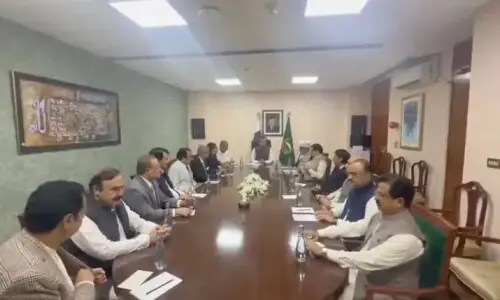
To foster dialogue in this regard, ‘Normalising India-Pakistan Trade – 2nd Regional Chambers of Commerce Roundtable’ was held on Tuesday.
The conference was organised by the Federation of Pakistan Chambers of Commerce and Industry (FPCCI) in collaboration with Indian Council for Research on International Economic Relations (ICRIER) and Institute of Business Administration (IBA).
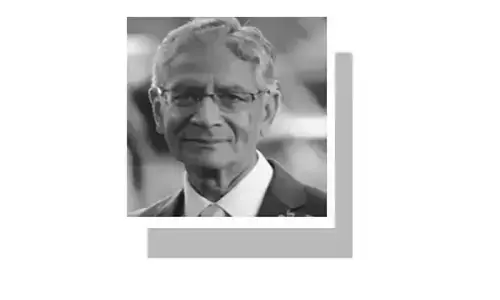
In his key-note address, Dean and Director IBA Dr Ishrat Hussain said, “Evidence-based research was projected to be important for improving the situation and academic institutions can play a role in assisting business community in thrashing trade-related issues on the basis of data and policy analysis”.
He stressed that the academic institutions were not in the advocacy mode but rather focusing on policy analysis.
He said that while the Association of Southeast Asian Nations (Asean) and other trade blocs are expanding, Saarc’s performance remained dismal due to the impediments created by the India-Pakistan issue.
“We have set our sights on the GSP plus status, ignoring the fact that EU is not driving growth. We have to look towards China. The western province of China is closer to Pakistan so why not take advantage of this,” he said.
Summing up, he said that while the government of Pakistan wants to normalise trade with India and has all major political parties on board, the consensus is non-existent in India.
In the welcome address, FPCCI President Zubair Ahmed Malik hoped that impediments to Indo-Pak trade would be removed to boost bilateral trade.
ICRIER director and CE Dr Rajat Kathuria said that India was a closed economy back in 1983 when the institute was established.
“Ten years later when India liberalised trade, it reaped the rewards. The retail policy of India is based on the ICRIER’s research, which helped change the policy discourse,” he said while adding that normalising Indo-Pak trade remained its flagship project.
ICRIER professor Dr Nisha Taneja said that unless the governments on both sides of the border bridge info asymmetries, trade potential will not be realised.
High Commissioner of India in Islamabad T.C.A. Raghavan in his message noted that trade between the two countries was growing.
He added that Pakistan’s exports to India have “shown a strong performance in the last financial year and crossed for the first time the half-a-billion-dollar mark”.
In a special meeting on NTBs at the event, members agreed that both countries should work jointly to facilitate traders on each side of the border, ease visa regimes, improve customs clearance procedures, open more bank branches near the border, hold business-to-business meetings at sector level to improve understanding of requirements and invest in port infrastructure, among other things.
Besides the discussion on non-tariff barriers, three separate parallel discussions were held on banking, trade in textiles and trade in agriculture.
As for agriculture, separate routes for perishable goods and round-the-clock operational border were suggested.
In order to remove impediments related to banking, both countries, according to the participants, should make every effort to minimise delay in operations and raise visibility and documentation to make the process more transparent.
For removal of barriers in textile trade, it was suggested that both countries should harmonise their customs procedures, remove specific duties and engage constantly for better understanding of regulatory regimes.
Moreover, better rail connectivity and mechanisms for joint ventures without physical presence of the businessmen in the other country were also suggested by the participants.