WB says cannot mediate in Pakistan-India water dispute



ISLAMABAD: The World Bank has expressed its inability to take an independent decision on appointment of a neutral expert or court of arbitration for settlement of a long outstanding water dispute between Pakistan and India, saying the two countries will have to bilaterally choose one option.
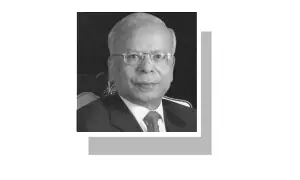
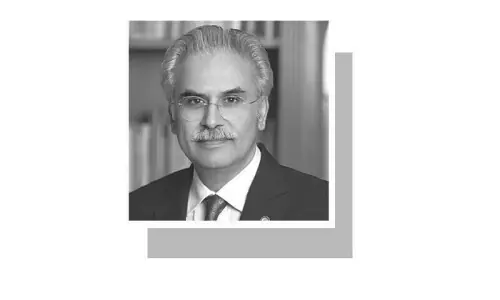
“Both India and Pakistan should come together as to which option to take forward,” said Patchamuthu Illangovan, the World Bank’s former Country Director of Pakistan, on completion of his five-year term in Islamabad.
Talking to Dawn, Mr Illango said Pakistan had made a request for appointment of a Court of Arbitration (COA) while India had sought a neutral expert to resolve their dispute on two hydroelectric projects. Because of two conflicting positions under the 1960 Indus Waters Treaty, the World Bank was facilitating the two governments to find ways in resolving differences and move forward.
“There is no provision in the treaty for the World Bank to take an independent decision,” he said when asked if the bank was shying away from its role even though it was part of the 1960 treaty and had been sitting on Pakistan’s request for a COA for almost four years now.
Responding to a question that the World Bank had promised to be part of the development works on the Indus basin and yet it had declined funding the Diamer-Basha Dam, Mr Illango said that while the bank was supporting other projects on the Indus River like Dasu-1 & Dasu-II, India had raised objections over the Diamer-Basha’s location in a disputed area and that it was not the WB policy to finance disputed projects.
Islamabad seeks a court of arbitration while Delhi wants a neutral expert
Pakistan has been reminding the World Bank since then to recognise its responsibility under the Indus Waters Treaty of 1960 to address its concerns over two disputed projects — 330MW Kishanganga and 850MW Ratle Hydropower projects — and play its role to ensure that India abide by the provisions of the 1960 treaty while building the projects.
India had completed the 330MW Kishanganga project during the period the World Bank “paused” the process for constitution of a Court of Arbitration (COA) as requested by Pakistan in early 2016. The Pakistani request was countered by India by calling for a neutral expert.
Pakistan had called for resolution of disputes over Kishanganga project on the Neelum river and 850MW Ratle hydropower project on the Chenab.
In December 2016, the bank had announced that it had “paused” the process for either appointing a COA or a neutral expert and started mediation between the two countries on how to advance and develop consensus in the light of the treaty on the mechanism for resolution of faulty designs of the two projects.
The last round of bank-facilitated and secretary-level talks between India and Pakistan were held in Washington in September 2015 that ended in disappointment for the latter. Pakistan had raised a number of objections over the design of the two projects at the level of Permanent Indus Waters Commission almost a decade ago followed by secretary-level talks and then requests for arbitration through the World Bank.
Under the treaty, in case the parties fail to resolve disputes through bilateral means the aggrieved party has the option to invoke the jurisdiction of the International Court of Arbitration or the neutral expert under the auspices of the World Bank.
The jurisdiction of the court could be invoked either jointly by the two parties or by any party as envisaged under Article IX (5), (b) or (c) of the treaty for constitution of a seven-member arbitration panel.
Responding to a question, the WB official said that the Washington-based lending agency was actively supporting Pakistan’s plans for least cost of power generation through long-term integrated plan because Pakistan’s generation cost was about 25 per cent higher than other regional countries.
He said Pakistan’s power sector had become unsustainable due to untargeted subsidies, inefficient distribution companies and low recoveries and Pakistan needed to improve in all these areas and take full advantage of the clean and renewable resources to ensure affordable energy. He said the renewable policy would go a long way in replacing imported fuels by 2030.
Mr Illango agreed that the WB’s 2018 projections for Pakistan to be an upper middle income country by 2047 through its Pakistan@100 programme had been affected by Covid-19, locust attack and resultant impact on underlying reform programme.
Published in Dawn, August 8th, 2020