Pakistan to return $3.5bn UAE debt before month end: official


 2
2


ISLAMABAD: Pakistan has decided to return $3.5 billion in debt to the United Arab Emirates (UAE) before the end of this month, a senior Pakistani official said on Friday.
The official described the move as a cost the country was willing to bear to uphold “national dignity,” even as it is set to significantly draw down foreign exchange reserves.
The official disclosed that Abu Dhabi had sought the immediate return of the amount.
“The amount will be returned as soon as possible,” the official said, adding that “national dignity could not be compromised for financial considerations”.
These funds were part of external financing support extended by the UAE in 2019 to help stabilise Pakistan’s balance of payments.
The official said the decision had ended the uncertainty surrounding the deposits placed through the Abu Dhabi Fund for Development, which had been rolled over multiple times since 2019. In recent months, the extensions had become as shorter as month long, reflecting Emirati unease over the continuation of the arrangement.
Under its ongoing International Monetary Fund programme, Pakistan is required to secure around $12.5bn in rollovers from three key partners — China, Saudi Arabia and the UAE — to maintain reserve levels and meet external financing needs. The UAE deposits were, therefore, a critical part of this arrangement.
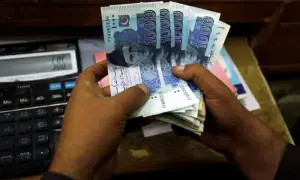
The latest available data shows Pakistan’s central bank reserves at about $16.3bn. A payment of $3bn from the reserves would reduce these holdings sharply by 18 per cent, significantly lowering the external buffer and import cover.
Other officials acknowledged that the return of the funds would have implications for reserve levels but said the decision was taken in view of evolving bilateral considerations and the UAE’s demand for immediate settlement.
Economic analysts say the return of the funds could increase pressure on the rupee and complicate Pakistan’s position under the IMF programme if not offset by fresh inflows. However, officials did not indicate any immediate arrangement for replacement financing.
On the other hand, Ministry of Finance, through a post on X, said it was “continuously monitoring and managing Pakistan’s external flows in order to ensure stable foreign exchange reserves”.
“The government of Pakistan remains committed to fulfilling all its external obligations,” it added.
The post referred to “speculation and commentary in some section of the media regarding the government of Pakistan’s external flows”, saying that it may be noted that the finance ministry was “continuously monitoring and managing external flows in order to ensure stable foreign exchange reserves”.