Country’s healthcare facilities acutely vulnerable to fire hazards, seminar told
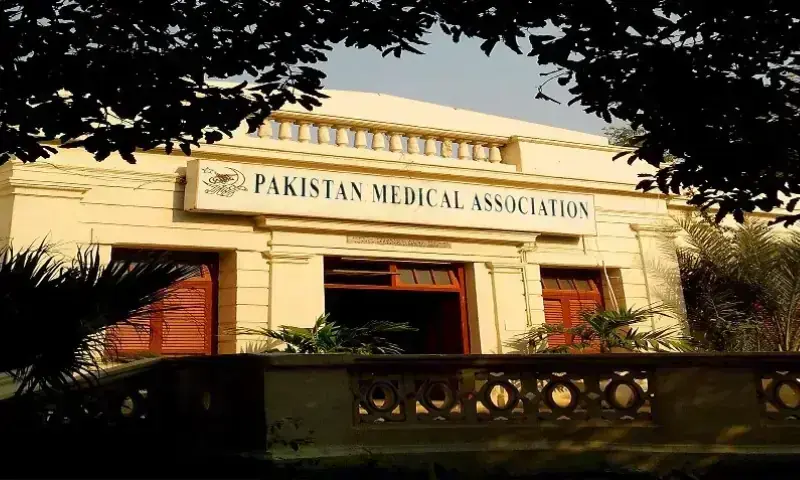
KARACHI: Highlighting gaps in Pakistan’s healthcare system, speakers at a seminar held on Saturday said that healthcare facilities in the country remained acutely vulnerable to fire hazards, requiring immediate steps to build institutional capacity for safety.
The seminar — Fire & Life Safety in Healthcare Facilities: Building a Resilient Pakistan through International Codes and Standards — was organised at the Pakistan Medical Association (PMA) House.
Karachi chapter PMA President Dr Ismail Memon welcomed the guests and said that ageing infrastructure, overloaded electrical systems, weak code enforcement, compromised cabling, and limited emergency preparedness have made the country’s healthcare sector extremely vulnerable to fire hazards.
“A hospital must be the safest place in any community, protecting patients, doctors and staff from preventable fire hazards. Fire safety should be treated as a permanent clinical administrative priority at every healthcare facility,” he stressed.
Experts call for stronger code enforcement, emergency preparedness to protect patients and critical health services from fire risks
Giving a presentation on the subject, Dr Anila Kazmi, lead for Patient Safety & QA at Sindh Institute of Urology and Transplantation (SIUT), demonstrated how rigid smoke compartmentation and passive barriers under the National Fire Protection Association (NFPA) 101 effectively insulate active patient care spaces.
Dr Syed Mairajuddin Shah, chief quality and patient safety officer for Pakistan & Afghanistan at the Aga Khan University Hospital (AKUH), delivered a strategic overview on harmonising Joint Commission International (JCI) Facility Management Standards with the core NFPA ecosystem through unified board governance.
The health experts warned that a hospital fire can rapidly escalate into a severe patient safety crisis because it endangers vulnerable, non-ambulatory patients who often cannot evacuate unaided, while also destroying the critical equipment and services a community depends on.
Mazhar Valjee, Vice President of the KIRAN Patients Welfare Society, outlined a strict corporate safety framework, detailing how top-tier commercial boards manage power system hazards and implement non-negotiable supply chain controls on distribution cabling to prevent catastrophic failures.
Dr Abeer Salim Habib, Director Quality and Patient Safety at the Sindh Institute of Child Health and Neonatology, spoke about building systemic institutional capacity and structuring safety optimisation workflows to protect neonatal and child care environments.
Naseeruddin Humayun, Group CEO & Director of MOSH Consultants — Pakistan’s first-ever and leading NFPA-Authorised Training Provider — explained why the NFPA codes served as the ultimate global benchmark.
He described the NFPA framework as a complete safety ecosystem based on 129 years of global history, comprehensively covering design, installation, inspection, maintenance, multi-shift training and emergency response.
He noted that MOSH Consultants remained a key player in conducting authorised NFPA training across the country.
Concluding the session, Dr Mairajuddin noted that infrastructure resilience required regulators who enforce, institutions that invest, training and emergency response.
He noted that MOSH Consultants remained a key player in conducting authorised NFPA training across the country.
Concluding the session, Dr Mairajuddin noted that infrastructure resilience required regulators who enforce, institutions that invest, professionals who train, and associations that sustain the conversation.
“Safety is also environmental sustainability: a clinical building that does not burn, keeps serving, keeps employing, and keeps vital societal resources intact,” he said.
Published in Dawn, October 4th, 2026