0
0
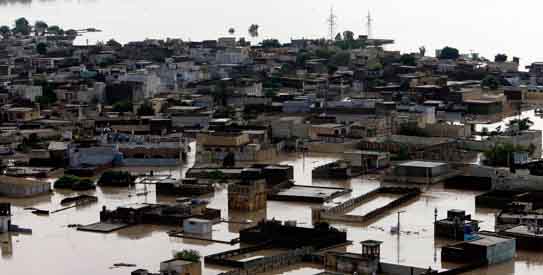
THE GREAT Flood of 2010 which turned Nowshera upside down spared Chen Fu’s Dragon Palace Chinese restaurant by a hair’s breadth, perhaps on compassionate grounds. Dragon Palace is nestled at a serene, little noticed spot just outside the limits of the Nowshera Cantonment on the Grand Trunk (GT) Road. It was one of the few places that were not found submerged in the floodwaters, and in fact escaped unscathed by the silt and mud that the Great Flood had left behind.
Three days after the floodwaters had receded from the main town and when the entire area was still enveloped in darkness, a feeble light was seen flickering in the Dragon Palace. The shutters were raised, and it appeared that business was as usual. One’s gastronomical desires suddenly stirred up, but the same had to be stifled as one was shamed by the grotesque surroundings.
The resilience of the Chang brothers, Chen Fu Chang and Chen Sheng Chang, is indeed incredible. By being content with their meagre business ventures on the fringes of civilisation, the two appear to be those few of the Chinese who seem to have denied themselves the true windfalls spelt by the Deng Xiaoping’s revolutionary economic reforms. The Changs have never been found as much as even whimpering about their sluggish business, and on days when no one turns up, the families assemble around their round dining tables, take their meals and retire to their living quarters on the top floors of their restaurants.
Dragon Palace first appeared on the landscape of Abbottabad in the year 1990 when the small hill station had just started reeling from the ill effects of commercialisation. Back then the once verdant valley still retained some of its charm, as it had not yet turned into an appalling workshop of decayed vehicles and a massive infirmary of teeming patients. The two brothers selected an idyllic corner for their restaurant at a little distance from the hubbub of the central business points, and settled down to presenting Chinese cuisine to what soon turned out to be an indifferent clientele.
A towering chinar tree canopied the restaurant at the entrance of which still stands a statue of tiger in plaster of Paris. The chinar soon fell to the onslaught of concrete, but the restaurant still stands, as a testimony to the indomitable will of the two brothers.
Fu, the elder one, is emaciated, thin and short which lends a boyish looks to his persona. Sheng, the younger one, as he jumps to stress, is portly and palpably more cheerful in disposition. It is perhaps a kind of nuanced openness that has apparently bestowed the commandeering status on the younger brother. Thus when the families expanded, and it was realised that the restaurant would not sustain both the families; Fu had to shift lock, stock and barrel to Nowshera. The restaurant in Nowshera, save for its architecture, is the exact replica of the one in Abbottabad.
With plenty of red chandeliers and the ubiquitous dragon in numerous postures showing him either squatting or flying, flying or fuming, at every conceivable slot, the ambience of the two restaurants represent the Chinese culture in all its popular manifestations. The two even have the same menu catalogues, and quite antiquated at that. The table cloths, crockery and furnishings have rarely if ever been changed ostensibly due to the economic constraints that the Chang families have to put up with. But it is the food that they offer to their limited clientele which in all fairness must be used to rate their standard and ranking. With that being the criteria, the Changs have no rivals in as far as one has traveled in this country and tasted the Chinese cuisine. The hallmark of the Dragon Palace restaurants is the exemplary price range, which one and all can afford with plenty of good taste in the mouth and little strain on the purse in these dizzying days of spiraling inflation.
Changs have styled and named some of their dishes after some popular Chinese provinces like Hunan and Sichuan. The stirred fried chicken, or beef, in hot and sour sauce (Hunan style) is one of the delicacies together with honey fried chicken or beef, which one has not found on any other menu, are simply irresistible. ‘Even if there be similar or more enticing dishes on offer elsewhere, those dishes have an uncanny resemblance in appearance and taste with the Indian curry,’ one heard someone remarking. This is not so in the case of Dragon Palace where the distinct Chinese touch is always quite perceptible.
One may also try fried chicken wrapped in paper in any other Chinese outlet including those set up in the five star hotels and compare it with the one offered in the Dragon Palace. The proof would be instantly known, as the one made by the Changs simply tantalises the taste buds. Same is true of the popular chow mein dishes, and a variety of soups. The sizzling hot and sour soup with a sprinkling of fried rice is one of its kinds available only in the Dragon Palace. Unfortunately, however, Fu has discontinued it in Nowshera citing sluggish clientele issues.It is so very unfortunate that so many of Fu’s decisions are dictated by his economic constraints. On a recent visit he was asked about the availability of jumbo fried prawns, but he had little better to offer in terms of an explanation except a guffaw. He did, however, proposed to offer tuna fish fried in plenty of brown spicy sauces, and that turned out to be quite a savouring substitute.
The two brothers could have made it really big in any other major city of the country, but they seem content with their small time concerns. Here they remind one of the stoic, ancient monks who found Nirvana in the Gandhara, the present day Khyber Pakhtunkhwa. Whatever, the two Chinese, especially Fu, must be given all credit for his great adventure in the godforsaken limits of Nowshera that keeps providing one with scores of opportunity to enjoy the sights and sounds of the fabled GT Road, which one would otherwise avoid for the comforts of the modern Motorway.