0
0

TWENTY-SEVEN years ago, a woman of Pakistan, a qualified gynaecologist of Peshawar, conceived a child which grew within her until, nine months later, Samia was born. She grew, was married to a relative, was unhappy, and four and a half years ago the couple separated.
Samia wished to divorce her husband, which angered her family. She sought the aid and protection of those well-known lawyers, sisters Hina Jilani and Asma Jehangir of Lahore, valiant supporters of human rights whose untiring efforts deserve nothing but gratitude and praise.
On April 6, 1999, whilst Samia was in Hina's office, her mother arrived accompanied by a man who shot Samia dead. On their way out the murderer fired at the police guard provided by the government. The policeman fired back, the murderer was killed. Asma, on her way to the airport to fly off to participate in a Human Rights Conference at Geneva, heard the news and turned back. An FIR was filed against Samia's mother, father (Chairman of the Sarhad Chamber of Commerce and Industry), uncle and brother, all of whom Samia had stated were a threat to her life.
So far, no case has been filed in court in Lahore as the police claim they are still investigating. In Peshawar, Samia's family retaliated, and engaged Barrister Baacha, the frequent 'one-line quotation' correspondent to our press who has been known in the past to speak up for human rights. Baacha filed an FIR against the two sisters accusing them of having abducted Samia.
Subsequently, Senator Iqbal 'Groovy' Haider of the PPP, supported by nineteen fellow Senators, framed a resolution condemning the horrific practice termed in this country, on the eve of the 21st century, as 'honour killings.' Iqbal had to amend the wording of the resolution four times, as the supporting Senators' feet grew cold and the majority of the honourable Upper House vehemently opposed the resolution, Senator Ajmal Khattak claiming that when it is a question of 'honour,' there is no room even for discussion. Chairman Rhodes Scholar Seasoned Flip-Flop Waseem Sajjad unhesitatingly ruled that there could be no discussion on the matter. The resolution was not tabled. Thus has the honourable Senate impliedly legalised murder by invoking honour. The question is, whose honour?
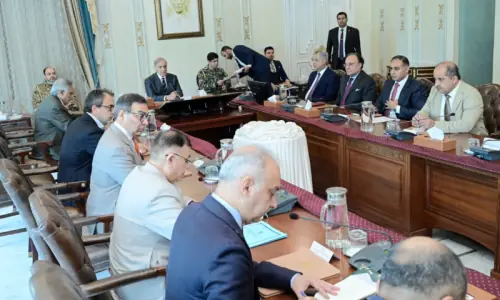
Now we proceed to the depths of the Lower House. On April 13, 1998, MNA Khwaja Asif moved a privilege motion alleging that on March 25 I had used "abusive language" and "threatened him with dire consequences," claiming that his privilege had thus been breached. The Standing Committee of the National Assembly on Rules of Procedure and Privileges then summoned me to appear before it.
I questioned myself. There are some 200 so-called 'honourable' members of the assembly, each capable of making a similar unsubstantiated allegation. If they were all to do so, can hundreds of citizens of Pakistan be summoned to appear at their own cost and waste of time? Is this legal? I consulted my lawyers. A letter was drafted raising queries and questions on a number of issues, and was sent off to the committee secretariat. As I received no reply, it was obvious the committee had no answers. But it persisted in summoning me on succeeding occasions.
On July 31 I was honoured by a visit from Ilahi Bakhsh Soomro, Speaker of the National Assembly. Why can't the committee answer my questions? I asked. They will remain unanswered, he responded. He invoked the bonds of a sixty-year-old friendship and requested that I appear before the committee.
On August 2, I received a notice summoning me to appear on August 6. That same evening the Commissioner of Karachi called to tell me that the committee chairman had issued a warrant ordering that the Sindh government arrest me and produce me before the committee. I informed a relieved Commissioner that I had already decided to attend.
Honouring the request of my old friend, I asked Barristers Makhdoom Ali Khan and Khalid Jawed to draft for me a statement to be presented to the committee. They did so, and it was then settled and approved by Grandmaster Syed Sharifuddin Pirzada.
On August 6, before the committee's proceedings began, I handed over this statement to the chairman requesting that it be placed on record, which he graciously did:
"1) Had I been summoned by a Standing Committee of the National Assembly on an issue of national interest aimed at benefiting the public at large I would have deemed it a matter of great privilege. But, whilst the people remain stricken with poverty, hunger and disease, I am here today solely because of your concern as to whether Khwaja Asif has been abused and threatened by me, as he alleges in his frivolous privilege motion.
"2) Have you taken into account that Khwaja Asif is a director of the defaulting Sialkot Dairies which is liable to return huge loans to many banks, including the ADBP, to which it owes many millions of rupees (last reported figure, some 60 million)? Have you taken into account the fact that Khwaja Asif is a man certainly not known for the modesty of his verbal language, but renowned for his proficiency in expressing himself through his body language which is unmatched even by his peers? Have you taken into account that, to his eternal shame, he has to his discredit a share in the storming of the Supreme Court of Pakistan on November 28, 1997? Have you taken into account that he has to his everlasting discredit the committing of a physical assault upon the former president of the Supreme Court Bar Association, Advocate Muhammad Akram Shaikh, within the premises of the Supreme Court on November 17, 1997, an assault which caused his victim bodily harm? Before enquiring into his privileges you might care to enquire into the above incidents and also as to how it is that a director of a defaulting company was elected to the National Assembly of Pakistan.
"3) Insofar as the allegation of the breach of his privilege is concerned, it is not only manifestly untrue but far too preposterous to merit a serious rebuttal.
"4) In my letter dated December 5 1998 (copy attached hereto), written in response to your notice, I raised the following issues and gave detailed reasons for each:
"(i) Whether the privilege claimed by the member and allegedly breached by a citizen legally exists?
"If the answer to (i) is in the affirmative:
"(ii) Whether the conduct amounting to an alleged breach of privilege is protected by the constitutionally guaranteed fundamental rights, such as the freedom of speech and expression, or by some other law.
"If the answer to (ii) is in the negative:
"(iii) Whether there is prima facie evidence that such conduct which is otherwise not protected by any law was indeed committed.
"If the answer to (iii) is in the affirmative:
"(iv) Whether the committee has the power to summon a person for an alleged breach of privilege for which no prima facie evidence exists?
"If the answer to (iv) is in the affirmative:
"(v) Is it still desirable to summon the person to appear before the committee, keeping in view our democratic aspirations and the desire to be a tolerant society governed by the rule of law?
"5) My conclusion was that no such privilege of a parliamentarian which confers immunity from public criticism and scrutiny was known to law. As for the committee's power to summon me, I have not been made aware of any law which empowers it to so do.
"6) The only response to my detailed reasons was a letter dated July 8, 1999, from the Secretariat which baldly stated that the points raised by me do not have any force. No reason for this assertion was given. This clearly proves that no good reason exists.
"7) If your claim that you are a civil court is accepted merely because a resolution of the single house which adopted the Rules of Procedure so declares, then what is there to prevent it from also declaring the committee to be a criminal court? What then is left for the courts to do if you confer upon yourselves the power of the courts by means of simple resolutions and thus tamper with the liberty and rights of the people? Surely you cannot encroach on the judicial power.
"8) Let me categorically state that I am not here today because of any misconception about the validity of your summons or the legality of the privilege claimed. I am here because freedom of expression is a fundamental right, guaranteed by the Constitution, which must be defended by me and which, I am sure, will be upheld by you."
The proceedings commenced, the chairman announcing they would be held 'in camera' (so they were, a PTV camera man was present). A puzzling decision, considering that matters of public interest were involved. When all was over, I was informed that the committee would consider whether Khwaja Asif's privilege had been breached or not. One member, jumping the gun, suggested that a date be fixed for the next hearing. This, the chairman declined to do.
A matter of honour? Whose honour?