3
3
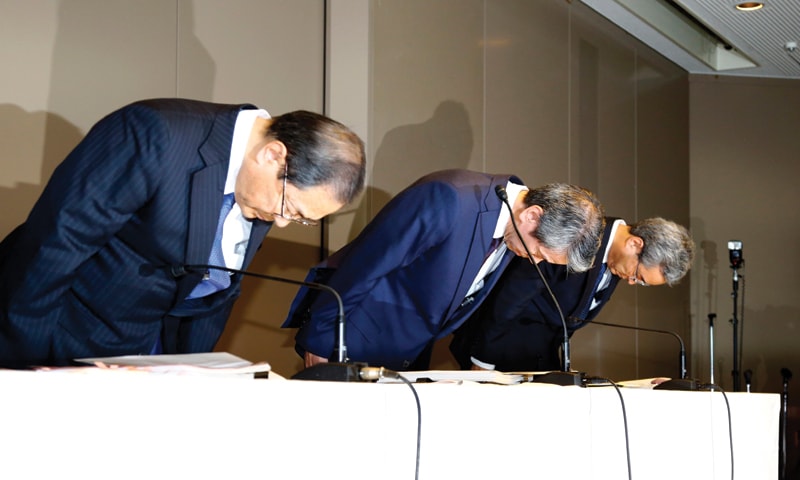
TOKYO: The president of Toshiba along with other high-level executives and directors resigned on Tuesday over a $1.2 billion accounting scandal blamed on management’s overzealous pursuit of profit, in an embarrassing blow to one of Japan Inc’s most-recognised companies.
What happened?
An independent panel’s report said Hisao Tanaka and vice chairman Norio Sasaki — also a former president — as well as other high-level staff were involved in doctoring the company’s books and “systematically” inflating profits dating back to 2008. The findings come less than two months after Japan ushered in a corporate governance code meant to boost firms’ transparency with investors.
How did it happen?
Top managers showed a relentless pursuit of profit and forced employees to fall into line.
“In some cases top management and division leaders appeared to have shared a common objective to inflate profits,” the panel said.
“Employees were pressured into inappropriate accounting by postponing loss reports or moving certain costs into later years... Toshiba had a corporate culture in which management decisions could not be challenged.”
What’s going to happen?
Toshiba’s chairman will take over on an interim basis as the 140-year-old conglomerate overhauls its board. But analysts warn that changing its corporate culture could be tricky. Authorities are expected to slap penalties on Toshiba while the company could also face lawsuits from angry shareholders. It is unclear if Tanaka or any others involved will face criminal charges.
Is this a first for Japan?
No, there have been other accounting scandals in the past.
One of the highest-profile cases involved camera and medical equipment maker Olympus. In 2011, the company’s first foreign chief executive blew the whistle on an accounting fraud that saw $1.7bn worth of losses moved off its balance sheet, sparking lawsuits and the arrest of former executives. They received suspended sentences and Olympus itself was fined 700 million yen.
In 2006, a rising Internet firm Livedoor used stock splits, swaps and share purchases to fraudulently boost its share price. Founder Takafumi Horie was convicted and served a 2.5-year prison term.
In 1998, Long-Term Credit Bank of Japan underestimated bad loan reserves by $4bn. Three executives were convicted on fraud charges, a ruling overturned by the country’s Supreme Court in 2008. The highest court ruled the three were justified in using old accounting rules. The bank was sold to a group of investors in 2000.
Published in Dawn, July 22nd, 2015
On a mobile phone? Get the Dawn Mobile App: Apple Store | Google Play