7
7

RECENTLY, on a call by the Punjab Bar Council (PBC), lawyers in Lahore observed multiple days of strike bringing judicial proceedings to a halt in the lower judiciary. The issue arose as a result of a complaint made by an additional district and sessions judge to the Lahore High Court against an office holder of the Lahore Bar Association.
According to the complaint, upset that the judge had passed an order against his clients, the lawyer in question and his associates misbehaved with the court, used inappropriate and offensive language, tore up court orders, and threatened the judge with ensuring his transfer to another city.
A supervisory committee of the Lahore High Court, comprising the chief justice and six other judges issued a show-cause notice to the lawyer and when he failed to turn up before the committee, proceeded to suspend his licence for three months and refer the matter to the PBC for further disciplinary action.
Interestingly, the PBC was not protesting the conduct of the lawyer in question. It did not ask those involved for an explanation of the matter. It took no notice of the fact that a lawyer had been accused of behaving unacceptably. Instead, the PBC was protesting the taking of disciplinary action against the lawyer by the high court.
The bar council chose to be silent when a lawyer misbehaved.
Indeed, immediately following the high court’s action, the executive committee of the PBC passed an order declaring the court’s order null and void, restoring the lawyer’s licence, and directing the bar associations to display its order on notice boards so that all other lawyers may also be aware. On Saturday, a convention by the PBC also called upon the Lahore High Court chief justice to resign.
The PBC’s argument is that the high court did not act according to the Legal Practitioners and Bar Councils Act, 1973 because the concept of a ‘supervisory committee’ is not mentioned in the act. Yet, it is clear that under Section 54(2) of the act, the high court does have the power to refer matters to the PBC and temporarily suspend licences. That the high court chose to act through a supervisory committee is surely just a matter of internal administration.
However, getting into this argument misses the larger, more important point. The same bar council that became suddenly acutely aware of its statutory role when the court acted, chose to stay silent when the lawyer misbehaved with the court. It not only chose not to exercise its undisputed power to discipline a lawyer, but also moved swiftly to protect the lawyer against action by any other body. Therefore, the real motivation seems not to be any genuine fidelity to the statute, but a protect-at-all-costs mentality.
The fact of the matter is that office holders of the various bar councils and bar associations are elected positions. They need the support and goodwill of masses of lawyers to enjoy their positions. Recent experience has demonstrated that it is simply not possible in the current climate for such office holders to exercise any disciplinary authority over the same electorally active lawyers whose support they require to attain their offices. There is, in other words, complete regulatory capture.
It should be unacceptable for bar institutions to turn a blind eye to incidents of mob behaviour and hooliganism by lawyers, simply to preserve their electoral alliances. It is even worse that they have now gone one step further to actively protect such behaviour. Ironically, this protect-at-all-costs mentality hurts the legal fraternity at large. By protecting mob behaviour and hooliganism, the bar councils destroy their own credibility and that of the legal fraternity. Therefore, in ‘protecting’ the few, they harm the many.
Yet it is essential that such disciplinary authority be effectively exercised. Bar associations and bar councils are important to the administration of justice.
The world over, they work as bodies that further professional development, and ensure that the highest standards are maintained. By doing so, they maintain the trust of the public in the administration of justice. Therefore, they perform not just a service to lawyers, but to the public at large. Their disciplinary authority over lawyers is given to them to protect the public — which has the most important stake in the administration of justice — against lawyers.
The PBC must stop viewing itself as a forum for projecting lawyers’ interests only, and recognise its role towards the public. It must develop the courage of conviction and foresight to distinguish between legitimate and illegitimate demands. If it cannot do so, then the disciplinary power should be handed over to an independent forum. The bar needs to decide once and for all whether there is any place at all for hooliganism and mob mentality in the profession.
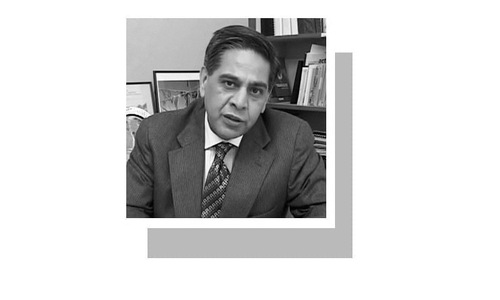
The writer is a Lahore-based lawyer.
Published in Dawn October 18th, 2016