‘CPEC placed in cold storage due to influence from West’


 22
22

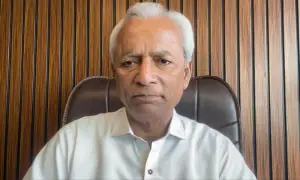
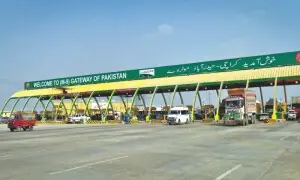
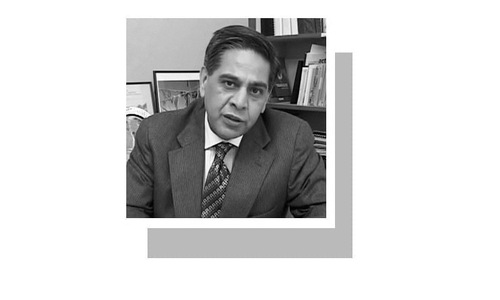
KARACHI: Well-known economist Dr Kasier Bengali has said that Pakistan’s economic policies are being made in Washington and the International Monetary Fund (IMF) has sent its people to sit in major institutions, which is why there is no mention of the China-Pakistan Economic Corridor (CPEC) in the budget 2020-21.
Speaking during a webinar organised by the Pakistan Institute of Labour Education and Research (Piler) on Sunday, he said due to the influence from the West the government had placed CPEC in cold storage. “Pakistan’s economy is mainly relying on foreign loans, so the economic managers are trying to appease the IMF and other international lenders by not mentioning the CPEC,” he said.
“The budget 2020-21 is a traditional budget, which has no focus on changing economic priorities,” he remarked.
He said many industries in various sectors of Pakistan’s economy were feared to be closed down due to the economic crisis arising after the coronavirus pandemic, which may render millions of employees jobless.
Dr Bengali, who has himself remained the economic advisor to various governments in the past, said that no relief was provided to the working class in the budget 2020-21.
“In fact the budget 2020-21 is an attempt to extract maximum tax revenue from the pockets of the common people as the government has made the budget on instruction from the IMF,” he remarked.
According to him, the federal government is going to increase prices of utilities in September or October as the prices of electricity and gas have not been increased in the budget.
Dr Bengali pointed out that despite the economic crisis, the government has not reduced its non-development budget and funds for running government departments.
“The government has shifted the blame on Covid-19 for all ills of the economy, but before the pandemic the economy was already on the ventilator,” he said.
He said that Pakistan’s economy is being run on foreign as well as domestic loans and no measure has been provided to reduce the burden of loans.
“All economic targets for the budget 2020-21 are fixed ambitiously as the government had miserably failed to achieve any major targets fixed during the current fiscal year [2019-20],” he said, adding that the Federal Board of Revenue was lagging behind in its tax collection targets.
According to Dr Bengali, mafias are running the economy and industries in Pakistan. “For example, the sugar mafia has been receiving subsidies for many years, which is made legal, flour mills are receiving wheat on discounted rates but they sell flour at exorbitant rates and paper manufacturing industries have monopoly which is affecting the local publishing industry.”
He said once the prices are increased in Pakistan they don’t come down. The mafias create artificial shortage of supply, which further increases the prices. When the government reduced the prices of petroleum products, the cartel of petroleum companies has created artificial shortage of petroleum products all over the country, he said.
“Sindh and Balochistan are producing gas but they are not receiving the proportion of the subsidies. Punjab is consuming 60 per cent of fertilizer, whereas Sindh is using only 20 per cent and Balochistan only four per cent. Punjab is enjoying a major share in subsidies at the cost of Balochistan,” he remarked.
Published in Dawn, June 15th, 2020