2
2

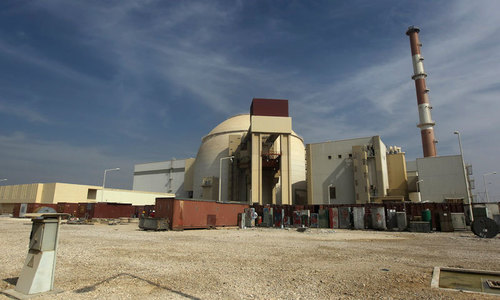
TEHRAN: Iran named a suspect on Saturday in the attack on its Natanz nuclear facility that damaged centrifuges there, saying he had fled the country hours before the sabotage happened.
While the extent of the damage from the April 11 sabotage remains unclear, it comes as Iran tries to negotiate with world powers over allowing the US to re-enter its tattered nuclear deal and lift the economic sanctions it faces.
Already, Iran has begun enriching uranium up to 60 percent purity in response three times higher than ever before, though in small quantities. The sabotage and Iran’s response to it also have further inflamed tensions across the Mideast, where a shadow war between Tehran and Israel, the prime suspect in the sabotage, still rages.
State television named the suspect as 43-year-old Reza Karimi. It showed a passport-style photograph of a man it identified as Karimi, saying he was born in the nearby city of Kashan, Iran.
The report also aired what appeared to be an Interpol red notice seeking his arrest. The arrest notice was not immediately accessible on Interpol’s public-facing database. Interpol, based in Lyon, France, declined to comment.
The TV report said necessary actions are underway to bring Karimi back to Iran through legal channels, without elaborating. The supposed Interpol red notice listed his foreign travel history as including Ethiopia, Kenya, the Netherlands, Qatar, Romania, Turkey, Uganda and the United Arab Emirates.
The report did not elaborate how Karimi would have gotten access to one of the most secure facilities in the Islamic Republic. However, it did for the first time show authorities acknowledging an explosion struck the Natanz facility.
There was a limited explosion of a small part of the electricity-feeding path to the centrifuges hall, the TV report said. “The explosion happened because of the function of explosive materials and there was no cyberattack.
Initial reports in Israeli media, which maintain close relations to its military and intelligence services, blamed a cyberattack for the damage.
The Iranian state TV report also said there were images that corroborated the account of an explosion rather than cyberattack offered by security services, but it did not broadcast those pictures.
The report also showed centrifuges in a hall, as well as what appeared to be caution tape at the Natanz facility. In one shot, a TV reporter interviewed an unnamed technician, who was shown from behind likely a safety measure as Iranian nuclear scientists have been assassinated in suspected Israeli-orchestrated attacks in the past.
The sound that you are hearing is the sound of operating machines that are fortunately undamaged,” he said, the high-pitched whine of the centrifuges heard in the background.
Published in Dawn, April 18th, 2021