3
3
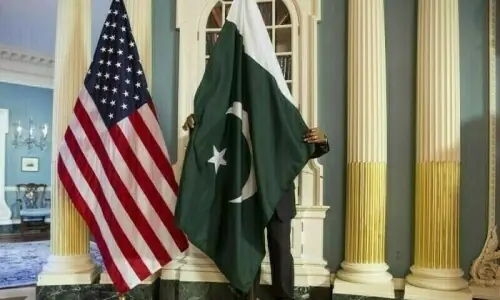
THE two key takeaways from Foreign Minister Shah Mahmood Qureshi’s trip to Iran on Wednesday were the need for better border security and trade relations between Islamabad and Tehran. The meeting with President Hassan Rouhani was cordial, with the Iranian leader stressing that “security is a common concern” for both states while also adding that bilateral trade activities needed to be further improved. The fact is that the Pakistan-Iran relationship, though amiable for the most part, has not been able to grow to its full potential. There are various reasons for this, most of them being geopolitical. While both states share a long border and centuries of cultural, linguistic and religious ties, these links have failed to translate into robust bilateral trade relations. President Rouhani hinted at “unimplemented agreements” standing in the way of better trade ties, specifically mentioning the stalled Iran-Pakistan gas pipeline project. Pakistan has been wary of attracting US sanctions and annoying friends and benefactors in the Arab world by getting too close to Iran in the post-1979 era. However, it needs to explain to its friends that one relationship does not need to come at the cost of the other.
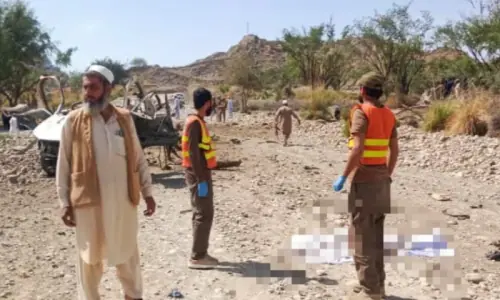
Official Pakistan-Iran trade is only in the region of a few hundred million dollars. This figure can grow manifold if both states decide to significantly improve trade ties. For example, there is a thriving informal border trade in Balochistan. If this were formalised and the requisite facilities provided in this underdeveloped part of the country, it could bring jobs to the impoverished region. The recent deaths of Zamyad drivers in the border area due to hunger and thirst point to the appalling fact that barely any facilities exist in this desolate region. This can change if both Iran and Pakistan decide to enhance bilateral trade through Balochistan. While the opening of a third border crossing at Pishin-Mand is a welcome move, many more such points are required, along with infrastructure — roads, utilities, shops catering to the needs of traders and travellers — to facilitate trade. If trade brings with it economic prosperity, security concerns can also be lessened as locals on both sides of the border are provided employment. The two countries need to work on a joint roadmap to promote trade, while Pakistan specifically needs to tell those who may be unsettled by the thought of better ties with Iran that there is no reason for concern.
Published in Dawn, April 23rd, 2021