18
18
ELECTION reform has become yet another polarising issue between the government and the opposition. The PTI has been consistently pushing EVMs as a modern, scientific way of ensuring free and fair polls while opposition parties are resisting the move claiming that the machines will, on the contrary, be conducive to rigging.
On Tuesday, the ECP, which had already expressed its reservations about the EVMs earlier, weighed in with specific objections — 37 of them, to be exact — contained in a document submitted to the Senate Standing Committee on Parliamentary Affairs. The ECP’s objections include, among others, the concern that the machines are not tamper-proof and have software that can be easily altered; there is not enough time for such large-scale procurement and deployment of EVMs and training the massive number of operators required; there are security issues involving the chain of custody.
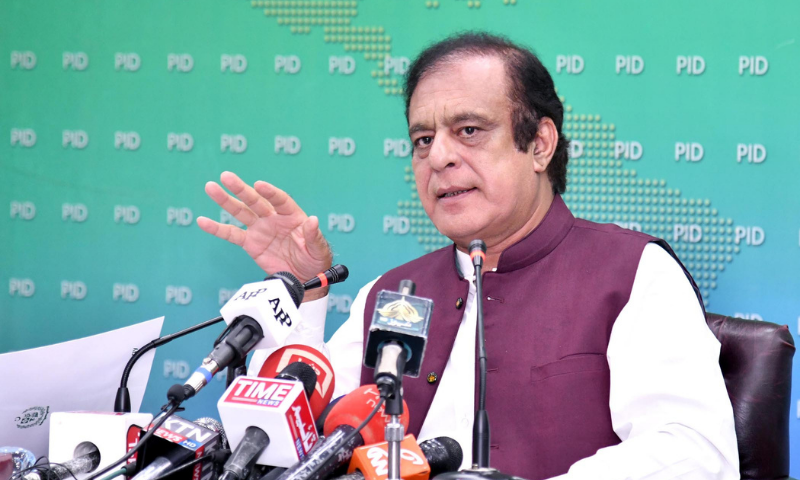
These points alone would be enough to throw the integrity of the polls into serious doubt. However, the government has rejected the ECP’s arguments. Science and Technology Minister Shibli Faraz said yesterday that 27 of the objections were on account of the commission’s own lack of capacity, while the indigenously developed EVM addressed the remaining 10. He also doubled down on the government’s resolve to introduce EVMs for the next election, saying it was “fully determined” to pass the necessary legislation.
Read: Reconsidering electronic voting
The government must reconsider its stance. Now that there is a renewed push for electoral reforms, it is critical to get them right — and for that, consensus between the government and opposition parties is key. At this point, they cannot even agree on prospective names for the appointment to the two ECP posts that fell vacant after the retirement of the members and it seems increasingly likely that the constitutionally mandated deadline for the appointments is likely to be missed.
The 2018 election, like many others before it, was marred by controversy and the allegations continue to vitiate the political atmosphere. The European Union election observers’ report on it pointed out several major shortcomings in the essential ingredients that together are imperative for free and fair polls — transparency, a level playing field and a free media. In the document it submitted to the Senate committee, the commission also mentioned a number of election-related problems that EVMs will do nothing to address. They include low voter turnout, low women’s turnout, misuse of state authority, election fraud, ballot stuffing, vote buying, dishonest polling staff, misuse of state resources, etc. Significantly, some of these problems fall in the category of pre-poll rigging, which queers the pitch long before anyone casts a vote. While EVMs can certainly be introduced in future elections, it must be done not in haste but after sufficient parliamentary debate and adequate preparation for such a radical change in the method of voting. For 2023, the old-fashioned paper ballot is likely the safest route.
Published in Dawn, September 9th, 2021