Ghost towns and old men in Afghanistan’s Panjshir valley


 5
5

BAZARAK: Fighters in Afghanistan’s Panjshir vowed to battle the Taliban to the last man, but nearly two weeks after the latter celebrated victory, parts of the rugged valley lie empty and abandoned.
In many villages, only old men and livestock remain.
Sitting under the awning of a closed shop, Abdul Ghafoor contemplates his deserted village, perched on the side of a rocky hill in the district of Khenj.
“Before, almost 100 families lived here,” he said. “There are only three left now. Everyone has left.”
Most had fled south to the capital Kabul before the Taliban swept in last month, he said.
Further up the valley at Malaspa, along a strip of green along the tumbling river, villagers once met to share gossip and news.
Now only a donkey and Khol Mohammad — aged 67 and limping with a bad leg — remain in Malaspa with a few others left in the vicinity.
“A few families stayed, but some 80 others all left,” he said.
It is the same story in village after village visited by AFP, travelling through three of the hardest-hit of the province’s seven districts.
A few shops or stalls, mainly bakeries, are still open but the markets — usually crowded with traders and customers — mostly lie empty.
“There is no one left, except the elders, and the poor who cannot afford to leave,” said Abdul Wajid, 30, who stayed behind to watch over the family home.
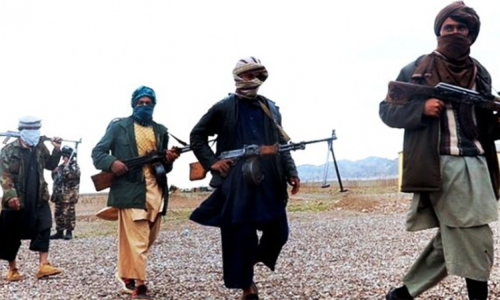
The only people busy are the heavily-armed Taliban who now lay claim to most of the mountain valley.
They guard roadblocks or patrol the dusty roads in pickup trucks seized as spoils of war during their lightning rout of government forces.
Panjshir fighters earned a legendary reputation for resistance, defending their mountain homes first from the Soviet military for a decade, then throughout a civil war, then the last Taliban regime from 1996 to 2001.
The 115-kilometre-long valley surrounded by jagged snow-capped peaks offers defenders a natural military advantage.
However, the Taliban were emboldened by their sweeping victories across the rest of the country, where they seized an enormous arsenal of weapons and military kit that the now-departed US had provided to the defeated Afghan army.
Several Panjshir leaders, including Ahmad Massoud — the son of the late veteran fighter Ahmad Shah Massoud — vowed never to surrender to the Taliban.
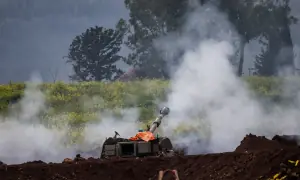
They put up some fight, with the evidence of their resistance in the twisted and charred remains of Taliban armoured vehicles and pickups.
But the Taliban, outnumbering the Panjshiri fighters and much better equipped, shrugged off the losses to power up the valley.
Earlier this month the Taliban declared victory, hoisting their white flag.
It is unclear what remains of the resistance and whether its leaders are even still in the country.
Published in Dawn, September 17th, 2021