Iraq’s court rejects pro-Iran group’s appeal against election results


 5
5

BAGHDAD: Iraq’s top court on Monday ratified the country’s October parliamentary election results after rejecting a complaint of irregularities filed by the pro-Iran Hashed al-Shaabi former paramilitary alliance.
The long-awaited ruling will allow parliament to meet and pave the way for the election of a president who will then appoint a prime minister tasked with forming a new government.
Iraq is trying to recover from years of war and jihadist violence but remains hobbled by political divisions, corruption and poverty.
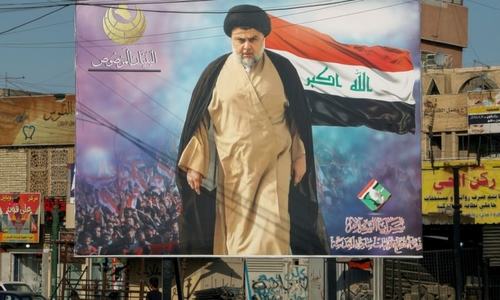
The ratification follows a delay of more than two months since the October 10 legislative polls won by Shia cleric Moqtada Sadr, a political maverick and former anti-US militia leader who opposes all foreign interference.
Sadr’s movement won more than a fifth of the seats — 73 out of the assembly’s total 329, well ahead of the 17 seats of the Fatah (Conquest) Alliance, the political arm of the pro-Iran Hashed.
That was sharply down from the Alliance’s 48 seats in the outgoing assembly. Hashed leaders rejected the result as a “fraud”.
They took their case to court seeking “to have the results annulled” because of “serious violations”, their lawyer said earlier in December when the hearing began.
Judge Jassem Mohamed Aboud of the Federal Supreme Court on Monday said the tribunal “rejects the request of the plaintiffs... not to ratify the final results of the election”.
He declared the judgment “binding on all authorities”.
Later the court media officer announced that the body “has ratified the results of the legislative elections”.
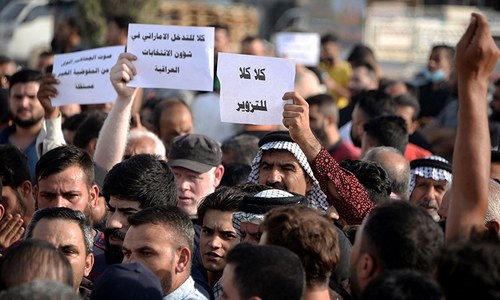
The Hashed had also organised protests over the preliminary election results. Political tensions soared, and in November at least one protester was killed and more than 100 injured when police clashed with demonstrators.
The Fatah Alliance alleged the electronic voting system had failed to recognise the fingerprint identification of many voters.
On Monday, Fatah Alliance leader Hadi al-Ameri reiterated “the profound conviction that the electoral process was tainted by fraud and manipulations.” He said he would accept the court’s verdict but accused it of coming under “heavy pressure.” Iraqi analyst Ihsan al-Shamari said that was not the case.
“The most important thing about the verdict is that the judiciary did not bow to pressure from the losing parties,” he said.
Judge Aboud, reading out the verdict, said the court also decided to make the plaintiffs bear the costs of the appeal.
In multi-confessional and multi-ethnic Iraq, the formation of governments has involved complex negotiations ever since the 2003 US-led invasion toppled dictator Saddam Hussein.
The prime minister tasked with forming a cabinet line-up will be, according to tradition, chosen by the largest parliamentary coalition.
Sadr, a self-styled defender against all forms of corruption, has repeatedly said that the next prime minister will be chosen by his movement.
He has also demanded that the new government include members of political parties and blocs which scored highly in the October polls.
The scion of an influential clerical family who led a militia against the 2003 US-led invasion of Iraq, has distinguished himself from other Shia factions by seeking to distance himself from both Iranian and US influences.
The Hashed alliance which helped defeat the militant Islamic State group holds opposing views.
It has said that the choice of a new prime minister should be made through compromise.
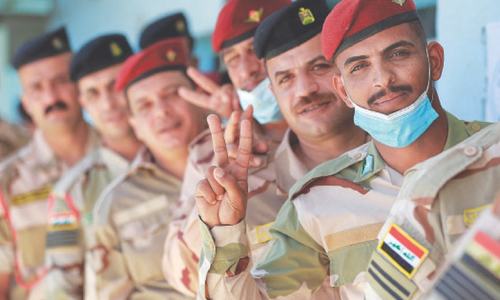
Backed by Iran and supported by 160,000 fighters who are now integrated into the regular armed forces of Iraq, the alliance remains a force to be reckoned with despite its losses in the October vote.
Aboud said the new parliament should amend Iraq’s electoral law and opt for a manual count of ballots in order to protect the credibility and transparency of future elections.
Published in Dawn, December 28th, 2021