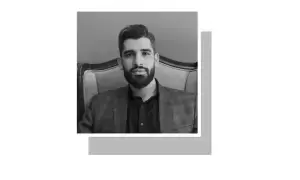
FM Bilawal responds forcefully to Indian terror allegations


 126
126

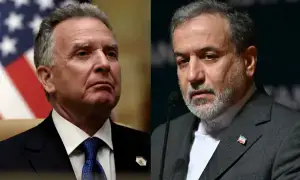
UNITED NATIONS: “The butcher of Gujarat lives, and he is the prime minister of India,” Foreign Minister Bilawal Bhutto-Zardari told a UN briefing room on Thursday, minutes after his Indian counterpart accused Pakistan of perpetuating terrorism and sheltering Osama bin Laden.
“I would like to remind Mr Jaishankar that Osama bin Laden is dead, but the butcher of Gujarat lives, and he is the prime minister (of India),” said the Pakistani foreign minister while responding to Indian Minister of Foreign Affairs S. Jaishankar’s remarks.
“He (Narendra Modi) was banned from entering this country (the United States). These are the prime minister and foreign minister of RSS, which draws inspiration from Hitler’s SS,” he added.
Minutes before Mr Bhutto-Zardari’s briefing, Mr Jaishankar addressed the media at a UN stakeout site, repeating the allegations he made inside the UN Security Council on Wednesday, where he accused Pakistan of “hosting Osama bin Laden”.
Says not ‘pursuing or receiving’ discounted energy from Russia
He also responded to the remarks Minister of State for Foreign Affairs Hina Rabbani Khar made in Islamabad on Wednesday, calling India “the biggest perpetrator of terrorism”.
Mr Jaishankar said that Ms Khar’s remarks reminded him of the then US Secretary of State Hillary Clinton’s visit to Islamabad more than a decade ago when she reminded Pakistan that “if you have snakes in your backyard, you cannot expect them to bite only your neighbours”.
He claimed that Pakistan was “not great at listening to good advice … and now look what’s happening there. Today, it’s the epicentre of terrorism … and has its fingerprints over a lot of activities in the region and beyond”.
Urging Pakistan not to blame others, the Indian minister asked: “How long Pakistan intends to practice [terrorism] and hide it by taking that debate elsewhere? Please clean up your act. Please try to be a good neighbour.”
At Mr Bhutto-Zardari’s briefing, a journalist asked him why the Indian and Pakistani foreign ministers were engaged in a war of words.
“This is not in a war of words. I have not noticed,” the minister said, adding that he was a victim of terrorism as his mother was killed by terrorists along with thousands of other Pakistanis.
“We have lost far more lives to terrorism than India did,” said Mr Bhutto-Zardari while pointing out that “India has been playing in the space” that has made it “very easy” to bracket Muslims with terrorism. “India has very skilfully blurred this line, making like us all terrorists who are actually victims.”
The Pakistani foreign minister noted that India has continuously perpetuated this philosophy, not just for Pakistani but Muslims in India too.
Energy from Russia
Meanwhile, in an interview with PBS Newshour, Mr Bhutto-Zardari said Pakistan “is not pursuing or receiving” any discounted energy from Russia, according to a Dawn.com report.
“As far as Russia is concerned, we aren’t pursuing or receiving any discounted energy, but we are facing an extremely difficult economic situation, inflation, pump prices,” he said. He, however, admitted that Pakistan was facing energy insecurity. “We are exploring various avenues to expand our areas where we can get our energy from,” he said, adding that “any energy from Russia will take a long time for us to develop.”
Last week, State Minister for Petroleum Musadik Malik announced that Russia had decided to provide crude oil, petrol, and diesel to Pakistan at discounted rates. Mr Malik said that detailed terms and conditions of the discounted oil commodities would be settled during the upcoming visit of the Russian energy minister to Islamabad by mid-January, but rates would be similar to the discount being given to other countries or even cheaper.
Before that visit, the two sides would crystallise proposals to a stage where an executive summary or an agreement could be signed and supplies start flowing, Malik had added.
Published in Dawn, December 16th, 2022