0
0
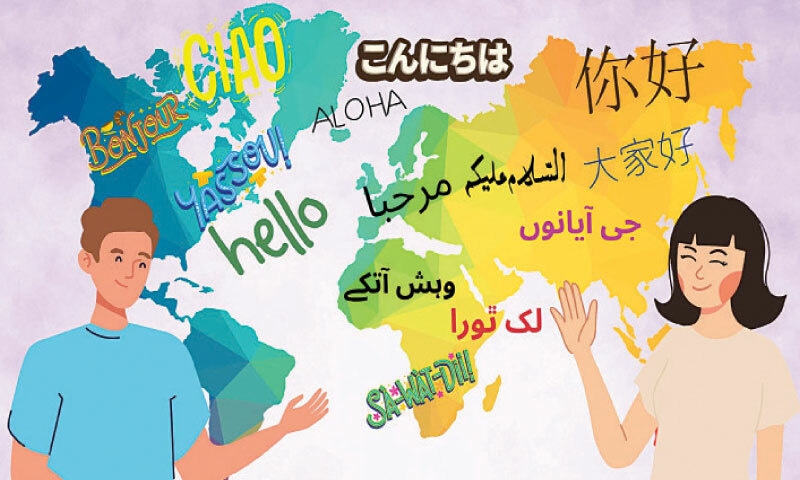
Once I was sitting with my siblings, having a fun conversation. Suddenly, my sister used a word from our native language that was completely new to me. Curious, I asked her what it meant.
After she explained, and I wondered aloud how we had never used it before. She simply said that it had come to her mind at that moment, perfectly fitting the situation. I marvelled at the uniqueness of my mother tongue.
On another occasion, during a casual conversation, I found myself pausing mid-sentence, struggling to recall the right word in my mother tongue. It was a simple, familiar word — one I had spoken countless times as a child. And yet, in that moment, it slipped from my mind. I sat there, trying to remember it, but I couldn’t. This happened several more times, and I struggled to find the right words to express my feelings in my mother tongue. This was probably because I use Urdu and English more often in conversation in everyday life than I do my mother tongue.
Unable to put my thoughts into words correctly in my mother tongue, I had to code-switch and use an Urdu word to convey my emotions. The code-switching did its job perfectly, but it left a lingering void — why couldn’t I express my thoughts in my mother tongue?
It was then that I realised that my mother tongue, the very language that shaped my childhood, the language I had spoken all my life, was fading from my daily existence. Not entirely, but its essence, its depth, was slipping away. I found myself relying more on the dominant languages around me, and though I still spoke my mother tongue, it was increasingly filled with foreign words, as if my own language no longer had the words I needed.
There is no doubt that linguistic diversity enriches societies, developing cultural exchange and mutual understanding, but losing a mother tongue weakens a community’s identity, disconnecting future generations from their roots, heritage and the wisdom embedded in their native language.
We must realise that when a language fades, we lose more than just words — we lose the stories passed down through generations, the traditions that define a culture and the collective wisdom of those who came before us, making the mother tongue an irreplaceable part of who we are.
Take pride in your mother tongue
I have come across many families who speak their mother tongue infrequently and prefer speaking in the second and third languages that are commonly being used around them. When I asked for the reason, they said that their kids find it easy because their friends speak those languages. As a result, many of these children have limited knowledge of their first language.
On the contrary, the more languages a child learns, the more their cognitive skills are enhanced. Having a different mother tongue from your second or third language is a privilege, as it expands your vocabulary and linguistic abilities. It gives you a distinct culture of your own — something to take pride in and feel connected to.
A study published in The Journal of Neuroscience (2016) found that bilingual children develop denser grey matter in brain areas linked to executive function, enhancing their ability to multitask and process information efficiently.
In short, the idea that learning multiple languages confuses children is a myth — science proves that it enhances brain development, cognitive flexibility and problem-solving skills.
Language as an inheritance
A mother tongue is more than a means of communication — it is an inheritance you receive in terms of culture, the stories, myths and literature created in that language, the unique expressions and idioms, songs, prayers and poetry that hold emotional bonds, and ways of thinking and perceiving that are rooted in the language’s structure.
The problem is that we focus on languages that offer educational success, better employment and social status, often ignoring the one that first shaped our thoughts and identity. Over time, the words that once felt familiar start to fade, and our bond with our mother tongue grows weaker.
When languages are lost or when people become disconnected from their heritage languages, they lose access to this inheritance. This is why language revitalisation efforts are so important — they’re about reclaiming an inheritance that connects people to their roots and provides a foundation for cultural identity.
Emotions can’t be translated
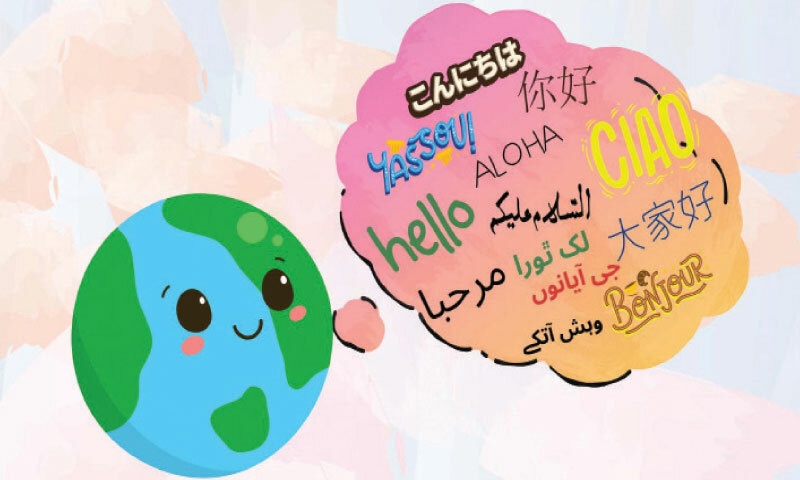
Have you ever considered what language your thoughts run in? It is usually our mother tongue in which we first think and execute ideas, before moving to a second or third language. Some emotions are too deep and too raw to be fully expressed outside our native language.
Besides, some words have no direct equivalents in other languages — they are soaked in history, wrapped in cultural meaning and engrossed by the emotions of those who speak them. For instance, in Sindhi, the word sik conveys an intense longing — a feeling so deep that native speakers use it only in moments of overwhelming emotion. There are many words in all native languages that are unique to their own culture and often have no exact equivalent in other languages.
But what happens when you stop speaking those words? When they become rare, buried beneath the languages of convenience? The emotions tied to them start to fade, too. It is a loss greater than just vocabulary, in other words, it is the slow disappearance of a part of your soul.
A silent loss, a quiet resistance
Losing a language is not always sudden. It happens silently, often choosing a simpler word in a dominant language, switching in the middle of the sentence and thinking in a language that is not your own. It happens when you hesitate before using a word because you’re unsure if it’s correct. It happens when you start explaining cultural terms in another language because it feels easier. It happens when you feel better and more expressive in a foreign language than your own native language.
It is a quiet surrender. One day, we realise that we speak our native language only when necessary. We start dreaming in another language. We write more fluently in a language that isn’t our own. And slowly, the words that once defined our world begin to fade.
The moment I realised my mother tongue was fading, I knew I had to hold on to it. So I resist. I now make an effort to speak it wherever I find its native speakers, even when it feels clumsy. I try to read books in my native language, letting the words settle into my mind like long-lost friends. I find joy in remembering the expressions my parents and grandparents used, and passing them down to the next generation.
To lose a language is to lose a part of ourselves. And I am not ready to let go.
Safeguarding our mother tongue is more than preserving words; it is to secure the bridge between our past and future — it’s about making sure our heritage stays alive and continues to be heard, even as time passes.
So, little friends, remember that you are the guardian of your mother tongue, preserve it, nurture it and keep it alive. It is your strength, your identity and your deepest connection to your roots. Let it anchor you so firmly that no force in the world can ever uproot you.
International Mother Language Day is observed every year on February 21st to promote linguistic and cultural diversity and multilingualism. International Mother Language Day, first proclaimed by UNESCO and later adopted by the UN General Assembly, underscores the role of languages in promoting inclusion and achieving Sustainable Development Goals.
Published in Dawn, Young World, February 22nd, 2025