0
0
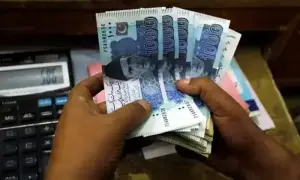
KARACHI: Banks have taken back about 48 per cent of the money they lent to the private sector within a month, indicating that the private sector has no plans to enter the market with new ideas or ventures.
From July 1, 2024, to Jan 17, 2025, the private sector borrowed Rs1.398 trillion from banks, but most of the lending in the last two months of CY2024 (Nov and Dec 2024) was carried out by banks to avoid the penalty for failing to maintain a 50 per cent advance to deposit ratio (ADR).
The latest SBP data shows that rapid withdrawal of money lent to the private sector was a temporary arrangement to avoid the payment of tax. It also shows that the private sector is not ready with projects to utilise money lent to it by banks.
Up to Jan 17, 2025, the total lending to the private sector was Rs1.398 trillion, but it fell almost by half to Rs742bn on Feb 24.
Rapid repayment shows lenders only gave money to avoid tax on deposit
Banks’ withdrawal of Rs656bn (48.3 per cent) within a month makes it clear that private sector participation would remain as low as it was last year.
The situation for borrowing is encouraging as the State Bank has slashed the interest rate by 1000 basis points to 12 per cent since June 2024.
Development spending cut
The Public Sector Development Programme (PSDP) has shrunk to just Rs148 billion in the first half of the current fiscal year against a revised allocation of Rs 1.1 trillion
According to half-yearly (July-December 2024) data released by the Ministry of Planning and Development, the total PSDP spending stood at about Rs148bn, accounting for about 10.5pc of the original budgetary allocation of Rs1.4tr.
During the same period, the country faced a revenue shortfall of Rs386bn against the target.
Both the government and private sector spending for development is not enough to reach even the targeted 3.2 per cent GDP growth for FY25.
Stringency is needed to meet the IMF target for a lower fiscal deficit, but domestic borrowing in the first half of FY25 rose by Rs2.723 trillion to Rs49.883tr. During the same period the government received Rs2.7tr from the State Bank as profit.
Despite this injection the shortage of liquidity and poor spending on PSDP is expected to damage the growth target.
Banks are still looking for investing their maximum liquidity in government papers and are not ready to take risk. Bankers said the risk is high due to uncertainty on the political front while US trade policy under President Trump could also bring bad news for Pakistan.
“There is no policy to measure the risks coming from the US trade war with China and the economic decline in the Europe,” said S.S. Iqbal, a senior banker.
The SBP data shows that Islamic banks showed aggressive lending and a willingness to manage their liquidity with the private sector.
Out of a total amount of Rs742bn with the private sector up to Feb 14, the Islamic banks’ lending was Rs550bn. Lending by conventional banks amounted to just Rs142bn while Islamic branches of conventional banks lent Rs50bn.
Published in Dawn, February 28th, 2025