0
0

LAHORE: A two-day Sanjh Saahat Mela by Sanjh Publications and Lok Sangat in collaboration with the Punjab Institute of Language, Art and Culture (Pilac), kicked off at Pilac on Saturday.There were food and bookstalls at the festival. The food stalls offered traditional food such as biryani, dahibhalayandchannachat. There were also food stalls offering fries, tea,fresh juices, and cold drinks. The book stalls by Sanjh and Pilac had plenty ofbooks on different topics. Sanjh had put on display books at 50 per centdiscount.
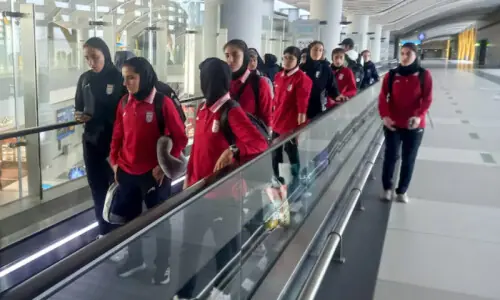
The turnout at the festival could not draw a crowd as due to the matches of the ICC Women’s World Cup qualifying round taking place at Qaddafi Stadium, the venue had beefed up security. Both gates of Qaddafi Stadium were closed from the Ferozepur side and from the Liberty side too. The only gate outside Qaddafi Stadium facing Ferozpur Road was being used for car parking and entrance. To many visitors, both Sanjh and Pilac should have mentioned on invitation cards that only the gate facing Ferozepur Road should be used. The festival visitors also complained about dirty washrooms on Pilac premises.
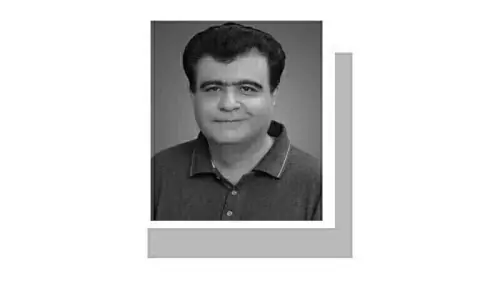
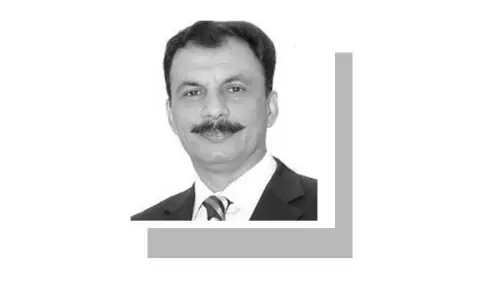
The festival featured bookstalls, music and intellectual discussions on different topics. The festivalwas organised for the promotion of Punjabi language and culture. Theintroductorysession of the festival featured Amjad Saleem Minhas, director of SanjhPublications, Prof Dr Ali Usman Qasmi from LUMS and Peter Jacob, executive directorof Centrefor Social Justice.
Mr Minhas, in his introductory remarks, thanked Pilac for providing the venue for the Punjabi festival. He said Sanjh had long been publishing books on diverse topics and in all languages such as Sindhi, Balochi, Seraiki, and of course Punjabi. He said Sanjh published books on such topics which were not mainstream; the topics that lead to progressive thought processes. He said Sanjh in his struggle had always tried to tread the path of progressive thoughts, though in that journey or process resistance had been offered. He underlined the need to provide space in the country to mainstream political parties.
Mr Qasmi, scholar and historian, threw light on the historical perspectives of Punjab and what different historians from the past years and present times had written about Punjab. He mentioned a great historian, Manzoor Ejaz, saying that the late Ejaz wrote a valuable book on the history of Punjab. To Mr Qasmi, Punjab was an ecological zone; it was an ecological civilization; if one looks through the annals of history. It was associated with the Indus Water Treaty. He said Punjab’s Sufi poets played a pivotal role in promoting a culture of tolerance and deterring the moves of the spread of sectarianism through their poetry and teachings. He was of the view that Punjab needed to have a dialogue with other provinces as there was a need to ascertain the Punjabi national identity.
Mr Jacob, who also presided over the introductory session of the festival, added that the Punjabi language and culture should be promoted. The misconceptions, if there are any, should be cleared.
A book of short stories titledMaasby Shahid Shabbir was launched in China Hall at the festival. The book launch was moderated by Iftikhar Mittra; the panellists were Prof Rauf Tahir Haidery, Dr Shabnam Ishaq and Sameer Asim Farooqi. Mr Farooqi said that the book had unique topics and a unique approach towards knitting the stories. The book, he said, discusses marginalized communities, special persons, and the feelings and behaviours of animals in a novel way.
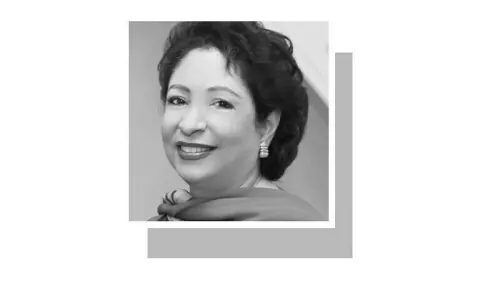
Dr Ishaq, commenting on the book, said that stories written in the book reminded one of childhood stories; this book can be considered a fairly good book for children as well. Ms Ishaq said that the book had an element of dramatics about it; one felt as if some performance was taking place while reading the stories of the book. She said the book was also reflective of present-day society and the approaches of people towards life. She said that the stories of the book should be enacted and presented in the form of theatre for children. She said the topics of the book were not national but international level; the book was well connected with Nature, she added.
Prof Tahir said the book was also reflective of a deep study on animals and how beautifully the author had written about marginalized communities. He said the book did not have traditional topics to discuss but it offered a fresh wave of thoughts and ideas. The treatment of the stories was entirely different, and it takes one to a performing stage as stories had an element of dramatics about them.
There was also a thought-provoking session on Shiv Kumar Batalvi’s poetry; his poetry was also sung as part of the music activity at the festival. On Sunday, Azad Theater will stage its popular playKi Jannan Mein Kaunat the festival. There will again be book launches and thought-provoking sessions at the festival.
Published in Dawn, April 6th, 2025