Nigeria flooding death toll jumps past 200

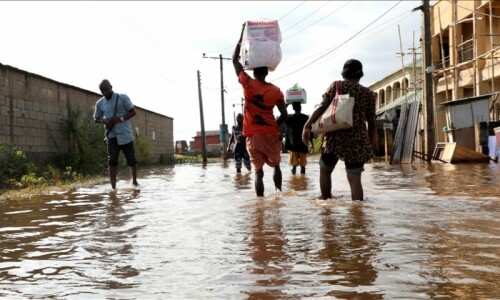
Flash flooding in north-central Nigeria last week killed more than 200 people, the Niger state humanitarian commissioner said Tuesday, while hundreds more remain missing and are feared dead.
The town of Mokwa was hit with the worst flash flood in living memory Thursday from overnight rains, with more than 250 homes destroyed and swathes of the town wiped out in a single morning.
The announcement comes after several days of the official toll standing at around 150, even as residents were sometimes missing more than a dozen members in a single family.
“We have more than 200 … corpses,” Ahmad Suleiman told Nigerian broadcaster Channels Television, adding: “Nobody can tell you the number of casualties in Niger state right now because up till now, we are still looking for some corpses.”
“We’re still looking for more,” he added. But, he said, “sincerely speaking, we cannot ascertain.”
Given the number of people still missing nearly a week later, the toll from a single morning of flooding in Mokwa could be worse than all of 2024 combined, which saw 321 deaths from flooding across the country.
Climate change has made weather swings in Nigeria more extreme, but residents in Mokwa said human factors were also at play.
Water had been building up for days behind an abandoned railway track that runs along the edge of the town, residents told AFP.
Floodwaters would usually pass through a couple of culverts in the mounds and run into a narrow channel. But debris had blocked the culverts, forcing water to build up behind the clay walls that eventually gave way.
Floods in Nigeria are often exacerbated by inadequate drainage, the construction of homes on waterways and the dumping of waste in drains and water channels.
Volunteers and disaster response teams have recovered bodies nearly 10 kilometres (six miles) away after they were swept into the Niger River.
Days before the disaster struck Mokwa, the Nigerian Meteorological Agency had warned of possible flash floods in 15 of Nigeria’s 36 states, including Niger state, between Wednesday and Friday.
When AFP reporters visited the town earlier this week, a powerful stench filled the air, which residents said came from decaying corpses trapped under the rubble.
The government said it has delivered aid, but locals have criticised what they say is a lacklustre response, with multiple families telling AFP they hadn’t received anything.