COP30 talks enter homestretch with UN warning against ‘stonewalling’
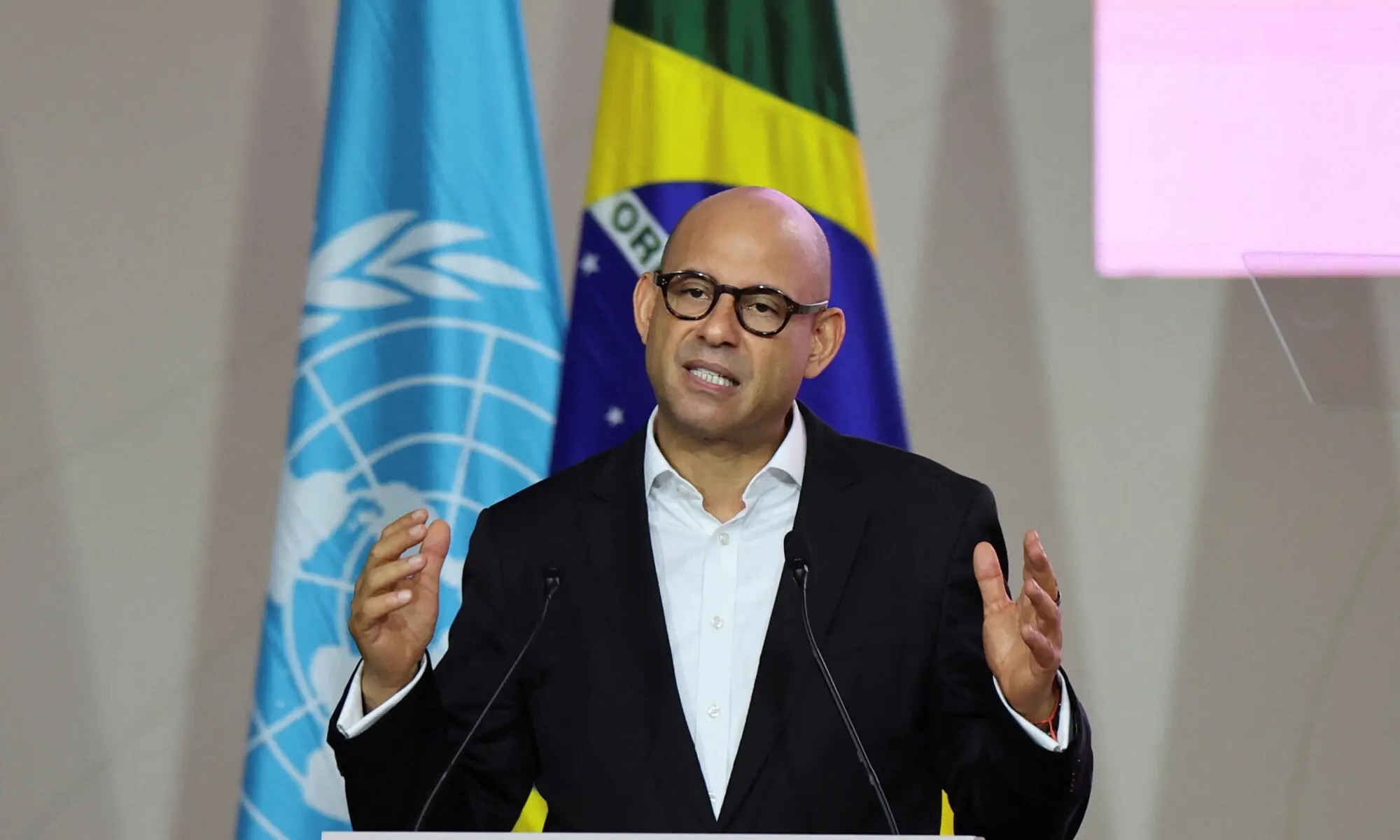
BELEM: The UN’s climate chief urged ministers on Monday to avoid any “stonewalling” and speed up negotiations at COP30 talks in Brazil, with nations divided on key issues with five days left in the gathering.
Ministers have started to arrive to take over negotiations in the second week of talks in the Amazonian city of Belem, with countries debating language over weak climate commitments, insufficient financial pledges and trade barriers.
COP30 is due to end on Friday but the UN’s annual climate talks usually spill into overtime as exhausted negotiators struggle to find compromises over how to tackle climate change.
“There is a huge amount of work ahead for ministers and negotiators. I urge you to get to the hardest issues fast,” UN climate chief Simon Stiell told the gathering. “I urge you to get to the hardest issues fast.” “When these issues get pushed deep into extra time, everybody loses. We absolutely cannot afford to waste time on tactical delays or stonewalling,” he said.
Three issues, climate finance, unilateral trade measures, and planned emissions cuts that don’t go nearly far enough, were blocking progress after a week of talks.
China, India and other allied countries want COP30 to adopt a decision against unilateral trade barriers — a dig at the European Union’s “carbon tax” on imports of carbon-intensive goods such as steel, aluminum and fertilisers.
Meanwhile, island states vulnerable to rising seas, backed by Latin American countries and the EU, believe it is crucial for COP30 to respond to the latest projections showing the world will fail to limit warming to 1.5C and step up their climate commitments. But major emerging countries, from China to Saudi Arabia, do not want a text that implies they are not doing enough to curb climate change.
The third point of contention is a bid by developing countries, especially from Africa, to point the finger at developed nations for falling short on providing financing to help adapt to climate change and cut emissions.
The Brazilian presidency published a memo on Sunday evening summarising these divergent viewpoints and proposing options, some of which are contradictory. “This is the Brazilian presidency setting the table for the end game,” Li Shuo, a climate expert at the Asia Society Policy Institute.
Ministers will have to “achieve the very delicate balance between these three pieces,” Li said.
Asked if there was any one issue dominating the talks, COP30 President Andre Correa Do Lago replied: “Everything, everything. It’s very complicated.”
Published in Dawn, November 18th, 2025