Situationer: PPP’s gubernatorial gambit ‘pays off’

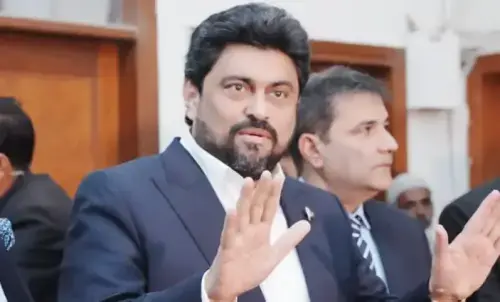
IN sacking Kamran Tessori as Sindh governor, it is not just that the ruling PML-N has bowed to pressure from its coalition partner, the PPP.
Rather, it appears that Mr Tessori had outlived his usefulness to those who brought him into office, as his “sacrifice” is being viewed as part of a larger gambit aimed at reshaping the Constitution and the resource distribution framework between the provinces and the federation, rather than merely antagonising the MQM-Pakistan.
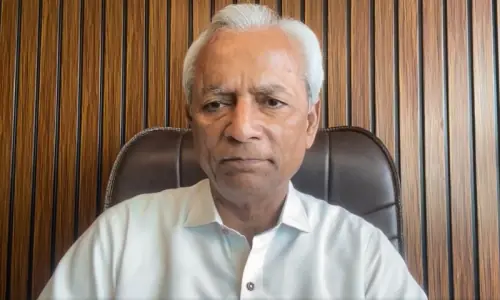
For context, the Muttahida-nominated Mr Tessori was removed from his office last week, and the PML-N replaced him with its senior leader, Nehal Hashmi, who took oath as governor on Friday.
Mr Tessori was not a senior member of the MQM-P when on the advice of the Shehbaz Sharif-led Pakistan Democratic Movement (PDM) government in October 2022, then-president Arif Alvi appointed him the governor of Sindh.
Insiders say Kamran Tessori was already on ‘borrowed time’, as PML-N had informed MQM-P of its decision to replace him in November last year
It was an open secret that the MQM-P leadership had endorsed the choice of certain quarters, which had instructed the party to make Mr Tessori their deputy convener around a month before his elevation to the province’s top constitutional office. After the February 2024 elections, once the PML-N formed its government at the Centre, Prime Minister Shehbaz Sharif had asked Mr Tessori to continue in office.
For nearly two years, he survived open opposition from the PPP, and covert resistance from within his own party, thanks to his connections.
It was in April 2024 that the PPP, for the first time, publicly demanded his removal on the grounds that Mr Tessori had “failed to bring an end to the political and urban-rural divide”.
‘Manner of removal’
It was not his removal, but the manner in which the decision was made that shocked the MQM-P, as its spokesperson claimed in a statement that the party became aware of Nehal Hashmi’s appointment as the governor via the news media, and that the federation had not taken them into confidence beforehand.
The initial reaction of the MQM-P leadership appeared to surprise the PML-N: lawmakers participating in the National Assembly session staged a walkout, while senior leader Dr Farooq Sattar said he saw no justification for remaining in the coalition government.
There was also talk of an imminent meeting of the party’s central committee, and speculation that the party might exit the coalition government and sit on the opposition benches.
But in public remarks on Saturday, MQM-P Chairman Dr Khalid Maqbool Siddiqui chose not to ruffle any feathers, simply saying that they were not consulted regarding Mr Tessori’s removal.
“We had to face the consequences of speaking up for what’s right. Kamran Tessori has left the Governor House with dignity, having made history,” he said, without announcing any future course of action.
Intention already conveyed
However, background discussions with senior MQM-P leaders reveal that the PPP had been pushing for a change at Governor House for quite some time; before the passage of the 27th Amendment.
Sources said that the PML-N, after receiving a nod from certain quarters, had conveyed its intention to replace Mr Tessori with its own nominee to the MQM-P in late November.
Mr Tessori, they say, had sought one week to resign, but that week turned into several weeks, finally culminating in his unceremonious removal.
“I am not a fan of Tessori, but I must say the PM should have given him a chance to resign,” said one leader. “This shows that not only the PML-N, but even the establishment needs the PPP more than it needs us. So this is a big win for the PPP.”
“In principle, we are against this ‘blackmail’ by the PPP,” said another MQM-P source. “But we know our limitations, as well as those of the PML-N. We both, and even the PPP, have no option but to continue working with each other.”
However, MQM-P leaders believe it would be very difficult for the PPP now to continue opposing its bill, which was supposed to be part of the 27th Amendment package, seeking an empowered local government system.
“We agree [powers that be] need the PPP for the 28th Amendment, a revised formula for the National Finance Commission award, and other legislation… but the PPP can no longer oppose our demand for an empowered local government system. So while it may appear as if we have lost, I’m sure we will emerge victorious in the long run,” said a senior MQM-P leader.
‘Troubleshooter’ intervenes
The optics of instability worried everyone, particularly the powers that be. So much so that known ‘troubleshooter’, Interior Minister Mohsin Naqvi, had to fly to Karachi to convince Dr Siddiqui to accompany him to Bilawal House for a meeting with President Asif Ali Zardari.
The meeting took place on Saturday evening, and on Sunday the Presidency released a statement, saying that matters relating to internal security, law and order and the evolving regional situation were discussed, and the president “stressed unity and stronger efforts for peace and rule of law”.
This was the first high-level contact between the two parties following the removal of Mr Tessori, but according to MQM-P leaders, the issue was not discussed at all.
“The meeting was actually planned for Islamabad even before Tessori’s removal,” said an MQM-P leader, asking not to be named. “President Zardari is also the chancellor of several public sector universities, and Khalid Bhai, being the federal education minister, wants his [Zardari’s] support to bring those universities’ campuses to Karachi and Sindh.”
However, he said Mr Naqvi urged Dr Siddiqui to meet the president in Karachi, as this would help lower temperatures, which were running high after Mr Tessori’s sacking.
The party’s detractors, meanwhile, see Mr Tessori’s removal as evidence of the MQM-P’s weakness.
Without naming the party, Mohajir Qaumi Movement Chairman Afaq Ahmed — who has no love lost for MQM-P — mused that a party that talks about handing over Karachi to the federation cannot even save its own governor.
In a statement, he claimed that the party could not even contemplate quitting the government without the consent of its “handlers”.
Published in Dawn, March 16th, 2026