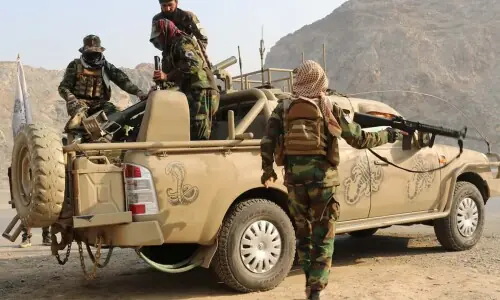
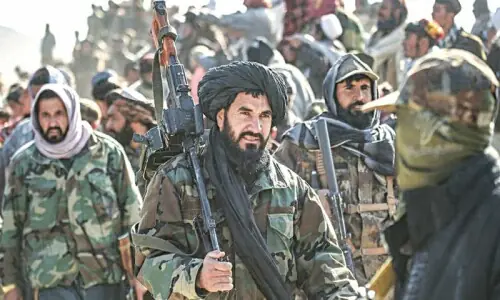
DESPITE the use of both carrots and sticks by the international community, the Afghan Taliban refuse to cut their ties to terrorist groups such as the TTP. This poses a particular problem to Afghanistan’s neighbours, including Pakistan, which has borne the brunt of terrorist violence ever since the Taliban’s return to Kabul in 2021.
Both KP and Balochistan are currently in the grip of violent insurgencies, with the elements responsible for the bloodshed finding safe havens in Afghanistan. Pakistan raised the issue at the UN Security Council on Wednesday, with this country’s permanent representative highlighting the “increasingly permissive environment” for terrorist groups in Afghanistan after the Taliban takeover. He urged the Taliban to fulfil their obligations and ensure Afghan soil is not used against neighbouring states. China’s representative at the same forum echoed these concerns, urging the Taliban to take action, whilst supporting Pakistan’s counterterrorism efforts. The Chinese diplomat also called for sanctions on the BLA and Majeed Brigade.
These issues have been raised repeatedly, while UNSC monitoring reports have endorsed Pakistan’s concerns regarding the permissive environment for terrorist groups in Afghanistan. It is not just the TTP; Al Qaeda, IS-K, ETIM and others are all believed to be active in Afghanistan. While the Taliban are opposed to IS-K, they have deep links with other violent actors. Moreover, nearly all of Afghanistan’s neighbours have complained of the threat these outfits pose to their security.
Yet the Taliban only pay lip service to these concerns, denying the fact that terrorists operate from their territory. These denials are implausible as there is a convincing body of evidence proving that violent outfits operate in an agreeable atmosphere in Taliban-ruled Afghanistan.
As this paper has argued before, a regional response is required to tackle the problem of Afghanistan-based terrorist groups. The Afghan Taliban are an unpalatable reality and cannot be wished away. The challenge for the international community is to use a combination of deterrence and incentives to make them change their tune. Pakistan has tried kinetic methods to deter cross-border terrorism, but in the long term, continued hostilities are not sustainable.
The economic situation in Afghanistan is dire, and its people live in misery. Instead of protecting their terrorist comrades, the Taliban need to think about improving the lives of common Afghans. This can only happen through trade and regional integration. Yet Afghanistan will remain a pariah if its rulers keep harbouring terrorists. Therefore, Kabul’s neighbours need to continue diplomatic, political and, where needed, kinetic efforts to end the ‘export’ of terrorism from Afghanistan, both for its own development, and regional peace.
Published in Dawn, August 7th, 2026