JI announces Aug 16 sit-ins in provincial capitals to protest petroleum levy
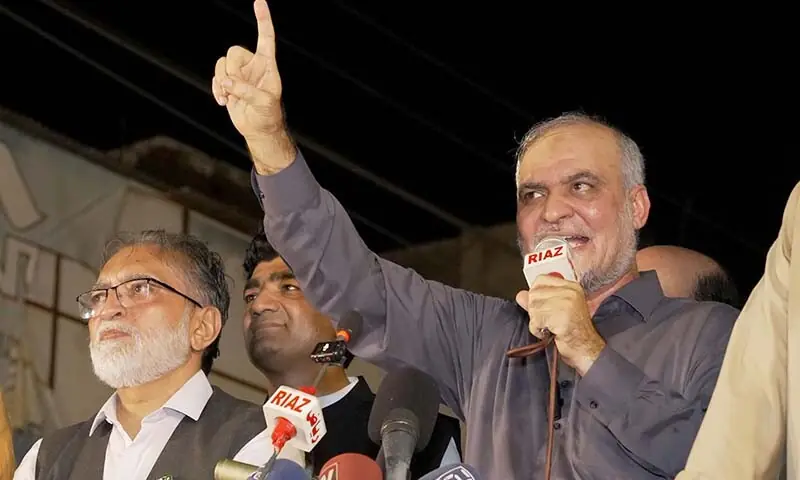


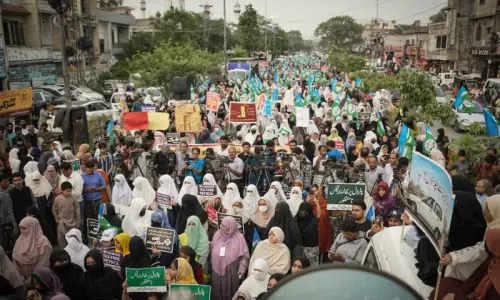
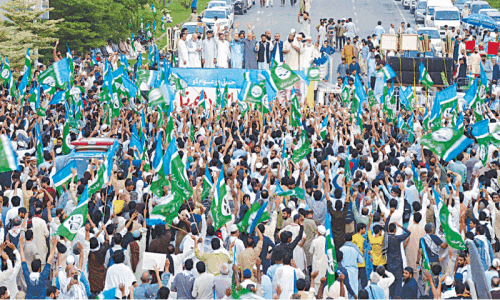
LAHORE: Jamaat-i-Islami Pakistan (JI) has decided to intensify its campaign against the petroleum levy and inflation, announcing simultaneous sit-ins in all four provincial capitals on August 16 to press the government to withdraw the levy.
The decision was taken after extensive deliberations at a special meeting of JI’s central and provincial office-bearers, chaired by party chief Hafiz Naeemur Rehman at Mansoora on Saturday.
Rehman said the sit-ins would be staged outside the Punjab chief minister’s house in Lahore and the governor houses in Khyber Pakhtunkhwa, Sindh and Balochistan.
Under the plan, the JI and its youth and women’s wings will participate in Independence Day activities on August 14, using the occasion to mobilise people around the party’s vision of a just system.
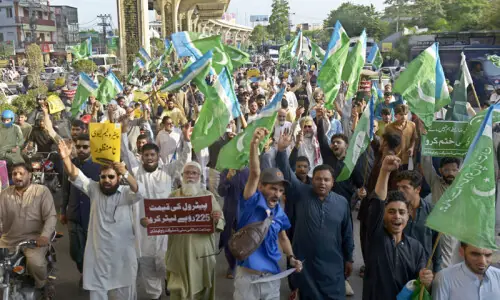
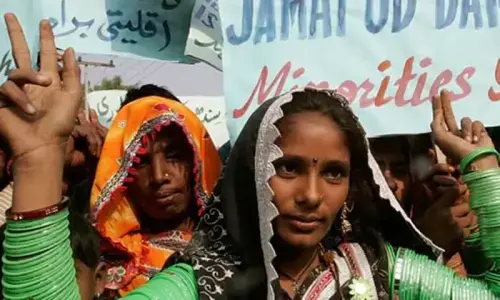
The JI chief added that the previous day’s nationwide protest had given the party’s campaign against the petroleum levy and inflation a new direction and fresh momentum; and that over 510 organised and peaceful protests were held across the country, with people from across Pakistan participating.
He said the protests had demonstrated that the JI was “becoming a symbol of national unity”, as people from Chitral, Malakand, Hazara and central Khyber Pakhtunkhwa, among others, had raised their voices against the petroleum levy.
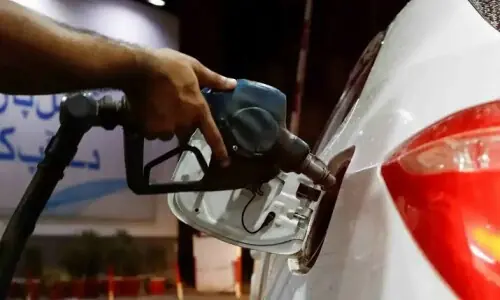
The JI chief added that the public had rejected the levy and wanted petrol prices reduced to Rs225 per litre. Rehman accused the ruling elite of pushing ordinary citizens into an unbearable inflationary crisis while refusing to cut their own privileges and expenditures.
The party chief also claimed the rulers were “unwilling to give up official aircraft, reduce government vehicle expenses or end perks such as free fuel and electricity”, while students, motorcyclists, workers and farmers were being burdened with indirect taxes on petroleum products.
“Even people whose incomes were below the taxable threshold were effectively being taxed through fuel prices,” he added.
Rehman said the JI had previously taken to the streets to force the government to negotiate with independent power producers (IPP), after initially refusing to engage with them.
He added that negotiations had been held with 17 to 18 IPPs, resulting in some reduction in electricity prices, but the process was subsequently halted.
“The unresolved energy crisis and rising prices have fuelled an inflationary storm that is affecting every segment of society, particularly salaried people, the middle class and poor families,” Rehman said.
He warned that the public could no longer be left to suffer the consequences of government policies and said the rulers would have to deliver their rights.
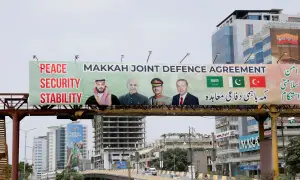
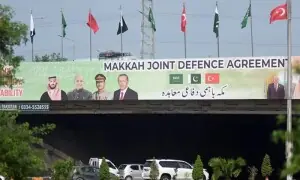
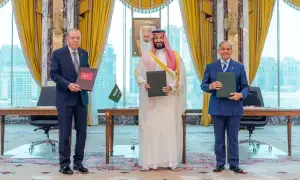
Rehman also welcomed the recently signed defence agreement between Pakistan, Saudi Arabia and Turkiye, describing it as “a positive development for the Muslim world”.
He said closer cooperation among Islamic countries could lead to a strong bloc and reduce Pakistan’s and the wider Muslim world’s dependence on external powers.
Additionally, he proposed expanding the defence cooperation to include Iran, Qatar, Bangladesh, Malaysia and Indonesia, saying efforts should gradually be made to bring all Muslim countries into such a framework.
“Muslim countries should overcome their differences, strengthen mutual cooperation and build collective capacity to face regional and global challenges,” Rehman emphasised.
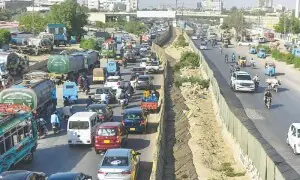
A day prior, several major thoroughfares in Karachi were blocked or affected by traffic disruptions as the JI held sit-ins as part of the nationwide demonstration against the petroleum levy.
Responding to the protest, Sindh government spokesperson Sadia Javed said the petroleum levy was a federal matter and questioned why Karachi’s citizens were being “punished” through road closures.
“Jamaat-i-Islami is using the protest to score political points instead of serving the public,” she alleged, adding that the party should focus on the performance of its local government representatives to improve conditions for Karachi’s residents.