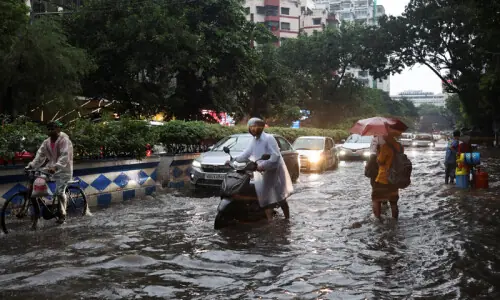
Below-average monsoon threatens crops in India

MUMBAI: A monsoon in India is expected to bring below-average rainfall to the country’s western, central and southern regions over the next fortnight, threatening newly planted cotton, soybean, corn and pulse crops, two senior weather officials said.
The monsoon delivers about 70 per cent of India’s annual rains to replenish crucial water sources in the nearly $4 trillion economy, where nearly half of farmland lacks irrigation and about half the population earns its livelihood from agriculture.
Rainfall is expected to ease across most parts of India over the next fortnight, with the exception of some eastern and northern states, said a senior official with the India Meteorological Department, who declined to be named as he was not authorised to speak with media. “The rainfall deficit could be quite significant in western and southern states during this period,” he said.
India has received 12pc less rainfall than average so far this monsoon season, which began on June 1, with some states, including southern Andhra Pradesh, recording deficits of as much as 34pc.
Worldwide economic losses from natural disasters reach $100bn
The rainfall deficit is likely to widen by the end of the month as a strengthening El Nino is expected to reduce rainfall in the coming weeks, said another weather department official.
Farmers stepped up planting of summer-sown crops, including soybeans, cotton, corn, pulses and paddy, after near-normal rainfall in July boosted soil moisture.
Meanwhile, economic losses from natural catastrophes worldwide are estimated to have reached $100 billion in the first half of this year, reinsurance group Swiss Re said on Tuesday, a sharp decline from the period last year. Despite severe storms in the United States and the deadly earthquakes that struck Venezuela in June, the losses were well below the $152bn recorded in the first half of 2025, the group said in its latest report.
The losses were also 10 per cent below the 10-year average for the period.
But Swiss Re, which serves as an insurer for insurance companies, noted that losses from natural disasters often increase in the second half of the year, mainly due to hurricanes in the North Atlantic ocean.
“A less costly first half of the year does not mean the risk has gone away,” said Balz Grollimund, the group’s director of Catastrophe Perils. “One major hurricane, earthquake or wildfire can quickly change the picture.”
Published in Dawn, August 12th, 2026