JI keeps long march option open over petrol levy
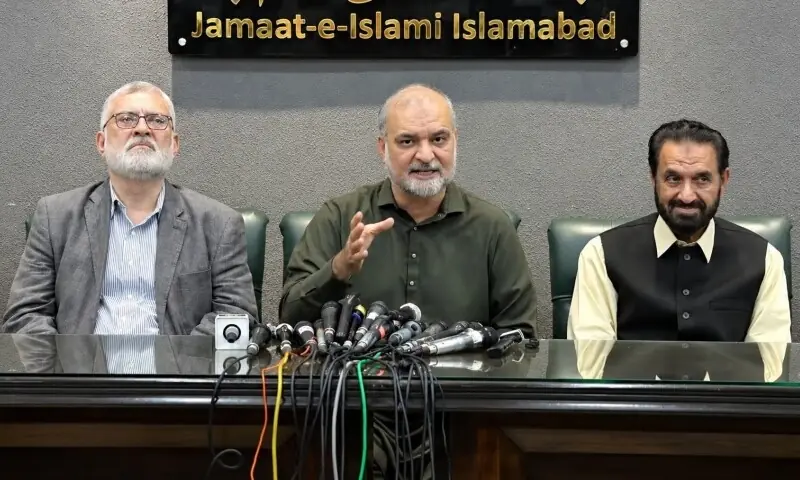
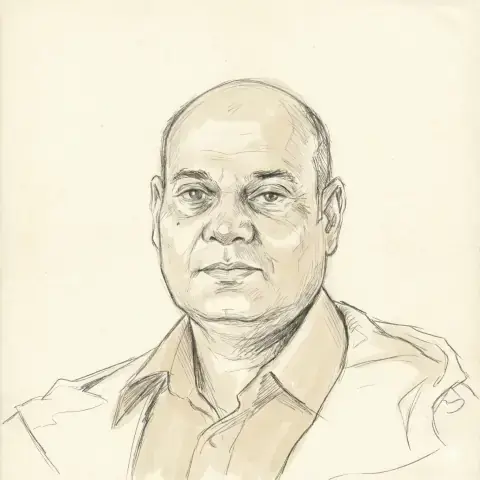
ISLAMABAD: The Jamaat-i-Islami has declared that its long march for a massive reduction in petroleum prices remains alive, as its chief Hafiz Naeemur Rehman said the party would not give up its right to march on Islamabad until the petroleum levy was abolished.
Addressing a news conference on Wednesday, the JI chief warned that the protest campaign would be expanded if the government failed to provide relief.
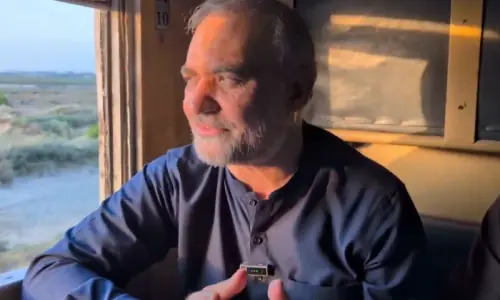
“The long march has been paused for a few days at Prime Minister Shehbaz Sharif’s request,” the JI chief said, adding that he would meet the prime minister after his return to Pakistan and that the party’s next course of action would depend on the “outcome” of that meeting.
Mr Rehman said the JI would continue its political and constitutional struggle and would not be deterred by criticism. He also reiterated his view that PTI founder Imran Khan was a political prisoner and said his party believed PTI workers were being subjected to injustice.
Govt must abolish levy or face wider protest, Hafiz Naeem warns
He said the government should abolish the petroleum levy, otherwise people would come out to seek the removal of the government. The JI chief also rejected the government’s argument that the petroleum levy was necessary because of IMF requirements.
Rejects IMF justification
He said the IMF agreement did not specifically require Pakistan to meet revenue targets through the petroleum levy, arguing that the government should instead reduce its expenditures and broaden the tax base. Mr Rehman said consumers were paying about Rs140 per litre in taxes on petrol and described the burden as unacceptable.
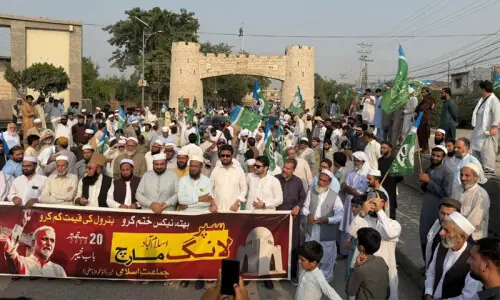
The JI has been staging sit-ins and protests against the petroleum levy since August.
The party launched road blockades at 510 locations before starting sit-ins at 42 locations across the country on August 16.
The campaign later expanded into a train march, launched on Sept 20, towards Islamabad.
The long march was subsequently paused following a telephone conversation between Mr Rehman and the prime minister.
He said JI would continue its protests during the pause and hold public meetings, including in Lahore and other cities.
Calls for spending cuts
He said the party had held several rounds of negotiations with the government and presented workable proposals, but the government had not given a convincing response.
He said reducing the interest rate by three percentage points could save the national exchequer more than Rs1.5 trillion and called for cuts in government privileges and expenditures.
He also demanded taxes on large landowners, an end to capacity payments to independent power producers and action against corruption in the Federal Board of Revenue.
Published in Dawn, September 24th, 2026