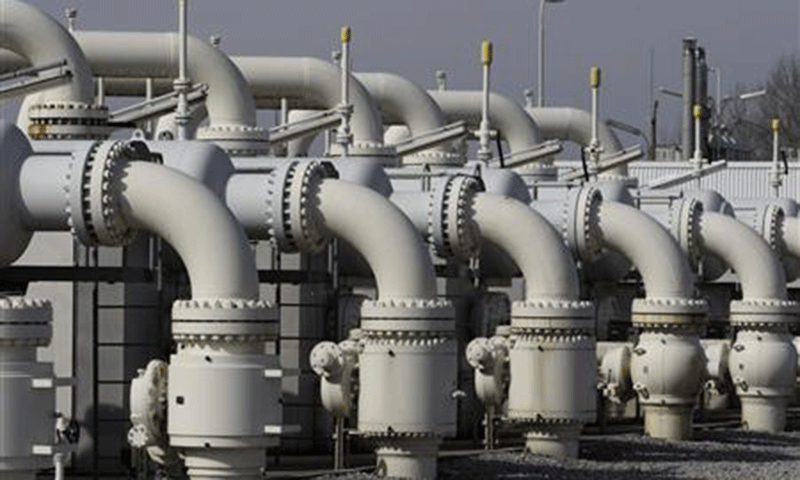
ISLAMABAD: Various stakeholders on Thursday raised serious objections to unusually lucrative dollar-based guaranteed returns proposed for a $432 million oil pipeline from Faisalabad to Peshawar and demanded substantial rationalisation of the incentives to avoid the creation of a new “super IPP”.
The Oil and Gas Regulatory Authority (Ogra) had called a public hearing on Frontier Works Organisation’s (FWO) petition for grant of a transportation tariff for the 437km oil pipeline, which envisages recovery of investment in four years to ensure participation of Azerbaijan’s State Oil Company (Socar). Ogra Vice Chairman Shahzad Iqbal presided over the hearing.
Participants generally supported the pipeline project because of its advantages over road transportation of fuel but argued that the terms being sought by the investors could undermine those benefits.
Neither the petitioners nor Ogra responded to questions about whether there was any precedent for allowing a private investor in a public project to recover its entire investment within four years.
Under the tariff petition, transportation of petroleum products from Faisalabad to Thalian near Rawalpindi and onwards to Tarujabba near Peshawar would cost around $64 per tonne in the first year, targeted to be 2029, before gradually declining to $14.5 per tonne by 2058 — the final year of the 30-year tariff period.
FWO representatives said the project should be viewed in a long-term context rather than on the basis of the initial tariff, which could be higher than road transportation costs in the early years but would taper off subsequently.
Some intervenors also questioned the proposed minimum throughput guarantees and projections of higher fuel demand amid an ongoing energy transition driven partly by expensive petroleum products.
One commentator described the proposed structure as a “super IPP” given its bulky demands and said there was no comparable precedent.
He said independent power producers (IPPs) had at least been set up under a pre-approved power policy that did not provide special treatment to individual investors, whereas in the pipeline project there was no such policy and investors were seeking unusually high returns.
“Who is behind this? Who is exerting pressure on Ogra?” asked Arif Bilwani from Karachi, urging the authority to act and behave independently as a regulator.
Ogra Senior Executive Director Misbah Yaqoob appreciated the stakeholders’ feedback and said the regulator would examine whether dollar-based returns were justified and, if so, to what extent.
She said Ogra would also consider rationalising the “ship or pay” allowance for a specified period instead of the entire life of the project and ensure that the pipeline tariff did not exceed the inland freight equalisation margin currently used to maintain uniform petroleum pricing.
Published in Dawn, September 25th, 2026