Number of unfrozen lakes in Pakistan grows by 65 in less than 2 months: Suparco
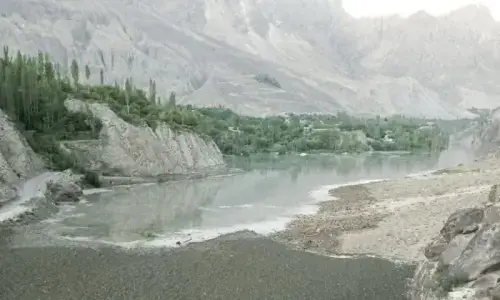
ISLAMABAD: The number of unfrozen lakes in Pakistan grew from 40 to 105 in less than two months, according to satellite imagery assessed by the national space agency of Pakistan between July and August.
Space and Upper Atmosphere Research Commission (Suparco) said in a press release that the latest assessment was based on temporal satellite imagery, with the the latest image acquired on Aug 5. All identified lakes were mapped on optical satellite imagery to estimate their surface area and to determine whether they were frozen or unfrozen, it noted.
The space agency said that, as expected with rising summer temperatures, the number of unfrozen glacial lakes had increased.
“At present, 105 lakes are observed to be unfrozen, compared with 40 lakes reported earlier. The current assessment also indicates temporal variation in extent, where few lakes have exceeded their previous recorded maximum extents,” it said.
Temporal variation is the measure of the change in a lake’s size or boundary and some having exceeded their recorded maximum extents means that few water bodies were found to be larger than ever before on record.
However, Suparco added that persistent cloud cover after the last submitted report in July had limited the availability of cloud-free satellite imagery, making it difficult to accurately assess lake area changes.
On July 2, Suparco had observed 40 unfrozen lakes, indicating accelerated seasonal melting. However, the assessment also indicated at the time that most unfrozen lakes remained within their previously recorded maximum extents.
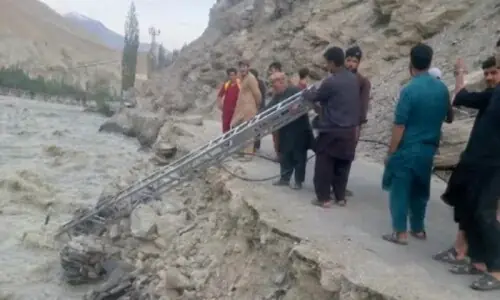
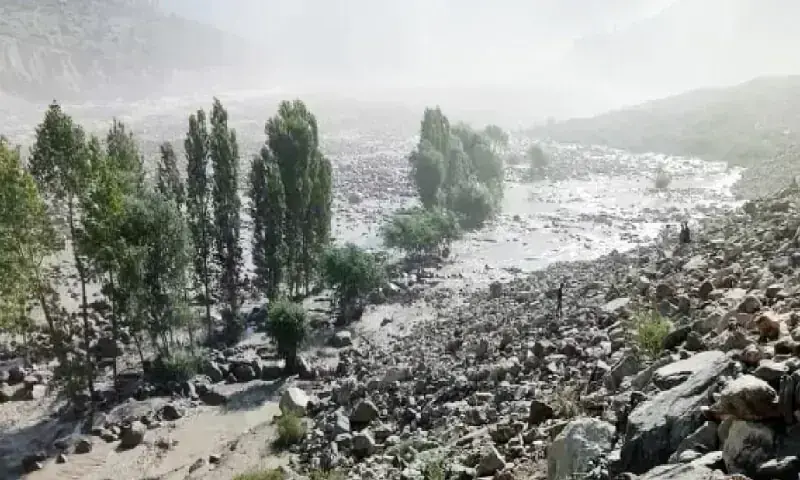
According to Suparco, a glacial lake becomes a greater concern when its water extent expands beyond its historical maximum. This may indicate increased water storage and a higher likelihood of moraine dam instability or failure, which can increase the risk of a Glof event.
Given the ongoing rise in temperatures and the increasing number of unfrozen lakes, all relevant authorities had been advised to maintain a high level of preparedness, “particularly in downstream valleys of potentially dangerous glacial lakes”, the agency said.
“Regular satellite monitoring will continue throughout the melt season to detect any rapid lake expansion or other signs of increased Glof risk, enabling timely dissemination of alerts and supporting proactive disaster risk management,” it added.
But Dr Karamat Ali, a glaciologist at Karakoram International University, called for more than just satellite monitoring to address the issue. He said that stakeholders were working in silos, with a lack of coordination and trust.
This led to insufficient information about the morphology of glaciers, their microclimates, and mass accumulation in summers and winters, among other parameters, he said.
“Glacial melt is a serious concern,” he told Dawn. “Numerous parameters are ignored which can only verified from field studies, and mere satellite imagery will not suffice.”
For example, he said, there was a lack of adequate information about hanging glaciers, such as the one that caused extensive losses in Nepal earlier this month.
Dr Ali, who has studied glaciers for two decades, called for thorough investigations and field studies to understand the depth, surrounding environments and end moraines (debris accumulated at the end of a glacier) to better understand the hazards and vulnerabilities of Glofs.
He also questioned what investments had been made by the government to address the issue of the rapidly melting glaciers, on which millions of lives depend.
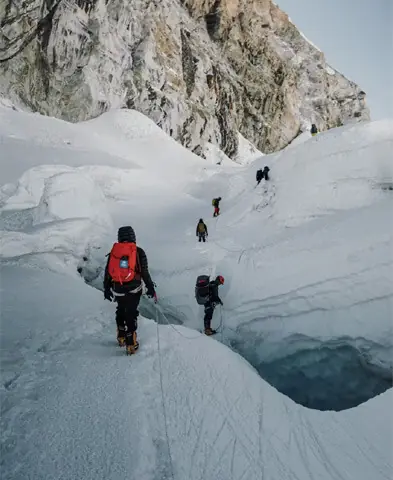
A glacier inventory completed in 2024 revealed that Pakistan was home to more than 13,000 glaciers — one of the largest concentrations outside the polar regions.
Suparco said in its latest assessment that it was regularly monitoring the status of potentially dangerous glacial lakes (PDGLs) using satellite imagery, in order to support early warning and preparedness for Glacial Lake Outburst Flood (Glof) hazards.
The monitoring results were shared with relevant stakeholders, including the Ministry of Climate Change (MoCC) Technical Committee on Glof Monitoring, it added.
A total of 131 PDGLs were identified in the August assessment, with their locations provided by the Provincial Disaster Management Authorities (PDMAs) including the Khyber Pakhtunkhwa PDMA, Gilgit-Baltistan Disaster Management Authority (GBDMA), and Wapda’s Glacier Monitoring and Research Centre (GMRC).
Mohammad Saleem Shaikh, spokesperson for the Ministry of Climate Change and Environmental Coordination, told Dawn after Suparco’s July assessment that the rapid rise in temperatures across the Hindu Kush-Karakoram-Himalaya region was fundamentally altering Pakistan’s cryosphere and accelerating glacier melt, increasing the risk of Glofs and other climate-induced hazards.
He said that while glacier melt initially boosted water availability, unchecked warming was expanding unstable glacial lakes that could burst without warning, unleashing devastating floods that threatened downstream communities, public infrastructure, agricultural land and essential services.
“The science is unequivocally clear that rising temperatures are reshaping Pakistan’s mountain ecosystems at an unprecedented pace. Every fraction of a degree of warming increases the risk to communities living downstream. Our response must therefore be science-driven, technology-enabled and translated into timely action to protect lives, livelihoods and critical infrastructure,” Shaikh said.