Israel revokes accreditation of Netherlands diplomats based in West Bank
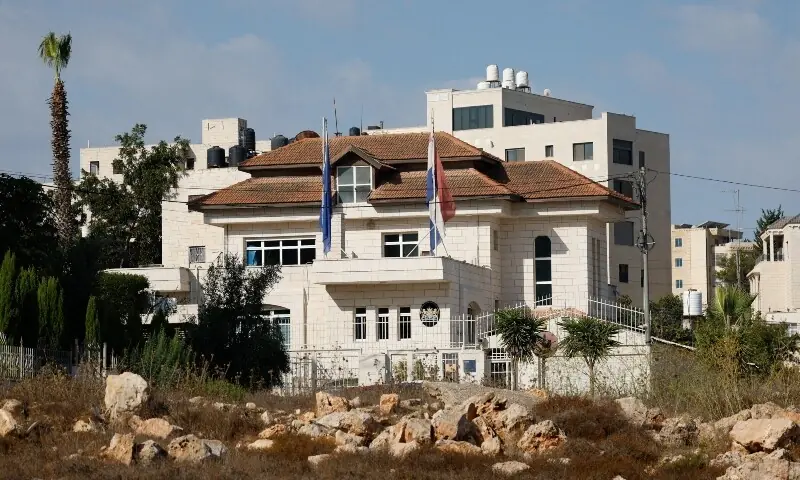
THE HAGUE: The Netherlands said on Monday it regretted Israel’s decision to revoke accreditation of Dutch diplomats based in the occupied West Bank, the latest retaliation by Israel to mounting Western pressure over settlements.
Israel, which has occupied the West Bank since 1967 and exerts power over diplomats’ entry into the Palestinian territory, on Monday ordered Dutch officials to surrender their diplomatic privileges.
“I deeply regret this unnecessary decision,” Dutch Foreign Minister Tom Berendsen said. Israel retaliated after Dutch authorities began implementing a ban on imports of any products from Israeli settlements in occupied West Bank.
In later comments after meeting his German counterpart Johann Wadephul, Berendsen told reporters he would summon the Israeli ambassador to “talk about the details of the measures and the impact on our diplomats, who have to leave within seven days”.
Berendsen said Dutch authorities were still assessing how many diplomats were affected by the sanctions. The exports decision, Berendsen said, was “not directed against Israel” but rather “the obligation, under international law, not to contribute to an unlawful situation: the illegal settlements”.
Israeli Foreign Minister Gideon Saar, announcing the move on Sunday, vowed: “Any country that acts in a hostile and one-sided manner against Israel will lose its influence and relevance in the region.” “If the Netherlands wishes to continue representing its interests vis-a-vis the Palestinians, it may do so from the territory of the Palestinian Authority and not from the territory of the State of Israel,” he said.
Israel controls entry points into the West Bank and the Oslo peace accords in the 1990s gave Israel control over diplomatic accreditation in the Palestinian territories. The Palestinian Authority condemned the move, saying Israel was trying to “reduce the international and diplomatic presence in Palestine so that it can carry out its crimes without witnesses”.
“The State of Palestine affirms that Dutch diplomats are welcome on the territory of the occupied State of Palestine, and that Israel has no sovereignty over any part of the land of the State of Palestine,” the foreign ministry said.
Rising tensions
The Dutch government imposed the sanctions in July amid increasing attacks by Israeli settlers on Palestinians and talk by Israeli politicians of formally annexing the territory. Britain, France and Canada also announced in early September they would impose sanctions on trade from Israeli settlements. Israel responded by ordering the closure of the British consulate in Jerusalem.
Ahead of Israeli elections on October 27, opposition figure Yair Lapid, a centrist former prime minister, said that Prime Minister Benjamin Netanyahu bore responsibility for the “anti-Israel wave”.
“The fact that Israelis landing in the Netherlands are having their bags rummaged through and products from the settlements confiscated is a diplomatic failure unlike anything we have seen before,” Lapid said, promising improved diplomacy but not mentioning a change in policy on settlements.
The United Nations says extremist settlers have been responsible for an average of six attacks per day on Palestinians and Palestinian property in the West Bank in 2026.
Palestinians have also attacked Israelis, with a Palestinian shooting dead a settler last week and a car-ramming attack seriously injuring the soldier son of the Israeli ambassador to Washington.
Published in Dawn, September 29th, 2026