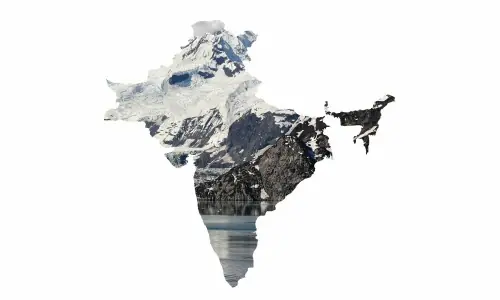
TOGETHER with the Kashmir dispute, India’s unilateral suspension of the Indus Waters Treaty has become the biggest source of bilateral friction in the subcontinent.
In a controversial move, New Delhi held the decades-old agreement ‘in abeyance’ in 2025 after the Pahalgam episode. But as Pakistan’s senior leadership has highlighted, Indian brinkmanship in this regard may set a negative precedent globally, while also planting the seeds of a new conflict in South Asia.
Speaking at an event in Islamabad the other day, Information Minister Atta Tarar said that India’s unilateral action vis-à-vis the IWT could threaten global water governance. He termed New Delhi’s moves “morally bankrupt and devoid of ethics”.
Prime Minister Shehbaz Sharif had raised the issue earlier, when he addressed the UN General Assembly last week. He did not mince his words when he said that diverting Pakistan’s water would amount to an “act of war”.
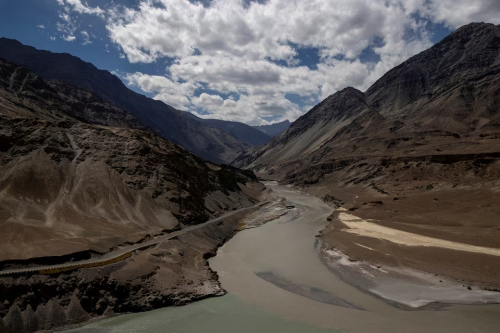
This is not mere rhetoric. The Indus and its tributaries are Pakistan’s lifeline, and the country cannot allow India to blackmail it using these precious waters. India has ruled out restoring the treaty until Pakistan acts against ‘cross-border terrorism’. This is a weak alibi being deployed to take what belongs to Pakistan. New Delhi has remained adamant despite the ruling by the Permanent Court of Arbitration in The Hague in August that the IWT could not be unilaterally suspended.
India has brushed aside the court’s decision. Along with the key issue of water rights, the larger question is what sort of precedent India wants to set. Its leaders speak of multilateralism and the global ‘rules-based order’.
Yet in practice, when they scupper bilateral treaties and refuse to recognise decisions by respected arbitrators, the Indians in fact promote the law of the jungle. Pakistan must continue to pursue its legitimate rights with regard to the Indus waters. It must also point out the double standards India adheres to — claiming to uphold global norms, yet trampling on international law.
If the IWT dispute is left to fester, or worse, if India takes further steps to cut off Pakistan’s share of water, a new conflict in South Asia is quite possible. In order to avoid such a grim scenario, saner elements in India must work towards restoring the IWT, and addressing all other outstanding issues in a civilised manner.
Published in Dawn, October 3rd, 2026