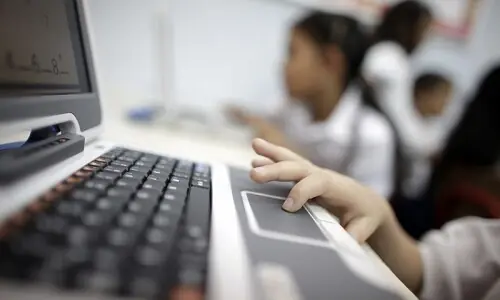
PAKISTANI children are spending more of their lives online, but the safeguards around them are not keeping pace.
A recent Kaspersky survey covering the Middle East, Turkiye, and Africa region, including Pakistan, found YouTube to be the most popular mobile app among children surveyed here, followed by Instagram and WhatsApp. The more important issue, however, is what children may face once they are online. Multiplayer games and communication platforms can put young users in direct contact with strangers. This can expose them to grooming, fraud, blackmail, and other forms of abuse.
Generative AI has made the problem more complicated. Photos and videos shared online can now be altered into convincing fake images or clips and used for cyberbullying or harassment. The survey figures should not be treated as a complete picture of all Pakistani children, but the risks it highlights are serious. The problem is that while these dangers are growing, the state’s ability to respond remains unclear. The PTA has told the Islamabad High Court that it does not have the legal authority to impose mandatory age checks or stop children under 16 from using social media.
This should lead to a wider debate about how Pakistan protects children online. The answer cannot simply be to demand restrictions that a regulator may not have the power or technical means to enforce. The PTA has also noted that because major platforms use HTTPS encryption, regulators may be unable to block one harmful page or post without affecting access to the entire platform.
At the same time, the 2025 amendments to Peca provide for a new ‘Social Media Protection and Regulatory Authority’, raising questions about which body will ultimately be responsible and what powers it will have. Whatever system is put in place, it must go beyond blocking websites and apps. Social media platforms should be required to make children’s accounts safer, offer simple reporting tools, and respond quickly to grooming, fake content, and abuse. Any age-checking system must also protect privacy. Schools should teach children how to recognise online risks, while parents need to talk openly with them about strangers, personal information, and troubling online conversations.
No single ban, parental control setting, or awareness campaign will be enough. Protecting children online will require clear laws, responsible technology companies, better digital education, and informed parents working together.
Published in Dawn, October 5th, 2026