Dar links regional progress to peace in Afghanistan
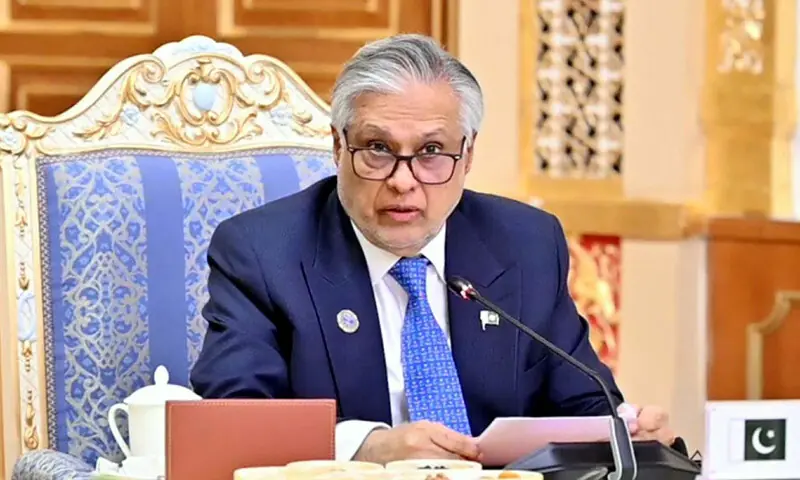
• Maintains Afghan soil must not be used for terrorism against Pakistan, other countries
• Calls for dialogue, diplomacy to resolve regional tensions
• Stresses stronger connectivity, investment and financial cooperation among SCO members
DUSHANBE: Deputy Prime Minister and Foreign Minister Mohammad Ishaq Dar on Tuesday said sustainable economic development in the region depended on lasting peace and stability, particularly in Afghanistan, and stressed that Afghan territory must not be used for terrorist activities against Pakistan or other countries.
Addressing the 25th meeting of the Shanghai Cooperation Organisation (SCO) Council of Heads of Government in Dushanbe, Tajikistan, he said Pakistan expected the Taliban authorities to ensure that Afghan territory was not used for terrorism. He reiterated Islamabad’s desire for a peaceful, stable and prosperous Afghanistan integrated with the region.
Mr Dar reaffirmed Pakistan’s commitment to regional stability, stronger economic partnerships and advancing Eu rasian connectivity and prosperity through the SCO. He said Pakistan firmly believed that dialogue and diplomacy offer the most effective path to resolving regional tensions.
“Our efforts to facilitate engagement and de-escalation in West Asia and the Gulf reflect our commitment to constructive diplomacy. To this effect, Pakistan remains engaged in mediation efforts between the US and Iran. We will continue to support all efforts for dialogue and peaceful resolution of disputes for lasting peace and stability.
“Our diplomatic strategy is guided by our firm belief that regional challenges require collective, cooperative, and sustainable multilateral solutions,” the Foreign Office quoted Mr Dar as saying. Calling for greater regional connectivity, investment in energy and transport infrastructure, and enhanced economic cooperation among member states, the deputy prime minister said these measures were essential to promoting shared prosperity.
He emphasised that the SCO should actively expand structured partnerships with international organisations including the UN, Asean, the ECO, and other international and regional financial institutions, to reinforce an open, rules-based, and inclusive regional order. He appreciated Prime Minister Qohir Rasulzoda, the government and people of Tajikistan for their hospitality.
Stressing the importance of economic integration, he said targeted investments in energy and transport were essential for connecting regional economies. He also called for greater investment in agriculture, mining and minerals, and information technology to strengthen economic resilience.
The deputy PM also described CPEC as an opportunity for all SCO partners to participate in and accelerate regional economic integration. He said artificial intelligence, digital transformation, innovation, energy cooperation and international information security should become key pillars of future SCO collaboration.
He noted that Prime Minister Shehbaz Sharif had unveiled Pakistan’s vision for its SCO chairmanship under the theme “Turning Vision into Action: Connectivity, Innovation and Shared Prosperity”.
The vision identifies five priority areas: peace, security and mutual trust; regional connectivity and trade; innovation, artificial intelligence and digital transformation; climate resilience and sustainable energy; and people-to-people exchanges.
Mr Dar also called for accelerating the use of national currencies in mutual settlements and establishing an SCO Development Bank, Development Fund and Investment Fund. He said these measures could support development projects and help member states withstand international financial shocks.
Criticising protectionist policies and unilateral coercive measures, he said such actions undermined international law, restricted technological progress and increased inequality. He stressed the need to reform global financial and trade systems to ensure equitable development.
Mr Dar said Pakistan also looked forward to welcoming the heads of states at the SCO-CHS Summit at Islamabad in August 2027.
Published in Dawn, October 21st, 2026