Netanyahu set to remain caretaker prime minister after inconclusive Israeli election
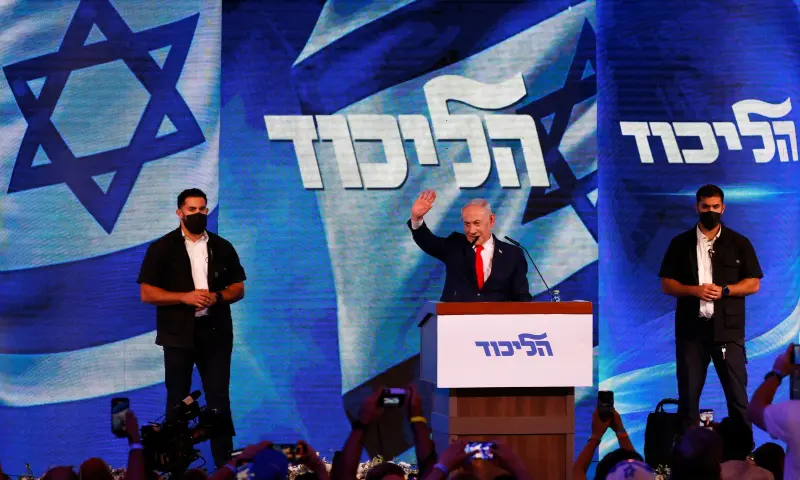
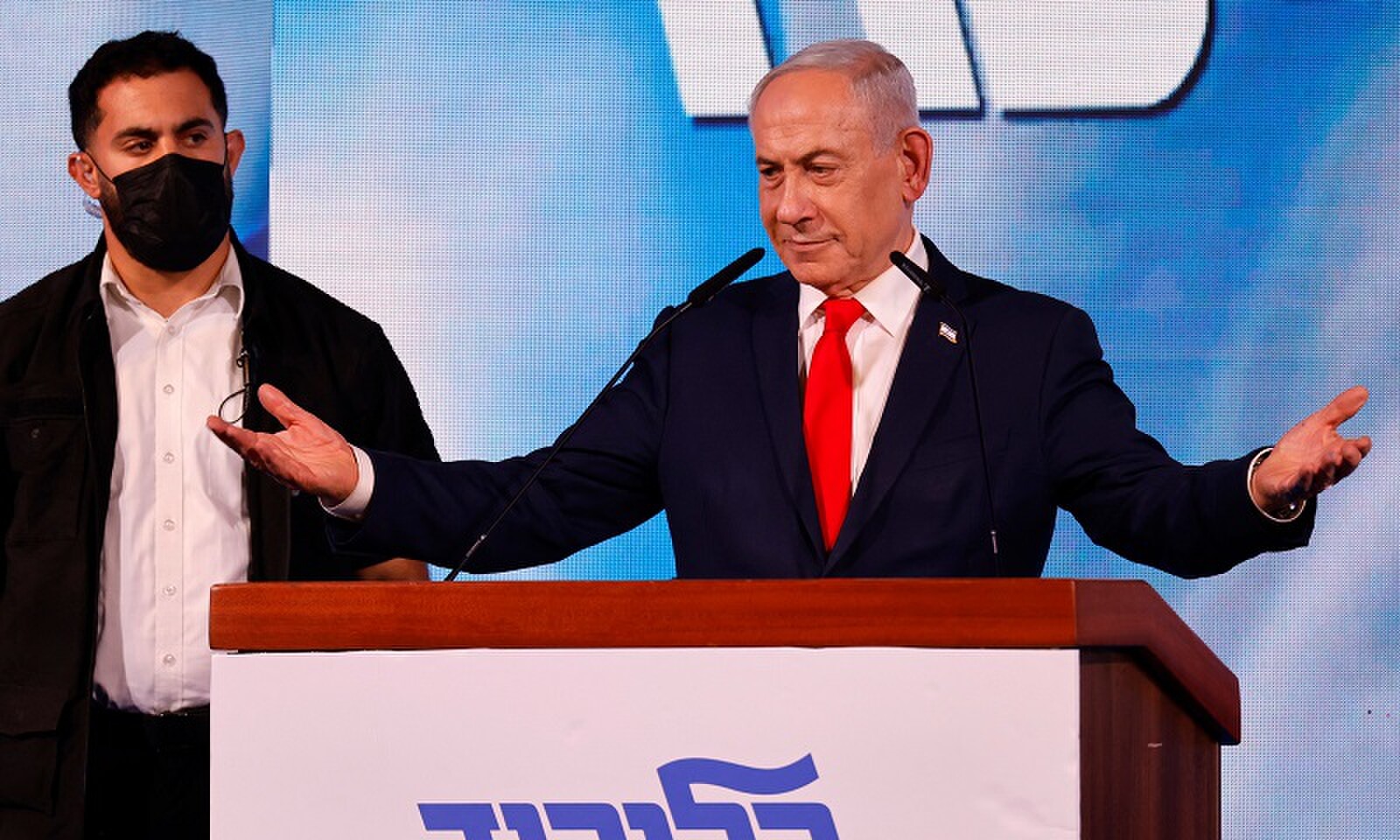
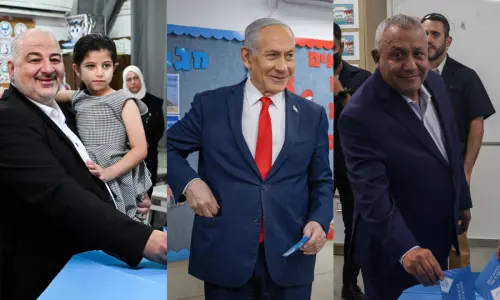
Benjamin Netanyahu looked set to remain Israel’s caretaker prime minister after unexpectedly strong backing among Jewish voters left his opponents little apparent prospect of unseating him, despite his right-wing bloc losing its parliamentary majority.
With nearly 86 per cent of votes tallied on Wednesday, Israel’s three main broadcasters projected Netanyahu’s bloc of right-wing, far-right and ultra-Orthodox parties would win 53 seats in the 120-seat Knesset, well ahead of the 48 for rival Gadi Eisenkot’s opposition bloc.
Parties representing Arab Israelis were projected to win an unprecedented 19 seats, leaving Eisenkot little realistic path to power without their broad backing, which many Jewish political leaders reject.
The results could still change as counting continued, but Eisenkot’s bloc of anti-Netanyahu parties, ranging from the centre-left to the hard right, had fallen short of pre-election polls that forecast a tight race.
Netanyahu would remain caretaker prime minister during any coalition negotiations and potentially until another election next year. While a caretaker government faces some constraints, experts say it retains powers, including over the war with Iran.
Guy Lurie, a research fellow at the Israel Democracy Institute, said a caretaker government formally had the same powers as a regular government, but also “a duty of restraint” and less discretion in some areas.
Security fight sharpens
Netanyahu, addressing his Likud party’s faithful after 3am (6am PKT), called for the formation of “a strong, right-wing national government”.
He highlighted Israel’s military successes and raised the prospect of renewed joint military action against Iran alongside his ally, US President Donald Trump, saying the two countries had a “singular historical opportunity” to remove what he called the Iranian threat “once and for all”.
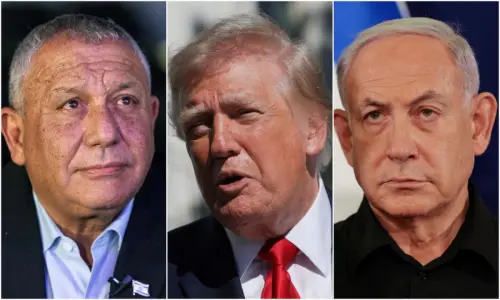
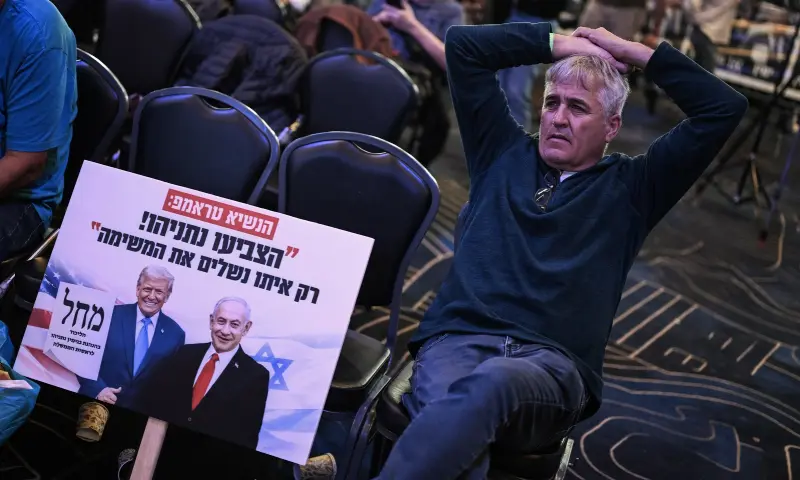
Trump, who had urged Israeli voters to keep Netanyahu in power so the two leaders could “finish the job” in Iran, said Netanyahu had done “very well” and claimed his endorsement had “helped him a lot”.
Eisenkot acknowledged that Netanyahu remained caretaker prime minister but warned that he might use security for political ends.
“I call on the heads of the security establishment and the civil service: Netanyahu is a caretaker prime minister, without a mandate or the people’s trust,” he said.
“Stand firm in the face of any attempt to challenge you.”
Netanyahu’s office has previously rejected accusations that he is using the Iran conflict for political gain and did not immediately respond to a request for comment on Wednesday.
The prospect of a caretaker government without a parliamentary majority weighed on Israeli markets. The shekel currency weakened around 1.6pc to 3.10 to the US dollar. Tel Aviv’s key benchmark stock indexes fell more than 3pc .
Decisive shift in Israeli politics
The result underscored the rightward shift among Israeli Jews during Netanyahu’s years as the country’s dominant political figure. The centre-left that dominated Israel for the first half of its history has been reduced to a small fringe.
Nearly all Jewish parties now share Netanyahu’s rejection of an eventual independent Palestinian state, the basis of internationally endorsed peace efforts since the 1990s.
The election was Israel’s first since Hamas-led fighters killed 1,200 people and took 251 hostages in attacks on October 7, 2023, that plunged the country into conflicts in Gaza, Lebanon and Iran.
The conflict in Gaza, which flattened the territory and killed 74,000 Palestinians, according to Gaza health authorities, has left Israel increasingly isolated on the world stage.
Netanyahu himself is wanted by the International Criminal Court in The Hague on war crimes charges he calls absurd, and faces corruption charges in Israel that he dismisses as an establishment plot.
The headquarters of the Joint List, an alliance of several Arab parties, burst into whistles and applause when exit polls were released. “We refuse the occupation and racism, and we will remain here,” said Joint List candidate Faten Gattas.
Turnout reached 77.7pc, the highest in more than two decades, and was particularly high among Israelis of Palestinian descent, who make up more than a fifth of the population. Many were motivated by what they see as open racism from Netanyahu’s cabinet, which includes a party leader convicted of inciting racial hatred against Arabs.
The coalition that last toppled Netanyahu relied on one small Arab party, but Eisenkot’s underperformance means the opposition would now need backing from the Joint List itself. Most Jewish leaders have shunned formal alliances with Arab parties since Israel’s founding.
Earlier, partial results suggested that Eisenkot’s bloc would have enough seats for a majority if it entered into a coalition agreement with the Arab parties, something most of its members expressed reluctance to do on the campaign trail.
But Yair Golan, the head of Israel’s main left-wing party, which is part of Eisenkot’s camp, called for precisely that on Wednesday.
“We must no longer accept Netanyahu’s racist division between Jewish votes and Arab votes,” he said on X.
“We have a responsibility. And we have an opportunity to form a government of change in partnership with Israel’s Arab citizens.”
Eisenkot had said during the campaign he would not govern with Israeli Arab lawmakers, echoing the position of Netanyahu, who has suggested a government relying on Arab votes would lack legitimacy.
Full results are expected by Thursday evening or Friday morning.
US President Donald Trump claimed on Wednesday that his endorsement of Netanyahu had helped “a lot”.
‘Public voted for change’
Speaking to supporters in Tel Aviv, 66-year-old Eisenkot issued a warning to Netanyahu.
“Netanyahu, don’t you dare use Israel’s security for your political needs,” Eisenkot said. He called Netanyahu “a caretaker prime minister, without a mandate or the people’s trust”.
Eisenkot shares many of Netanyahu’s views on security and has backed the Gaza offensive that has reduced the territory to rubble.
But he has vowed to create a more inclusive atmosphere inside Israel, repair its international standing and rein in violent West Bank settlers.
Eisenkot said it would be a mistake to hold a second election and vowed to work “swiftly” to form a government.
“The public has voted for change,” he said. “A worthy leader would accept the people’s vote of no confidence and announce his retirement from political life today.”