Changes to vagrancy law: PA committee approves bill to raise child protection age limit from 14 to 16 years
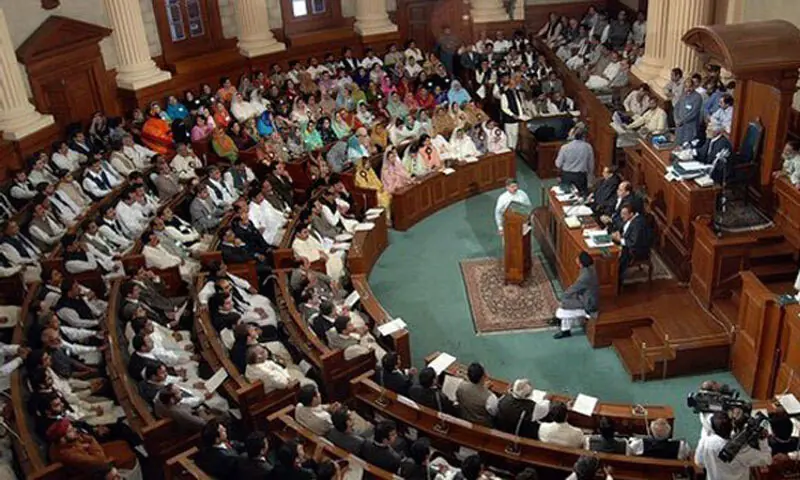
LAHORE: Punjab Assembly Committee on Home Affairs on Tuesday unanimously approved amendments to the provincial vagrancy law, raising the age limit for child protection from 14 to 16 years and introducing imprisonment up to three years and fine up to Rs300,000 for the parents and guardians found using children for begging or allowing others to do so.
The committee, chaired by MPA Safdar Hussain Sahi, approved the Punjab Vagrancy (Amendment) Bill, 2026, at a meeting attended by committee members and officials of the Punjab Assembly and other relevant departments.
The bill seeks to amend the Punjab Vagrancy Ordinance, 1958, by strengthening safeguards for children, fixing responsibility for enforcement and introducing a coordinated mechanism for anti-begging operations and rehabilitation.
Under the proposed amendments, the protected age of children has been raised from 14 to 16 years. Parents and guardians will also be held directly responsible if they employ children for begging, permit others to use them for the purpose or negligently fail to prevent their exploitation.
The bill also envisages stricter punishment, a heavier fine for parents using their children for beggary; Law panel approves ADR bill
Violations will be punishable with imprisonment ranging from three months to three years and a fine of Rs100,000 to Rs300,000.
The legislation designates the director general of Social Welfare and Bait-ul-Maal, Punjab, as the controller, empowering the office to coordinate anti-vagrancy operations, inspect welfare and rehabilitation centres, maintain a central database, issue standard operating procedures and oversee rehabilitation schemes.
The proposed amendments also seek to improve coordination among departments and facilitate monitoring of persons taken into custody and subsequently rehabilitated.
The bill repeals the earlier amending ordinance issued in 2026, incorporating the changes into the provincial law through legislation.
The expanded age limit and tougher penalties are intended to discourage the exploitation of children by families and organised begging networks. However, effective implementation will depend on the availability of adequate rehabilitation facilities, trained staff and financial resources.Concerns also remain over the provision holding parents and guardians liable for negligence, as its application could affect economically vulnerable families struggling to meet basic needs. Without adequate social protection and livelihood support, enforcement risks focusing on arrests rather than addressing the underlying causes of child begging.
ADR BILL: The Punjab Assembly’s Standing Committee on Law on Tuesday unanimously approved a bill proposing resolution of specified civil, family, property and other disputes within 30 days through mediation, offering an alternative to lengthy court proceedings.
The Punjab Alternative Dispute Resolution (ADR) Bill, 2026, was approved at a meeting of the committee, chaired by MPA Muhammad Arshad Malik.
Parliamentary Secretary for Law Khalid Mahmood Ranjha also attended the meeting, along with officials of the assembly, Law Department and other relevant government departments.
The proposed legislation seeks to provide citizens with a faster, affordable and accessible mechanism for settling disputes through mediation and mutual agreement, reducing the burden on the courts.
Under the proposed framework, specified civil, family, property, inheritance, financial and minor compoundable criminal disputes may be referred to trained mediators to facilitate an amicable settlement.
The mediation process is to be completed within 30 days, with an extension of up to 60 days where necessary. If the parties reach an agreement, the settlement will be referred to the relevant court for approval and enforcement under the law. In case of failure to reach a settlement, the dispute will proceed through the regular judicial process.
The bill also provides for confidentiality of mediation proceedings and allows overseas Pakistanis to participate through video conferencing. It further proposes the appointment of female mediators, where possible, in cases involving women.
A key feature of the proposed legislation is the establishment of an autonomous Punjab ADR Authority, to be headed by a retired High Court judge. The authority will be responsible for regulating the system, training and monitoring mediators and ensuring effective implementation of the law.
The legislation aims to promote out-of-court settlements in appropriate cases, make the justice system more accessible and reduce delays and litigation costs for citizens.
Published in Dawn, November 4th, 2026