A bleak economic future

ROBERT Lucas, a towering figure of 20th-century macroeconomics and a Nobel laureate, opined on economic growth and the standard of living that “the consequences for human welfare involved in questions like these are simply staggering: once one starts to think about them, it is hard to think about anything else” (On the Mechanics of Economic Development, 1988).
The context of his observation was the significant differences in standards of living across the globe. I contemplated the same — specifically, whether our economic future might offer us some respite from our perennial failures. Sadly, it does not look good. What follows is a brief narration of various considerations that led me to this conclusion.
The incentives and structure of the economy resemble anything but a viable plan for sustained improvement in living standards and chances of shared prosperity. Tellingly, Pakistan now has the unique distinction of being the only country in the world where three different arrangements compete for a limited set of resources. The first is the formal sector, which mainly comprises an extremely unproductive and extractive public sector. The second is the ‘deep state’, growing within the bosom of the public sector (formally and informally) and meeting its growing economic interests through forced ingress. The third is the ‘informal’ sector, estimated at about 35 to 40 per cent of the formal economy, that tries its best to stay away from formality.
The implications of continuing this arrangement now and in the future are not well understood. There is little, if any, chance, for example, of an entrepreneur arising who could upend traditional industries and usher in economies of scale or creative disruption. It follows, then, that we will remain stuck with low-productivity, rentier industries like sugar that rely on legislative rents (taxpayer-financed subsidies) and tariff protection to shield them from competition.
The incentives and structure of the economy resemble anything but a viable plan for sustained improvement in living standards.
An even more damning predicament is the continuation of economic management as merely an accounting exercise to balance the books. From having some of the worst development indicators to the absurdity of taking foreign loans for purposes such as pension reforms, the adverse spillovers of this mediocrity are well known.
Yet one is astonished to see such pedestrian management celebrated officially. Witness the bewildering displays of vainglorious puffery under the banner of ‘nationalism’.
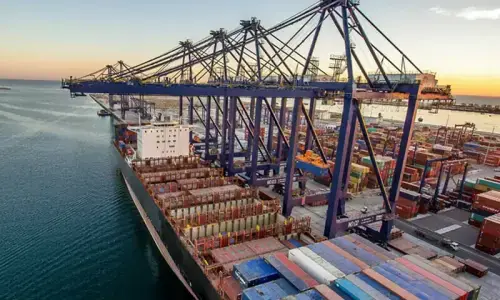
At the same time, trade with three of our neighbours is almost non-existent, a situation akin to a contraction of the available resource envelope and growth possibilities.
This attitude helps explain why we, the world’s fifth most populous country, account for less than 1pc of the massive $35 trillion global trade in goods and services.
What we have done to our human capital is another indicator of our dim prospects. Since at least the time of Adam Smith’s seminal work (1776), it has been understood that it is the most valuable input in the process of economic growth, something that Paul Romer’s endogenous growth theory (1990) put an authoritative stamp upon.
Developing this input has always remained low on our priorities. An even more grievous spectre now haunts our economy: the flight of quality human capital. It is officially celebrated as an achievement in the context of remittances. Still, no policymaker is willing to realise that the full value of quality human capital is captured outside Pakistan. Think of the innumerable examples of people who have made a name for themselves abroad. What if they had remained here and invested their time, resources, and effort to create wealth at home? Or are we just happy to receive a pittance of that effort in the form of remittances that merely sustain consumption?
The ‘Lucas critique’ of the 1970s, which transformed macroeconomics, implies that people respond to policy regimes by revising their expectations. The steady flight of skilled people from Pakistan, a trend since the 1970s, has accelerated sharply in recent decades, suggesting that citizens’ expectations of the country’s future have turned deeply pessimistic. This is reflected in what young people think. Having taught at several universities, I can attest that the majority of students view their education as a stepping stone to settling abroad.
For those who cannot make it to foreign shores and are active in the workforce, a difficult predicament under a poorly designed incentive structure awaits. Try justifying, logically, how in a country with one of the lowest labour force participation rates, the salaried class gets bilked for more than Rs2tr of its income in the last five years, while record inflation has decimated purchasing power for the majority. The obvious lesson (which then spills over into expectations) is that the main beneficiary of workers’ effort is the government’s coffers rather than the person. Better then to try one’s luck elsewhere.
This hollowing out, which will continue, leaves the public sector and its PSDPs as the major avenue of growth. This system spawns corruption, multi-trillion liabilities, and waste (the burden of which ultimately falls upon the taxpayer).
Lahore is the most pertinent example among Pakistani cities, with the second-largest economy and one of the highest per capita incomes. Yet it regularly tops the world’s most polluted city rankings rather than quality-of-life rankings, thanks mainly to brick-and-mortar-based PSDPs. Any material gains are more than offset by deteriorating air quality and rising health costs.
I can continue in this manner — for instance, by pointing out that the legislature is held hostage by the same people who have been there for at least three decades, with no meaningful economic reform emerging during their tenure. It is further compromised by their progeny, who inhabit both Houses. But I am sure the reader gets the gist of my argument: the chances that we will witness a significant turnaround in our economic fortunes are remote. We will likely remain saddled with a state whose main aim, as Marx described it, is ‘nothing else’ other than extracting taxes. At least that’s how I see it. Bob Lucas, I posit, would also have nodded in approval.
The writer is an economist. His current research focuses on the long-term analysis of various issues plaguing Pakistan’s economy, as well as economic reforms and the history of economic thought.
Published in Dawn, November 6th, 2026