
THE preoccupation of exchange rate fundamentalists in Pakistan with a single, partial indicator — Real Effective Exchange Rate (REER) — is astonishing. As Nadeem ul Haque argued in an illuminating article, fixing or deliberately boosting exchange rates effectively ended with Bretton Woods’ collapse in the 1970s. Research has since confirmed that the exchange rate is a market price — the price of one currency in terms of another, determined by underlying economic conditions — and not a policy tool.
Hence, the exchange rate is an endogenous variable reflecting domestic inflation, productivity, external balances, capital flows, reserve adequacy, fiscal credibility, interest-rate differentials, and market expectations. As Haque notes, “The rupee does not weaken because someone decides to weaken it. It weakens because underlying conditions make the existing price unsustainable.”
REER has a legitimate but limited purpose. It measures changes in the nominal exchange rate adjusted for relative price movements against trading partners. But an index reading of 100, based on a selected base year, doesn’t establish an optimal exchange rate. Nor does a deviation from 100 automatically signal overvaluation or undervaluation. REER says little about balance-of-payments sustainability, foreign exchange availability from non-trade sources or exporters’ ability to compete through quality, technology, productivity, and delivery. There are questions to address before treating REER as an authoritative guide to exchange rate policy.
First, does the base year 2010 represent an equilibrium exchange rate? Pakistan recorded a current account deficit of $3.95 billion, around two per cent of GDP, that year, compared with a near-balanced account in 2026. Second, have trade weights and trading partner composition remained representative over 16 years, especially after the China FTA? Third, have movements in individual partners’ currencies been adequately reflected in an index referencing the US dollar? Fourth, the choice of price deflator (CPI, PPI, unit labour costs or GDP deflator) can produce very different results. These points need serious thought before prescriptions are based on a single index.
REER doesn’t capture many of the external account components. Workers’ remittances have grown faster than merchandise exports. They’re a major source of foreign exchange, financing imports of raw material, equipment and fuel, enabling domestic industry to use productive capacity that would otherwise be underemployed. They help build reserves, boost external stability, and reduce reliance on borrowing. FDI, portfolio investment, and external debt disbursements provide more foreign exchange liquidity. Assessments limited to REER overlook these determinants of external sustainability.
Questions must be addressed before treating REER as an authoritative guide to exchange rate policy.
Three empirical tests help establish whether the exchange rate is artificially managed or broadly market-determined. The first is the differential between official interbank and open-market rates. It peaked at Rs10-15 per dollar in FY2023. As reserves accumulated and market conditions normalised, the gap narrowed to its customary Rs0.50-2 range, indicating a more unified foreign exchange market. The second test is whether administrative restrictions on imports and profit and dividend repatriation are being used to suppress foreign exchange demand.
Such curbs were imposed in FY2023 when SBP reserves fell to $3bn or so. Imports declined to $53bn and profit and dividend repatriation to just $331 million against normal levels of about $70bn and $2bn. Last fiscal, imports recovered to $71bn. Profit and dividend remittances reached $2.3bn. Arrears were cleared and current obligations met. This restoration hardly supports the view that the exchange rate is being sustained through administrative demand suppression.
The third, perhaps most compelling, test is whether SBP has depleted its reserves to defend a parity. In FY2023, reserves fell to about $3bn recovering to around $21bn despite annual external debt-servicing dues of about $25bn. This accumulation occurred while the rate was around Rs280 per dollar and REER above 100. It’s difficult to reconcile this outcome with the claim that an artificial exchange rate is being maintained when SBP is mopping up surplus dollar liquidity after interbank clearance.
Historical comparisons reinforce this view. Between 2015 and 2018, the rupee was maintained around Rs104 per dollar, but SBP reserves declined from $18bn to $9bn. In contrast, in 2000-2007 when reserves increased from barely $1bn to $13bn, the exchange rate remained stable around Rs60 and exports more than doubled from $9bn to $19bn. Still, critics said the rate was artificially defended, overlooking the net foreign exchange inflows being sterilised to prevent excessive appreciation and protect exporters’ competitiveness.
Market expectations are another important aspect. In Pakistan, they are often driven by a bandwagon effect instead of rational assessments of fundamentals. When reserves fall below comfortable levels, depreciation expectations can become self-fulfilling. Exporters withhold dollar proceeds within the permitted 90-day surrender period, anticipating a better rate; importers advance foreign exchange requirements to avoid future depreciation. Supply contracts and demand rises putting pressure on the rupee. The anticipated depreciation then materialises.
Would a 10pc depreciation advocated by REER fundamentalists improve competitiveness? Foreign buyers may demand price discounts of at least 5pc from exporters, treating additional rupee earnings as a windfall. About 40pc of exports use imported inputs including fuel, LNG, and textile raw materials. Their costs rise, leaving exporters with a net gain of perhaps only 2-3pc.
The impact goes beyond exporters. Costlier imports fuel inflation, hurting poorer households whose main asset is their labour and whose wages, particularly in an informal economy with extensive underemployment, do not adjust proportionately.
The central bank may raise interest rates, increasing domestic borrowing costs. Imported machinery becomes costlier, forcing investors to put off or abandon projects, hurting both investment and growth. As the rupee cost of servicing external debt increases, partly offset by higher import-duty collections, government may have to borrow more, crowding out private-sector credit. Foreign investors earn lower dollar returns, discouraging fresh investment.
The lesson is that exchange-rate stability can’t be engineered through administrative intervention or depreciation alone. It must rest on credible fiscal management, a broader tax base, sound trade and tariff policies, remunerative energy pricing, higher productivity and prudent monetary management. Together, these policies reduce the need for disruptive exchange-rate adjustments.
Pakistan must not treat REER as a magic number and depreciation as a remedy. The aim should not be an arbitrary index reading but sustainable external competitiveness, stronger reserves, higher exports and investment, and protection of purchasing power. The exchange rate is a reflection of economic fundamentals, not a substitute for them. Correcting symptoms while neglecting underlying weaknesses will only perpetuate the rupee’s woeful tale.
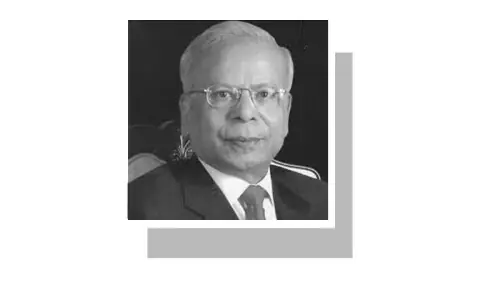
The writer is a former State Bank governor.
Published in Dawn, November 7th, 2026