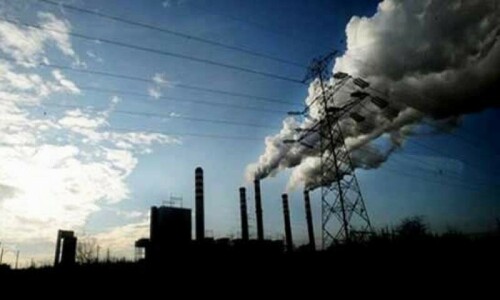
Fossil fuel emissions fall due to Iran war, renewables: research
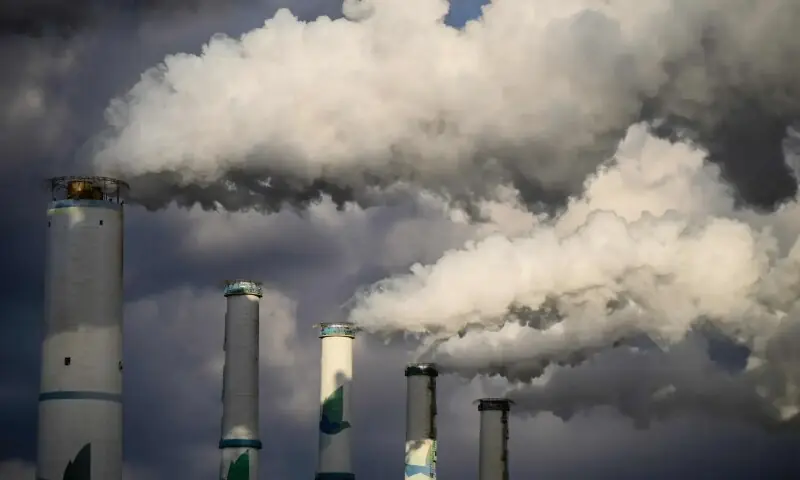
Global fossil fuel emissions are projected to fall slightly in 2026 due to the expansion of renewable energy and the oil price shock sparked by the Iran war, researchers said Tuesday.
Emissions from the burning of oil, gas and coal — the main drivers of climate change —rose by 0.9 per cent per year on average in the past decade, hitting a record high in 2025, according to the Global Carbon Budget report.
But they are expected to drop by 0.4pc in 2026, according to the research, published as nations meet at the UN’s COP31 climate summit in Antalya, Turkiye.
It would be the first annual drop since 2020, when the Covid pandemic paralysed the global economy, trade and transport.
This year, the US-led war in Iran and closure of the Strait of Hormuz played a role in driving emissions down as it caused a drop in oil consumption amid soaring crude prices, the researchers found.
The deployment of solar panels, wind farms and electric vehicles also contributed to the drop. Two thirds of the increase in global energy demand is being met by solar and wind power and electric vehicles, the report found.
“A decline in fossil CO2 emissions is encouraging, but a reduction driven partly by geopolitical shocks is not a sustainable climate solution,” said Pierre Friedlingstein, director of the Global Carbon Budget Office at the University of Exeter in Britain.
“The long-term answer remains the rapid deployment of clean energy technologies,” said Friedlingstein, who led the study published in the journal Earth System Science Data.
Rebound looms
Corinne Le Quere, a climate change science professor at the University of East Anglia, noted that emissions rebounded when economies recovered following shocks such as Covid or the global financial crisis.
A rebound is likely “when the oil tensions go away”, she said in a media briefing.
Oil-related emissions are projected to drop 1.9 percent last year but it was “likely a short-term response to the energy shock triggered by the Iran conflict”, the researchers said.
Gas emissions are set to fall 0.3pc while those from coal use will rise 0.6opc.
Overall, fossil carbon dioxide emissions are expected to reach 38.2 billion tonnes in 2026.
Including emissions from land-use change such as deforestation, total CO2 emissions are projected to rise to 43.3 billion tonnes, from 42.8 billion tonnes last year.
The researchers said land-use emissions are projected to rise partly due to peat fires and forest degradation in southeast Asia, associated with drier conditions linked to this year’s exceptionally strong El Nino climate pattern.
The report found that the world’s carbon budget – the amount of CO2 that can be emitted before global warming exceeds 1.5°C above pre-industrial levels —stands at 150 billion tonnes.
The researchers calculated that at the current, the carbon budget would be exhausted in less than four years.
Nations agreed at the 2015 UN climate talks in Paris to keep global warming “well below” 2°C above pre-industrial levels, while pursuing efforts to limit it to 1.5°C.
But the United Nations declared in September that the long-term 1.5°C target would be missed in a matter of years.
Scientists say it is crucial to reduce greenhouse gas emissions from fossil fuels to limit the period of “overshoot” above 1.5°C and bring temperatures back down as quickly as possible.