Unicef says Israel blocks Gaza basin repairs, warns of flood risk
The UN children’s agency said Israel had rejected the importation of equipment needed to repair a water basin in Gaza, and warned that the facility could overflow and endanger nearby residents through flooding and disease.
Local authorities say Israel destroyed water infrastructure and vehicles used to pump water during its military campaign in Gaza, which had displaced most of the territory’s more than 2 million residents and left much of Gaza in ruins. Most of the population now lives in tent camps.
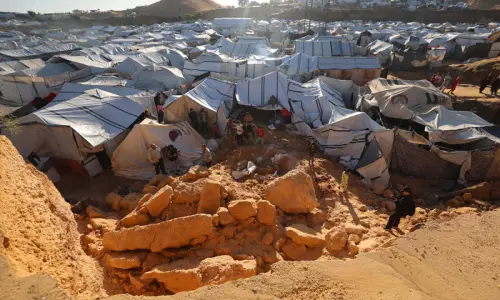
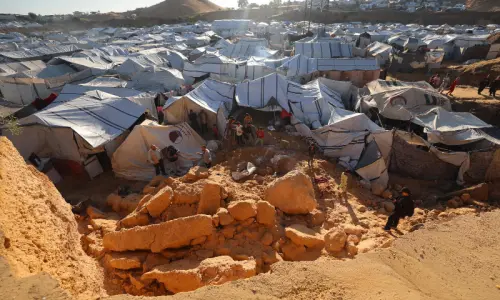
One damaged facility is the Sheikh Radwan stormwater basin in Gaza City, which is now contaminated with sewage and at risk of overflowing after heavy rainfall, according to Unicef James Elder.
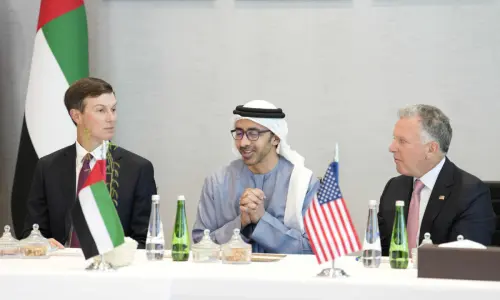
He told reporters the agency had been working with Israeli authorities and US President Donald Trump’s Board of Peace for a year on a $3m plan to repair it, but that COGAT, the Israeli military agency overseeing humanitarian affairs in Gaza, had rejected the project in the past few days.
“Toxic sewage could flow into the streets and tents of Gaza City, forcing children and families from their makeshift homes once more, and grossly increasing the threat of disease. So we’re a bit baffled,” he told a press briefing in Geneva.
“Let’s do the rehabilitation before this becomes another entirely preventable killer of girls and boys in Gaza,” he said.
COGAT did not immediately respond to a request for comment. Elder said it had cited security grounds.
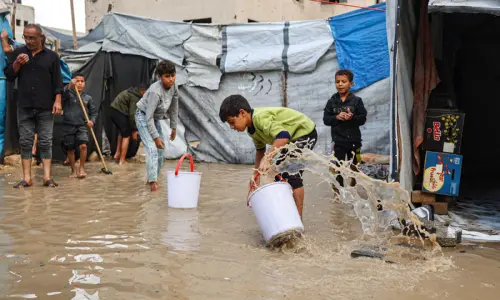
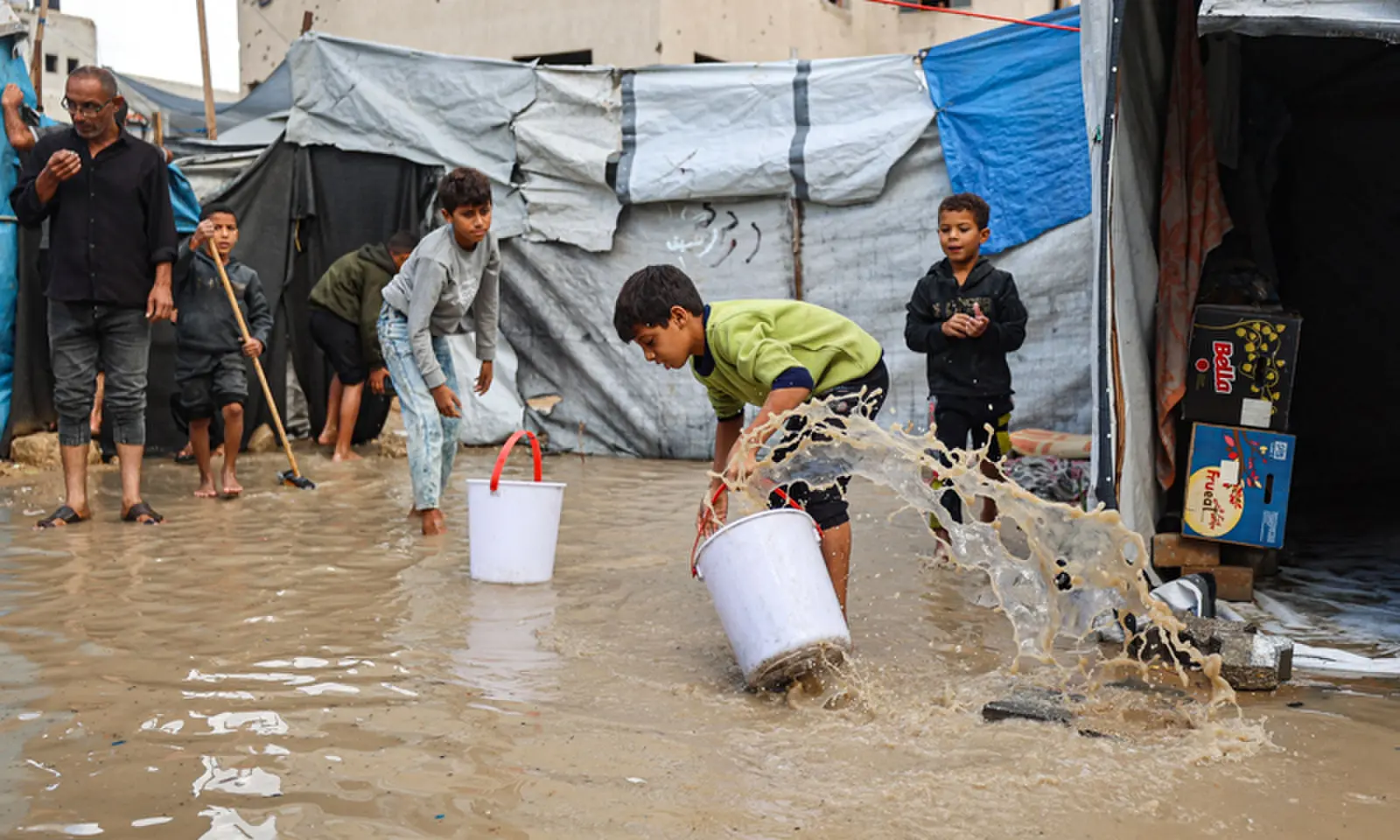
This week, heavy rain has already flooded tens of thousands of tents housing displaced Palestinians crammed into encampments across the Gaza Strip.
Four people, including three small children, were killed when a sand embankment collapsed on their tents in an incident that highlighted the risks ahead of the rainy winter season.
A US-brokered ceasefire last year called for the eventual reconstruction of Gaza, but little progress has been made as negotiators have failed to agree on terms for Hamas to disarm or for Israel to withdraw its troops.
World Health Organisation spokesperson Christian Lindmeier said at the same briefing there were significant communicable disease risks in Gaza due to flooding, poor sanitation and insufficient health and water services.
Nearly 1m displaced people across Gaza now faced medium or high flood risk, he said.