PM Shehbaz to outline Pakistan’s climate priorities at COP31
• Premier to meet Erdogan, other world leaders on sidelines of UN climate conference
• Musadik Malik says Islamabad seeking global cooperation on glacier research
• Aleem Khan reaffirms commitment to green freight corridors and low-carbon logistics
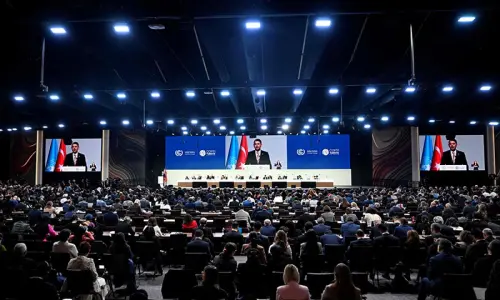
ISLAMABAD: Prime Minister Shehbaz Sharif is set to highlight Pakistan’s climate priorities at the COP31 Antalya Leaders’ Summit in Turkiye today, as Islamabad reaffirmed its commitment to decarbonising global supply chains, while highlighting the threats posed by melting glaciers and the growing risk of glacial lake outburst floods (GLOFs) to vulnerable communities.
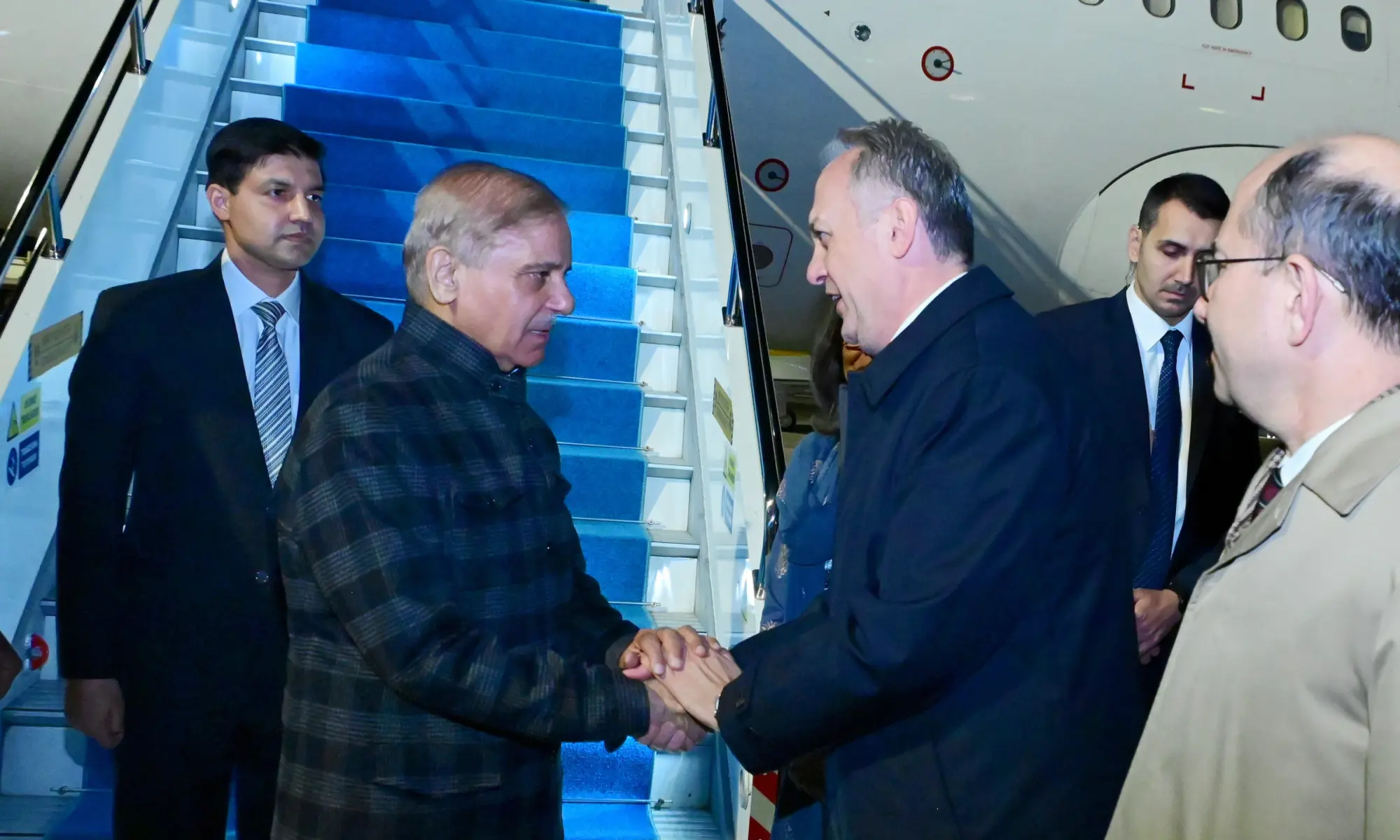
On the sidelines of the summit, the prime minister is scheduled to hold bilateral meetings with Turkish President Recep Tayyip Erdogan and other world leaders attending COP31 to discuss matters of mutual interest and explore avenues for strengthening bilateral cooperation.
At the conference, the prime minister will highlight Pakistan’s climate priorities and stress the urgent need for enhanced global climate action and stronger international cooperation to mitigate the adverse impacts of climate change in line with established principles.
He will also address a high-level dialogue on clean energy transition and electrification titled “35 by 35: Powering the Future”.
Melting glaciers
Earlier, speaking at the UN Climate Change Pavilion at COP31, Federal Minister for Climate Change Musadik Malik called for international scientific cooperation to study glaciers and mountain ecosystems, saying the first impacts of climate change were often felt in mountainous regions.
He said more than 13,500 glaciers had been identified in Pakistan, while the growing threat of glacial lake outburst floods required coordinated scientific research and international cooperation.
“Pakistan contributes less than one per cent to global greenhouse gas emissions, yet it remains among the countries most severely affected by climate change,” he said.
He warned that melting glaciers were putting thousands of people, their homes and sources of livelihood at risk, adding that climate change was not merely an environmental challenge but a question of human survival.
The minister called for an equitable distribution of climate finance, saying developing countries facing severe climate impacts needed timely financial assistance. He observed that climate financing remained concentrated among major emitting countries, despite the vulnerability of nations contributing little to global emissions.
He said scientific research in mountainous regions could also improve understanding of climate risks in plains and polar regions, stressing the need to move beyond international declarations towards practical cooperation.
Highlighting Pakistan’s proposed initiatives to promote research and innovation, Mr Malik outlined plans for a Green Virtual University to connect Pakistani students, researchers and faculty members with leading international universities and scientists.
Green freight corridors
Meanwhile, Federal Minister for Communications Aleem Khan reaffirmed Pakistan’s commitment to decarbonising global supply chains and building climate-resilient logistics infrastructure while addressing a high-level ministerial roundtable on the Global Green Freight Corridors Initiative during COP31 in Antalya.
Mr Khan said international freight transport served as the lifeblood of global commerce but remained one of the fastest-growing sources of transport-related greenhouse gas emissions.
Emphasising that economic growth and environmental protection were mutually reinforcing goals, he said the launch of the Global Green Freight Corridors Initiative demonstrated that sustainable logistics was essential for the future.
Endorsing the initiative and its four key pillars — clean technology, digital connectivity, smart route planning and climate finance — the minister expressed Pakistan’s full support for collaboration with international partners on pilot green corridors. He stressed that as the international community focused on the objectives of COP31, efforts should shift towards translating climate commitments into tangible cross-border outcomes.
With additional input from APP
Published in Dawn, November 11th, 2026