Another bullish week as stocks flirt with 180,000-milestone
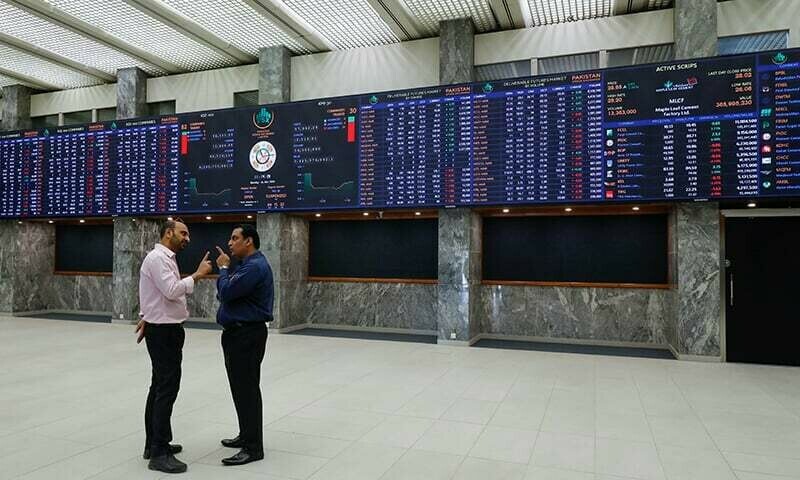
KARACHI: The Pakistan Stock Exchange (PSX) extended its recovery rally during the outgoing week as falling international oil prices eased inflation concerns and encouraged value-hunting across the board.
The index crossed the 180,000-point barrier during the second-last trading session but failed to sustain gains as investors resorted to profit-taking. Cautious sentiment amid domestic political uncertainty also capped the rally.
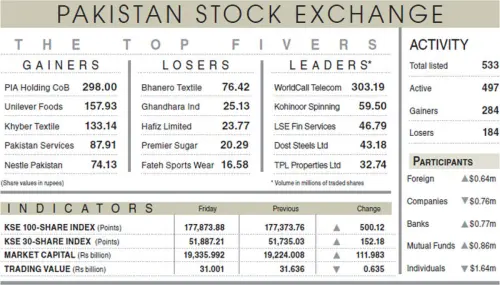
According to Arif Habib Ltd (AHL), the KSE-100 index gained 3,987 points, or 2.29 per cent, week-on-week to close at 177,873.88 points on Friday. It traded between an intra-week high of 180,769 and a low of 176,292 points.
Topline Securities attributed the positive performance primarily to declining crude oil prices and improved investor sentiment amid hopes of a de-escalation in Middle East tensions following the US midterm election results.
Falling oil prices, higher remittances and institutional buying support market
International oil prices retreated sharply during the week, with Brent crude easing to around $96.10 per barrel by Friday. The decline from elevated levels helped ease concerns about imported inflation and the domestic economic outlook.
Among major economic developments, workers’ remittances rose 14pc year-on-year to $3.9 billion in October, compared to $3.4bn in the corresponding month last year. Inflows also increased 8pc month-on-month, taking cumulative remittances during the first four months of FY27 to $14.8bn, up 14pc from a year earlier.
Pakistan posted a fiscal surplus of Rs1,274bn, equivalent to 0.9pc of gross domestic product, during the first quarter of FY27, down 40pc from Rs2,119bn, or 1.7pc of GDP, in the same period last year. The primary surplus stood at Rs3 trillion. Federal Board of Revenue collection amounted to Rs3,086bn, up 7pc year-on-year, while markup payments increased 23pc to Rs1,700bn.
In the latest treasury bill auction, the government raised Rs587bn, exceeding its Rs400bn target, while cut-off yields declined by 22 to 48 basis points across tenors. Meanwhile, central government debt fell 1pc during the first quarter of the current fiscal year to Rs82.7tr as of Sept 30.
The State Bank of Pakistan’s foreign exchange reserves increased by $11.3 million to $21.6bn as of Nov 6, while banks’ reserves declined by $37.1m to $5.3bn. Total liquid foreign exchange reserves stood at $26.8bn, providing import cover of approximately three months.
On the energy front, petroleum prices declined by around Rs21 per litre to Rs332 and high-speed diesel by Rs22 to Rs360 per litre.
Weekly oil production edged up 0.5pc to 65,200 barrels per day, while gas output increased 3.3pc to 3,106 million cubic feet per day, supported by higher production from Uch, Kandhkot, Naimat West and Sutiari Deep fields.
Automobile sales also recorded strong growth. Passenger car sales rose sharply in October, with industry data indicating increased demand, particularly for lower-displacement vehicles. The Pakistan Automotive Manufacturers Association reported sales of 21,635 units, up 60pc year-on-year. The rupee appreciated marginally by 0.02pc against the dollar, closing at Rs276.60 compared to Rs276.66 in the preceding week.
Sector-wise, exploration and production companies led the gains, contributing 1,058 points to the benchmark index, followed by banks with 1,036 points, cement (545 points), fertiliser (317 points) and investment banks (187 points).
Among individual stocks, Mari Petroleum contributed the most, adding 582 points, followed by United Bank (264 points), Lucky Cement (250 points), Pakistan Petroleum (244 points) and Habib Bank (202 points). National Bank led the negative contributors, shedding 48 points, followed by Attock Refinery, Adamjee Insurance, Pakistan Telecommunication and Cnergyico.
AHL expects the market to maintain a cautiously optimistic trajectory, with further gains possible if international oil prices remain stable.
Published in Dawn, November 15th, 2026