LAHORE: Pakistan’s cotton and textile supply chain is at a critical juncture, caught between grassroots climate adaptation in the fields of lower Sindh and widening statistical discrepancies in official crop reporting.
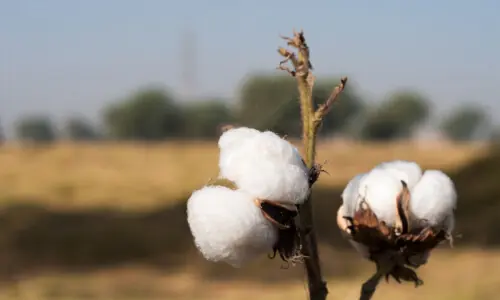
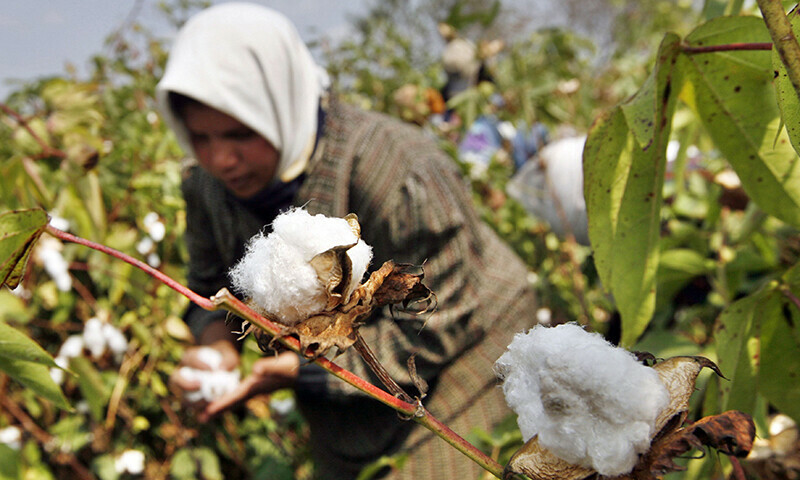
The decision by growers in Sindh’s coastal districts of Thatta and Sujawal to begin cotton sowing in the second week of November marks an unusual departure from the country’s conventional agricultural calendar.
However, whether this farmer-led experiment translates into commercial relief for the domestic textile industry depends as much on agronomic resilience through the winter as on resolving data distortions that are currently clouding market pricing.
Traditionally, cotton sowing in Punjab takes place between May and June, while Sindh begins in February and March — a cycle that exposes the crop to peak summer heat stress and post-monsoon pest attacks, particularly from the pink bollworm. By utilising land cleared after the paddy harvest and intercropping directly into standing tomato fields, growers in coastal Sindh are attempting a multi-season model.
Dr Tasawwar Hussain Malik, a plant breeding and genetics specialist at the Central Cotton Research Institute (CCRI) in Sakrand, notes that while the initiative originated with farmers, CCRI researchers are closely monitoring the fields and conducting parallel trials to assess the viability of “off-season” planting in frost-free pockets of lower Sindh, where winter temperatures remain comparatively mild.
November sowing in coastal areas could bring early lint supplies, but crop resilience and fibre quality remain uncertain
If the November-sown crop matures through winter and yields lint by February and March, domestic spinners could see fresh arrivals months ahead of the traditional August peak. Such an early injection of raw material would bridge the annual inter-season supply gap and curb reliance on costly imported lint.
For ginning factories, a March start would also extend operational capacity beyond their usual three-to-four-month window, though overlapping with the late wheat harvest could strain local transport, labour and warehousing.
Despite initial optimism, cotton scientists urge caution against declaring November sowing a proven model before the crop completes its full cycle.
Sajid Mahmood, head of technology transfer at CCRI in Multan, points out that while daytime temperatures of 33-34 degrees Celsius and night-time lows of 21-22°C in mid-November appear favourable for germination, air temperature alone does not govern crop success.
Seed germination requires warm soil at seed depth, and the decisive test will arrive between December and February. Falling night and soil temperatures during peak winter can retard root development, delay flowering, and impair boll formation.
Furthermore, prolonged fog, dew, and cool, overly moist soil heighten the risk of the Seedling Disease Complex, driven by soil-borne pathogens such as Rhizoctonia and Pythium, alongside fungal leaf infections.
From an industrial standpoint, sub-optimal winter warmth and reduced sunlight can compromise fibre maturity, lowering micronaire values and staple length. Should early-spring lint fail to meet export-grade spinning specifications, textile mills would inevitably discount the crop, eroding farmer profitability.
Equally concerning is the potential disruption to natural pest cycles. Keeping cotton plants in the ground from November until the conventional spring sowing season could create a continuous green bridge for pink bollworm larvae to multiply and migrate into the main summer crop, he warns, stressing that multi-location comparative trials over at least two to three seasons — tracking soil temperatures, fog days, pest dynamics, and fibre quality alongside strict crop-residue management — are essential before scaling up off-season cultivation.
Compounding these field uncertainties is a stark reporting gap for the 2026-27 season. While the Pakistan Cotton Ginners Association recorded Punjab arrivals at 1.999 million bales by Oct 31, the Punjab Crop Reporting Service (CRS) projected provincial output at 3.7m bales, claiming arrivals reached 3.64m bales by Nov 5.
This over 1.6-million-bale discrepancy distorts price discovery across the value chain. Inflated official supply estimates artificially depress local lint prices — currently hovering around Rs18,500 per maund — making growers and ginners hesitant to sell.
Simultaneously, overstated projections risk delaying spinners’ forward import contracts, exposing mills to panic buying on global spot markets at steep premiums if domestic shortfalls emerge, while driving up bank risk premiums and borrowing costs for warehouse financing.
Ultimately, translating coastal Sindh’s November sowing into lasting relief for Pakistan’s textile sector requires institutional alignment: targeted PARC-CCRI seed research for cold-tolerant, pest-resistant varieties paired with credible, unified crop statistics to restore market stability.
Published in Dawn, November 15th, 2026